

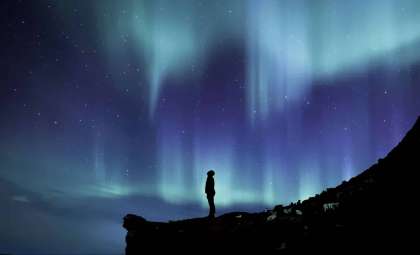
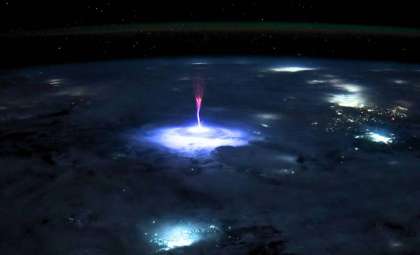
A strikingly uncommon purple glow spotted in Earth's upper atmosphere has provided scientists with fresh insights into how solar activity can generate extraordinary light shows in the sky, according to NASA. This rare phenomenon, captured by the NASA Earth Observatory, reveals the intricate interactions that occur when solar energy reaches Earth's atmosphere and reacts with surrounding gases. Unlike the typical green or red auroras—formed by charged solar particles colliding with atmospheric molecules—this violet hue arises from a unique combination of atmospheric conditions and light emissions. Researchers are actively investigating these events to deepen our understanding of the evolving interplay between solar activity and Earth's near-space environment.
A Spaceborne View of a Purple Aurora
The remarkable image was taken by NASA astronaut Jessica Meir aboard the International Space Station (ISS) during Expedition 75. Captured on September 7, 2026, with a Nikon Z9 digital camera, the photo reveals the purple glow from about 255 miles (411 kilometers) above Kyrgyzstan. The NASA Earth Observatory emphasized this observation as a prime example of how photos from astronauts, paired with satellite data, help scientists explore atmospheric phenomena that are otherwise challenging to observe and analyze from Earth's surface.
Auroras form when solar wind particles travel toward Earth and engage with the planet’s magnetic field. These charged particles enter the upper atmosphere around polar regions, exciting oxygen and nitrogen atoms and molecules. The release of this energy produces visible light, resulting in the colorful aurora displays.

Green auroras are generally attributed to oxygen emissions at certain altitudes. Purple and violet hues emerge when energized nitrogen molecules join the light show or when different wavelengths overlap. In this instance, the purple tint resulted from the blending of multiple light emissions during a phase of intensified solar activity.
This purple glow illustrates how subtle variations in atmospheric chemistry, altitude, and solar energy influx can alter the night sky's appearance. Such shifts provide valuable information for scientists studying the upper atmosphere’s conditions.
Purple Haze. Jimi Hendrix would have rejoiced at the site of the northern lights last night. I’ve never before seen such a brilliant purple wavelength in the aurora – certainly makes me want to kiss the sky. Photo taken with Nikon Z9, 15mm lens. pic.twitter.com/3A3v4GiZsS
— Jessica Meir (@Astro_Jessica) September 8, 2026
NASA Explores the Science Behind Uncommon Aurora Colors
As explained by NASA, investigating these luminous atmospheric events assists scientists in understanding the link between solar phenomena and Earth's surroundings. Spaceborne instruments enable the monitoring of extensive portions of the planet, revealing changes that might be missed when observed from a single location.
The Earth Observatory acts as a hub for sharing satellite imagery of natural events such as storms, climate dynamics, and atmospheric occurrences. Pictures taken from orbit offer a comprehensive view of processes happening beyond Earth's surface.
Researchers combine these satellite observations with data from ground-based stations and spacecraft to examine how solar energy interacts with Earth's magnetic field and atmosphere. Every new observation enriches the broader understanding of how our planet responds to solar influences.
Studying auroras also contributes to the field of space weather, which focuses on solar flares, charged particles, and their potential impacts on satellites, communication networks, and other technologies.
What Sets Purple Auroras Apart from Typical Displays
The visible colors during an aurora depend on factors like the types of atmospheric gases involved, the altitude of interaction, and the energy level of incoming particles. Purple hues often stem from nitrogen emissions combined with other atmospheric light sources.
Such displays are rare because the human eye is usually familiar with the green shades prevalent in most auroras. Detecting purple requires a precise mix of environmental conditions that enable these wavelengths to become apparent.
Scientists study these colors as they reveal detailed information about the structure of the atmosphere. The light emitted during auroras carries insights about the gases and phenomena occurring high above the Earth’s surface.
Advanced satellite technology lets researchers observe these rare events across wide areas and compare varying atmospheric conditions. This data helps improve models of the upper atmosphere’s behavior and its response to solar inputs.
The Dynamic Link Between Solar Activity and Earth's Sky
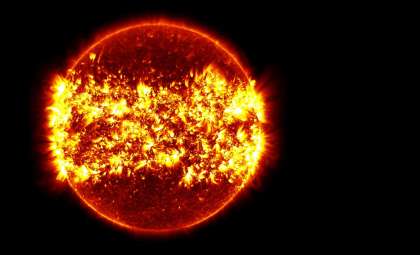
The Sun continuously emits streams of charged particles through space. Earth's magnetic field shields the planet while channeling some of these particles into the upper atmosphere.
When solar activity escalates, auroras can spread over wider regions and become visible farther from the poles than usual. The brightness and nature of these displays depend on the solar emissions’ intensity and Earth's magnetic field status.
These purple atmospheric phenomena underscore the ever-changing interaction between Earth and space, demonstrating that our atmosphere is an active system shaped by external forces.
Future satellite missions and scientific tools will further unravel the details of these infrequent light shows. Each new observation helps clarify how solar energy influences the environment around our planet.
- Categories:
- News





0 comments
Sign in to Comment