

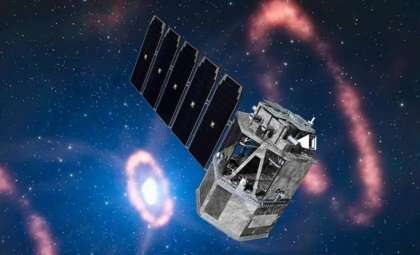
The Chandra X-ray Observatory launched by NASA has uncovered a novel type of celestial object emitting exceptionally soft X-rays alongside strong ultraviolet radiation. Scientists identified 84 instances of these so-called "hypersoft X-ray sources" spread over six different galaxies, potentially offering insights into the mysteries of Type Ia supernovae and interstellar gas dynamics.
These objects were discovered through a detailed examination of publicly accessible data within the Chandra archive. The researchers noticed an unusual signature: the sources emerged in low X-ray energy images, yet vanished when observed at higher X-ray energies.
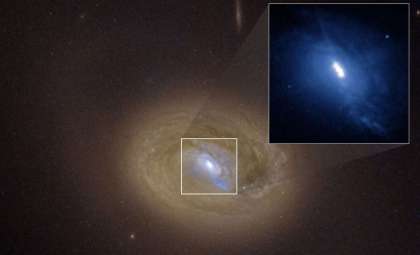
The research, published in Nature Astronomy, investigates sources found in galaxies including the spiral M101 (known as the Pinwheel galaxy), M31 (the Andromeda galaxy), and four elliptical galaxies. These phenomena appear in varied stellar environments — regions of both active star formation and older stellar populations.

Scientists have named these objects hypersoft X-ray sources due to their emission predominantly in the lowest X-ray energy range, signaling a class of cosmic bodies previously unrecognized.
Discovery of 84 Hidden Celestial Sources by Chandra
The team identified these sources by systematically comparing Chandra’s X-ray imagery at varying energy levels. Every one of the 84 objects showed intense activity at soft X-ray energies and absence at higher energies, highlighting their unique emission signature heavily weighted towards softer X-rays.
This observation led scientists to consider their ultraviolet light emissions. Since softer X-rays lie adjacent to energetic ultraviolet radiation within the electromagnetic spectrum, it is believed these sources are also powerful emitters of ultraviolet waves.
“We’ve never encountered a group of objects that act like this,” said Mustafa Muhibullah of the University of Alabama, who led the study. “Of course, the next step was to try to figure out what these things are.”

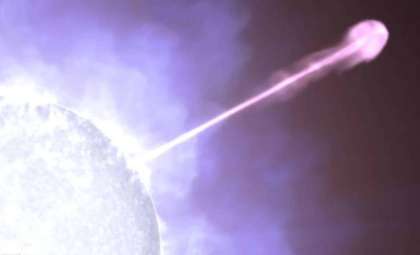
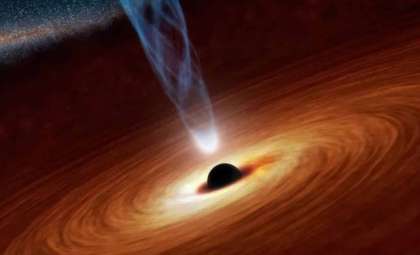
Their nature remains uncertain. It is thought that these sources likely represent systems where a black hole, neutron star, or white dwarf draws matter from a companion star. The accretion of this material heats up and emits X-rays. Although such binary systems are known, none previously exhibited this combination of bright ultraviolet output and extremely soft X-ray emissions.
Linking Hypersoft Sources to Type Ia Supernovae
Understanding these objects is crucial due to their possible connection to Type Ia supernovae. Certain white dwarfs that accumulate material from companions might trigger this kind of supernova, which serves as a key tool to gauge cosmic expansion and led to the discovery that the universe’s expansion is accelerating. However, the progenitors of Type Ia supernovae have eluded direct detection until now.
“If we could find a way to spot these Type Ia supernova explosions before they go off, that would be really important,” said study co-author Jimmy Irwin, also from the University of Alabama. “Right now, we study them after they’ve exploded, and astronomers have struggled to understand what is actually ignited.”

These hypersoft sources now provide astronomers with a promising set of objects to examine in the quest to decode Type Ia supernova progenitors.
Unveiling a Potential New Ultraviolet Radiation Source in Galaxies
A second enigma concerns the ionization of gas between stars in some galaxies, a process that shapes star formation rates and galactic evolution. While hot, massive stars contribute to this ionization, they do not fully account for all observations. The intense ultraviolet light emitted by these hypersoft sources could be a missing piece in this puzzle.
But why were these 84 sources overlooked for so long? Their emission characteristics make them challenging to detect: low-energy X-rays are tough for telescopes to capture accurately, and energetic ultraviolet radiation is often absorbed by hydrogen and helium in the interstellar medium.
By delving into Chandra’s extensive archive, the research team uncovered this hidden population. Rosanne Di Stefano from the Center for Astrophysics, Harvard & Smithsonian explained:
“That’s how we found what appears to be a new class of cosmic objects with remarkable qualities.”

At present, the exact identity of these sources is still a mystery, but Chandra has unveiled an overlooked population of extraordinary cosmic phenomena.
- Categories:
- Nasa





0 comments
Sign in to Comment