

A pioneering spacecraft concept funded by NASA promises to assist explorers in pinpointing mineral deposits on distant planets and moons, potentially saving vast costs before launching complex missions.
Revolutionizing Resource Detection Beyond Our Planet
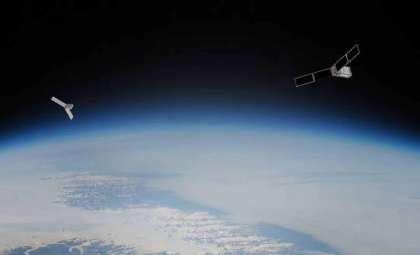
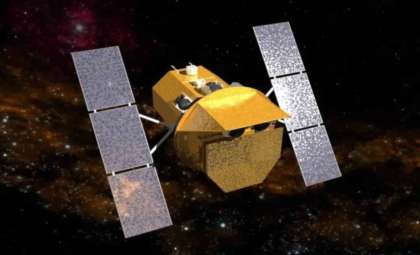
The mission, called Interworld Slingshot Resource Surveys, intends to remotely analyze the mineral makeup of celestial bodies throughout the solar system. By employing cutting-edge remote sensing technology, it aims to identify valuable resources from afar, eliminating the need for landing-based investigations.
This methodology leverages Raman spectroscopy, a scientific technique where light interactions reveal the chemical composition of surfaces. Unlike traditional approaches, this system targets detecting mineral signatures at significant distances instead of requiring direct contact.

By gathering geological data about asteroids, moons, and planets remotely, the technology could minimize risks inherent in space missions, which often carry hefty financial and technical burdens.
One of the major obstacles in space resource exploration is determining the correct destination. Misguided missions could result in enormous financial losses and wasted time.
According to the SETI (Search for Extraterrestrial Intelligence) Institute, the challenge lies in signal sensitivity over vast distances. SETI noted: “Detecting Raman scattering is extremely difficult since only one in 10 trillion photons undergoes this effect. Previous tests by Sobron managed up to 120 meters, but this project explores the feasibility of spans around 30 to 50 kilometers.”
The Importance of Mineral Surveys for Future Space Ventures
Locating usable resources like water ice and metals is central to supporting sustainable space exploration by reducing dependency on resupply missions from Earth.
Currently, detailed knowledge about where such resources exist on remote worlds is limited, sometimes leading missions to costly disappointments when anticipated materials are absent.
This remote sensing system aspires to offer clarity prior to long-distance journeys, enabling explorers to focus on places demonstrating promising mineral indicators.
Petr Sobron, one of the project’s researchers, highlighted the financial stakes of uninformed exploration.
“The thing most likely to stop space mining may be that we cannot afford to prove there is anything worth mining,” Sobron said. “Land in the wrong place and you can lose an entire exploration program or a company, and nobody has enough money to keep sending spacecraft and hoping for the best.”
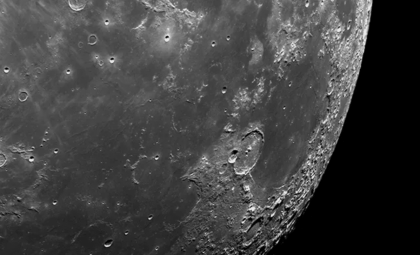
This approach could play a critical role in planning missions to asteroids, the Moon, and other planetary bodies that might host resources vital for scientific or commercial efforts.

Overcoming the Obstacles of Detecting Extremely Weak Signals
The primary technical hurdle is the faintness of Raman scattering signals, which demands exceptionally sensitive detectors and advanced observation techniques to gather data remotely.
The project team must prove that these measurements can be reliably extended from the previous maximum of a few hundred meters to tens of kilometers, a substantial leap requiring innovative engineering solutions.
Success could enable spacecraft to remotely survey distant surfaces extensively, mitigating the hazards tied to direct landings and providing a preliminary layer of reconnaissance prior to more involved operations.
Additionally, mapping minerals remotely can shed light on planetary formation and geological evolution since mineral distributions reveal clues about past environmental conditions.
Though still in development, this strategy exemplifies a growing trend toward intelligent exploration—relying on thorough preliminary surveys before missions undertake complex tasks on unknown terrains.
Advancing More Strategic Deep Space Exploration
The creation of Interworld Slingshot Resource Surveys showcases efforts to refine space exploration into a more focused and informed endeavor. Rather than utilizing trial and error, spacecraft could leverage advanced sensors to select optimal targets prior to arrival.
This technology is likely to integrate into broader exploration frameworks involving governmental bodies, academia, and private enterprises eager to exploit space resources. Enhanced knowledge about remote environments promises improved mission design and minimized risks.
Furthermore, adapting scientific instruments traditionally used in terrestrial labs for demanding space conditions marks a significant milestone in planetary science innovations.
Before large-scale extraterrestrial mining becomes feasible, explorers must possess dependable methods to locate and evaluate resource-rich areas. Spacecraft equipped to remotely map minerals could become instrumental in ushering in the next chapter of solar system exploration.
- Categories:
- Nasa




0 comments
Sign in to Comment