

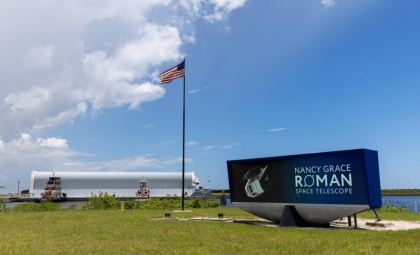
The recently launched Roman Space Telescope by NASA aims to revolutionize the exploration of planets beyond our solar system by capturing direct images of distant exoplanets. This significant advancement could transform the quest for habitable worlds, Space.com reports. Featuring a cutting-edge coronagraph instrument, the telescope is designed to block out the blinding light from stars and detect the faint glow emitted by orbiting planets.
Innovative Approach to Discovering Exoplanets
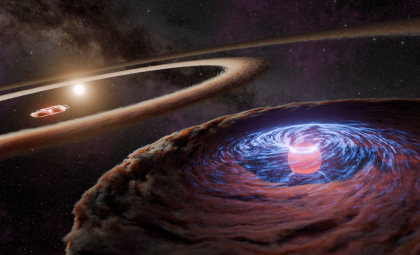
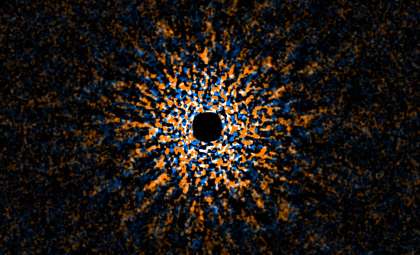
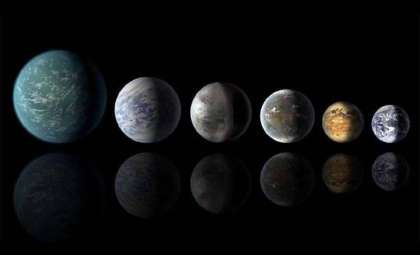
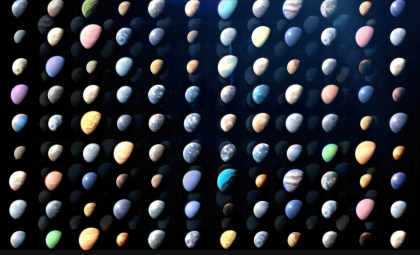
For many years, astronomers have identified thousands of exoplanets through indirect indicators, such as dips in starlight or gravitational effects caused by planets. These techniques uncovered a wide array of planet types, from giant gas planets to small, rocky bodies. In contrast, direct imaging offers the chance to observe planets by detecting the actual light coming from them, bypassing the need to infer their presence from stellar behavior.
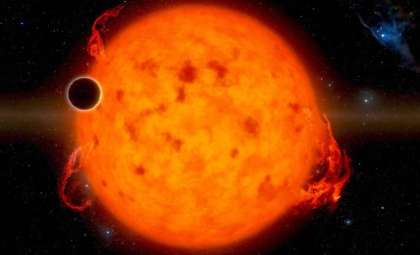
The main obstacle is the tremendous brightness difference between stars and their planets — stars can outshine their planets by factors of millions to billions. Even the most advanced telescopes must overcome this challenge to isolate the weak planetary light.

NASA’s Roman Space Telescope addresses this through its sophisticated coronagraph, which uses optical masks, ultra-sensitive detectors, and finely tuned mechanisms to suppress stellar glare. This technology will enable scientists to experiment with new planet observation techniques and collect valuable data that will inform the design of upcoming missions.
“The Roman Space Telescope is carrying the most advanced coronagraph that humanity has ever put into space,” Dominic Benford, the telescope’s program scientist, told Space.com.
Beyond imaging, the coronagraph is expected to help determine distant planets’ properties such as brightness, chemical makeup, and surrounding environments. These insights will identify the most promising candidates for future studies focusing on planetary habitability.
Enhancing Space Imaging with Roman’s Coronagraph
Creating the Roman telescope’s imaging system involved some of the highest-precision engineering feats ever attempted in space. Since the observatory operates far from Earth, it must maintain incredible optical stability with no possibility for repairs.
A key element is the deformable mirrors, which swiftly adjust their shape to fix microscopic distortions in the optical path. These mirrors boost image clarity by minimizing stray light, thus enhancing the telescope’s sensitivity to faint planetary signals.
“These deformable mirrors are a real engineering feat,” Bailey said during the press briefing. “They can be commanded with the precision approaching the size of an atom, and this is what really allows us to make this transformative performance.”
This coronagraph technology also serves as a proving ground for future space telescopes. Demonstrating that such complex instrumentation can function flawlessly will pave the way for even more ambitious missions designed to find Earth-size planets.
By studying planetary systems through direct imaging, Roman will advance our comprehension of their composition and structure, offering lessons that will shape next-generation astronomical tools.
Searching for Earth-Like Worlds
Directly capturing light from exoplanets opens new opportunities to analyze atmospheric and surface characteristics rather than relying solely on secondary effects on stars. Although Roman isn’t intended to detect signs of life itself, it will spotlight candidates worthy of in-depth investigation with future missions.
“I love the feeling of smallness that comes from understanding you’re not alone in the universe,” Vanessa Bailey, Roman’s coronagraph instrument scientist, told Space.com.
This observational capability also helps scientists gauge the prevalence and variety of planets across the galaxy. While some systems present clear views of their planets, others are obscured by dust or other cosmic material.
Roman’s data will clarify the conditions in nearby planetary neighborhoods, assisting in pinpointing systems that offer the best prospects for further exploration of habitability.
Preparing for Future Missions to Detect Habitable Planets
NASA’s upcoming Habitable Worlds Observatory will build on Roman’s technological demonstrations to conduct detailed studies of Earth-like planets near our solar system. Roman’s coronagraph experience will be critical in refining tools and strategies for this flagship mission.
Understanding the dust and debris around stars is essential since these materials can interfere with detecting smaller planets by producing extra light noise.
“That is interesting in its own regard but also interesting as a precursor to the Habitable Worlds Observatory,” Bailey said, discussing NASA’s future flagship equipped with an advanced iteration of Roman’s coronagraph.
Roman’s findings on dust levels around star systems will help determine which targets are viable for subsequent missions aiming to study potentially habitable exoplanets.

“We can study how dusty these nearby systems are and understand whether any of them might have too much dust for us to be able to observe an Earth-like planet in the future,” Bailey added.
Roman’s mission results will significantly influence the architecture of future observatories and bolster the capacity to investigate distant planetary systems. By pioneering direct imaging in space, it represents a pivotal step toward addressing one of astronomy’s greatest mysteries — the existence of Earth analogs elsewhere.
As Roman begins its scientific operations, astronomers will carefully review its initial findings to assess the progress of advanced imaging technologies. The discoveries made could lay the groundwork for a new era in exoplanet exploration, bringing remote planets into sharper focus than ever before.
- Categories:
- News



0 comments
Sign in to Comment