

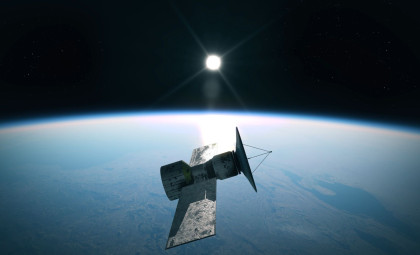
NASA’s Neil Gehrels Swift Observatory is approaching the end of its mission, as it prepares to reenter Earth's atmosphere following the failure of a private effort to extend its operational life. Launched in 2004, this telescope spent over two decades monitoring some of the universe’s most intense explosions before its orbit began to degrade.
Designed specifically to observe gamma-ray bursts—brief but extremely powerful cosmic events—the Swift Observatory was equipped with three telescopes capturing data across X-ray, ultraviolet, and optical wavelengths, providing invaluable insights into various astronomical phenomena.
The spacecraft’s mission closure stems from the gradual decay of its orbit, accelerated by increased solar activity which raised atmospheric drag. This left NASA a narrow timeframe to devise a strategy to prevent Swift’s inevitable fall back to Earth.

In September 2025, NASA initiated a mission to save Swift by seeking a boost to its orbit. The Arizona-based firm Katalyst Space Technologies responded with a plan involving a robotic spacecraft named LINK, aiming to dock with Swift and elevate its altitude.
Attempt to Save Swift Falls Short
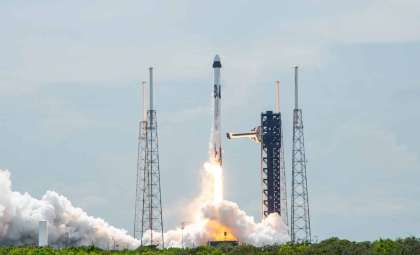
This novel rescue mission aimed to prolong the life of aging satellites. NASA awarded Katalyst Space Technologies a $30 million contract to back the initiative. The company launched LINK on July 3, intending to rendezvous with Swift and provide the required orbital boost.

However, difficulties with LINK’s attitude-control system forced an early end to the operation. Unable to achieve the planned rendezvous, NASA and Katalyst halted the mission. In an August 24 CNN interview, Ghonhee Lee, CEO of Katalyst, stated:
“You know, this is not the outcome that we wanted, but I think it’s very important to recognize the unprecedented scale. This was an ambitious, high-risk, high-reward mission where we designed, built and launched a space robot within nine months.” With no orbital boost, Swift continued its descent toward the atmosphere.
Monitoring Swift’s Inevitable Return
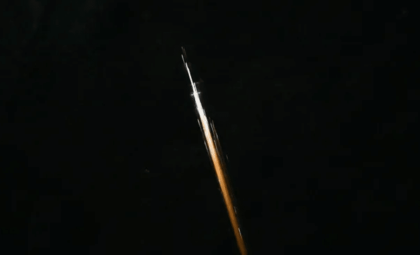
Swift will undergo an uncontrolled reentry, making it impossible to predict the exact landing area. NASA remains vigilant, promising updated information as the reentry draws near.
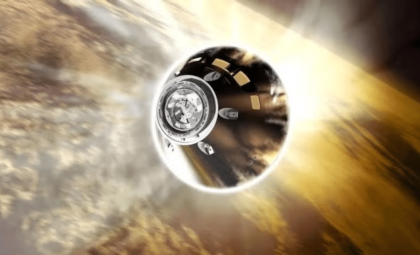
NASA spokesperson Alise Fisher clarified that Swift’s return won’t happen before October. The timing depends on various orbital parameters, and NASA plans to follow standard notification protocols regarding reentry. Most of the telescope is expected to vaporize as it passes through the atmosphere, though some sturdier components might survive.

With a dry mass of 613 kilograms (1,351 pounds), the observatory houses three primary scientific tools: the Burst Alert Telescope, Ultraviolet/Optical Telescope, and X-Ray Telescope. According to Space.com, although Swift poses little risk upon impact, some fragments may remain intact post-reentry.
Uncertain Debris Impact Zone for Swift
The exact landing site for debris remains unpredictable. With a 21-degree orbital inclination, the spacecraft could enter anywhere between 21 degrees north and 21 degrees south latitude.
Experts are evaluating which parts of Swift may survive reentry. Darren McKnight, senior technical fellow at LeoLabs, noted that sufficient breakup during descent should minimize ground hazards. However, some components like optical lenses and titanium fuel tanks have a higher likelihood of withstanding the harsh conditions.
“It has an orbital inclination of 21 degrees, so could reenter anywhere in any latitude from 21 North to 21 South,” Ewan Wright from the University of British Columbia and the Outer Space Institute said. “The most likely outcome is that any surviving debris will land in the sea, but there is a chance it could impact a built-up area and cause a casualty.”
- Categories:
- Space








0 comments
Sign in to Comment