

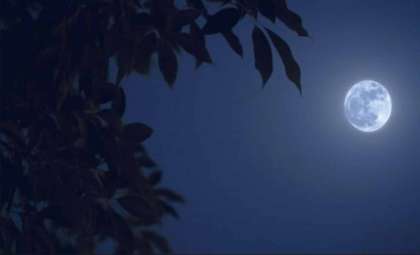
On the night of August 27-28, 2026, a partial lunar eclipse covering approximately 96% of the moon will captivate stargazers as Earth’s shadow nearly conceals the lunar surface. This spectacular celestial show will be observable from vast areas across North America, South America, as well as pockets of Europe and Africa, weather permitting.
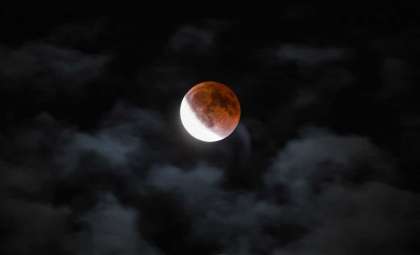
The eclipse takes place when Earth positions itself between the sun and the full moon, creating a shadow that obscures most of the moon’s surface. At maximum eclipse, a slim crescent of moon will stay illuminated, while the rest lies in Earth’s umbral shadow.
According to Space.com, roughly 3.3 billion people will find themselves within viewing zones for this event. Though all phases occur simultaneously worldwide, observers will witness them at local times based on their geographic location.

Though not a total eclipse, the large portion of the moon covered promises a striking spectacle. The moon may glow with a distinctive reddish hue caused by sunlight filtering through Earth’s atmosphere before reaching its surface.
Prime Viewing Across the Americas
The Americas will have prime vantage points to witness the eclipse’s progression across the lunar disk. In the western U.S., cities such as Los Angeles and Portland will see the eclipse peak shortly after dusk. Moving eastward, observers in places like New York and Jacksonville can catch the maximum phase near midnight.
This variation in timing is due to Earth’s rotation and geographic location relative to the eclipse’s path. Despite the universal timing of the event, the moon’s altitude and ambient conditions differ by region.
Parts of South America will also witness this celestial phenomenon, observing how Earth’s shadow slips across the cratered lunar surface during this event’s multiple phases.
Predawn Viewing for Europe and Africa
For those in the United Kingdom, much of Europe, and parts of Africa, the eclipse will unfold during the early morning hours of August 28, 2026. As detailed by Space.com, the moon will appear low in the western sky as dawn approaches. Observers’ experiences will vary depending on moon altitude and local visual clarity.
Anyone positioned on Earth’s night side at the time will have the opportunity to witness this event. The moon’s changing location in the sky means the partial eclipse could be seen near sunset, midnight, or just before sunrise, depending on where viewers are located.
Skywatchers worldwide will share the unique experience of observing Earth’s shadow gradually sweeping across the lunar landscape, presenting diverse perspectives of this iconic alignment.
Watching the Eclipse Is Safe and Simple
Unlike solar eclipses, viewing a lunar eclipse requires no special eye protection. A simple, unobstructed view of the moon is enough to enjoy the event’s phases. Using binoculars or a telescope can enhance the experience, offering close-up views of surface features as Earth’s shadow glides over them.
The characteristic reddish tint some eclipses exhibit arises as sunlight passes through Earth’s atmosphere, which bends and filters the light before it touches the moon.

The August 2026 partial lunar eclipse unites sky enthusiasts across continents, showcasing the dynamic interplay between the sun, Earth, and moon. Nearly the full lunar disk will be in shadow, providing a vivid glimpse into the orbits of our nearest cosmic neighbors.
- Categories:
- Astronomy




0 comments
Sign in to Comment