

The moments right after the Big Bang remain one of physics’ most profound enigmas. Recent breakthroughs at CERN are helping scientists unravel this early epoch by uncovering fresh evidence of the extraordinary form of matter that once permeated the cosmos. These discoveries mark a crucial advance in piecing together the conditions present mere millionths of a second following the universe's rapid expansion, offering vital clues about how ordinary matter emerged from an intensely hot, dense primeval state.
Recreating the Conditions of the Infant Universe
For years, researchers have aimed to simulate the extraordinary environments that dominated just after the Big Bang. Temperatures soared into the trillions of degrees, rendering protons and neutrons incapable of existing in their usual form. Instead, the universe was filled with a unique phase of matter called the quark-gluon plasma, where quarks and gluons roamed freely rather than being confined inside particles. Generating such conditions demands immense energy, a feat achievable only by a few advanced facilities worldwide.
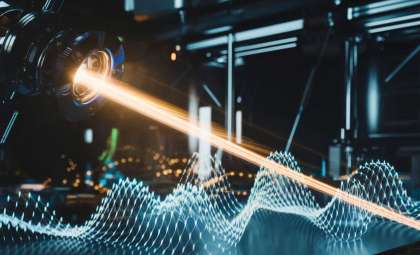
At the Large Hadron Collider (LHC), scientists accelerate heavy ions to near-light speeds before colliding them with extreme force. These impacts create tiny fireballs whose temperatures briefly exceed those found at the cores of stars by vast margins. Although these states persist for only split seconds, they enable researchers to explore how matter behaves under conditions akin to those of the early universe. Every collision presents a new chance to examine how the initial plasma state transitioned into the familiar matter composing galaxies, planets, and life.

Fresh CERN Data Expose New Characteristics of Primordial Matter
CERN scientists report that multiple experiments have uncovered new indications supporting the existence and dynamics of quark-gluon plasma formed during powerful heavy-ion collisions. By integrating results from various detectors, researchers construct a comprehensive understanding of the plasma’s nature. They analyze how particles emerge from collisions, examine energy loss in jets traveling through the hot medium, and study the interaction of heavy quarks with the plasma. Collectively, these observations reinforce the conclusion that the same exotic matter once prevalent moments after the Big Bang is being replicated in the lab.
The newest findings also enhance the precision of previous measurements, enabling physicists to rigorously test advanced theoretical frameworks. By aligning data with predictions derived from quantum chromodynamics (QCD), the theory governing the strong nuclear force, scientists sharpen their insights into quark and gluon behavior under extreme conditions. These advances close the gap between theory and experiment, driving progress in understanding the early universe’s evolution.
The Broader Impact on Cosmological Knowledge
These results resonate far beyond particle physics, illuminating one of the universe’s most pivotal transitions. Learning about quark-gluon plasma reveals how the cosmos cooled enough for quarks to bind into protons and neutrons, sparking the formation of atoms, stars, galaxies, and the structures we observe today. Replicating this plasma within controlled laboratory environments allows physicists to probe processes that shaped cosmic history mere microseconds after the universe’s inception.
Additionally, these experiments serve as vital tests for the Standard Model of particle physics under unmatched conditions. Minor deviations between theory and observation might hint at unknown physical phenomena or subtle complexities in the strong force yet to be uncovered. Even confirming established theories tightens the accuracy of models used to describe matter’s cosmic evolution. Each dataset contributes to an immense cosmic puzzle spanning nearly 13.8 billion years.
Advancing Our View of the Universe’s Earliest Era
The quest to understand the primordial universe is ongoing. Upcoming runs of the Large Hadron Collider, alongside enhanced detector technology and more refined analysis methods, promise significantly larger datasets and even greater experimental detail. These innovations will facilitate unprecedentedly precise measurements of the quark-gluon plasma, revealing aspects of its behavior previously inaccessible.
Researchers also aim to explore how this extraordinary matter reacts under varying collision energies and experimental setups, which may expose new phenomena yet undiscovered. As theoretical models evolve hand-in-hand with increasingly precise experiments, the scientific community moves steadily toward reconstructing the universe's first fleeting moments with remarkable clarity. Every breakthrough at CERN brings us closer to uncovering the origins of matter and the universe as we know it.
- Categories:
- Physics


0 comments
Sign in to Comment