

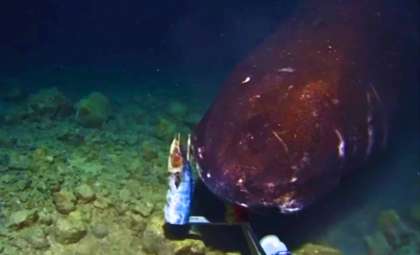
Researchers have uncovered a previously unrecognized deep-sea shark species, Rhinochimaera costaricana, along Costa Rica’s Pacific Ocean coastline. This elusive ghost shark had been collected multiple times but remained unidentified for many years.
Sampling in Costa Rica’s deep Pacific zones has historically been sporadic, leading to gaps in biodiversity data. Scientists had long suspected the existence of unusual species in these habitats, yet traditional identification methods made distinguishing them challenging.
Thanks to advancements in genetic analysis, scientists revisited older ghost shark samples, which led to the formal recognition of this hidden species, as detailed in a recent Zootaxa publication.

Three Specimens Spanning Over Two Decades
The discovery of Rhinochimaera costaricana is grounded in the study of three male specimens gathered between 2000 and 2023, from depths between 390 and 787 meters. According to researchers at Costa Rica’s Fisheries and Aquaculture Institute (INCOPESCA), these sharks had been housed in collections but were not recognized as a distinct species until now.
The analysis was a collaborative effort involving INCOPESCA, the University of Costa Rica, and Brazil’s Federal University of Pará. The lengthy time span between specimen collections complicated the study but ultimately confirmed consistent traits across all individuals, as described in the Zootaxa paper.

Genetic tests were crucial in confirming the uniqueness of this species. The study highlighted a DNA divergence of 3.9% to 4.7% when compared to other known members of the genus Rhinochimaera, supporting its identification as a separate species within this group of cartilaginous fish.
Distinctive Anatomical Features
To validate the new species status, researchers measured 49 different body features from the Costa Rican specimens and compared them with data from over 90 individuals of related species. This extensive comparison was necessary because long-nosed chimaeras often look very similar at first sight.
R. costaricana stands out with a shorter snout compared to close relatives, a taller first dorsal fin featuring a more prominent spine, a wider spacing between its two dorsal fins, and fewer tail tubercles.

Although these differences are subtle, they are reliably present in all specimens examined. Within this group of deep-dwelling cartilaginous fishes, small morphological variations often define separate species.
Deep Waters Still Holding Secrets
The species name Rhinochimaera costaricana acknowledges Costa Rica, the site of all specimen collections, and highlights the expanding involvement of local scientific institutions in exploring deep-sea life.
This finding emphasizes how much remains unknown about ecosystems beyond the continental shelf in the eastern Pacific. Even in relatively well-sampled zones, species can remain undiscovered, often due to being previously misclassified.

As the researchers note, modern genetic sequencing is enabling scientists to revisit museum collections, uncovering distinct species that had previously gone unnoticed.
The discovery of this ghost shark underscores how much of the deep ocean is still unexplored, with each investigation revealing just how incomplete our understanding remains.
- Categories:
- Science


0 comments
Sign in to Comment