

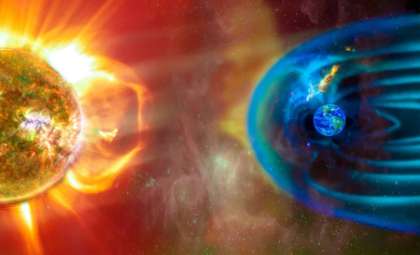
Recent research indicates that Earth’s magnetic shield might be far more resilient to intense solar storms than earlier believed. Scientists discovered that a statistical bias may have caused the magnetosphere to appear capped, whereas in reality, it could withstand even more severe solar disturbances.
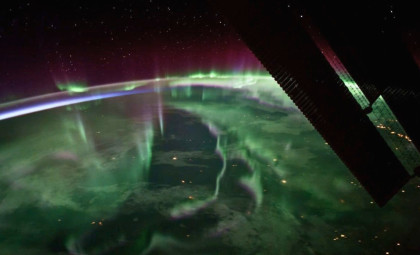
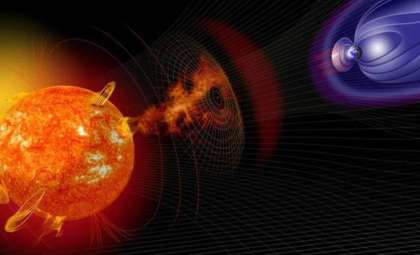
The magnetosphere is crucial in shielding our planet from the Sun’s relentless flow of charged particles. When the solar wind interacts with Earth’s magnetic field, it funnels plasma and electric currents into the upper atmosphere, predominantly near the poles, resulting in the breathtaking phenomenon of auroras.
Decades of study, employing tools like the Polar Cap Index (PCI), have shown a consistent relationship between solar wind intensity and Earth's magnetic activity during moderate solar events. However, during the most intense solar storms, researchers noted a puzzling plateau: the magnetosphere's response seemed to max out, as if it had a hard upper limit.

A fresh analysis featured in Nature challenges this so-called “saturation” concept. Led by Dr. Nithin Sivadas from NASA’s Goddard Space Flight Center, the team suggests this effect may stem from inherent biases in how solar storm measurements are interpreted.
Uncovering Measurement Bias in Solar Wind Observations
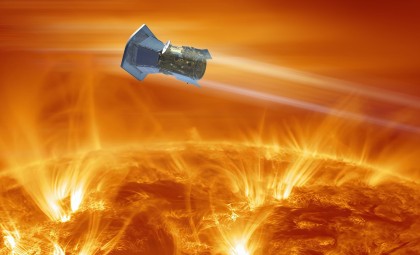
Data regarding solar wind primarily comes from probes like WIND, ACE, and DSCOVR, positioned near the L1 Earth–Sun Lagrange point, approximately 1.5 million kilometers (930,000 miles) closer to the Sun than Earth. This vantage point enables early detection of solar activity. However, the solar wind's properties fluctuate during its journey, and intense storm fronts add layers of uncertainty to these observations.
The study indicates that during extreme solar events, these measurement errors become more pronounced. Thus, the moments when storms are at their peak could coincide with the least accurate solar wind data.

The researchers highlight a statistical concept known as regression to the mean. When comparing unusually high readings from spacecraft far from Earth to relatively lower geomagnetic responses measured near Earth, this effect can create an illusion that the magnetosphere's reaction ceases to intensify. This may account for earlier findings of a flattened response curve in major solar events, suggesting the apparent cap was an artifact of data analysis rather than a true physical limit.
Rethinking Earth’s Response to Solar Storm Extremes
To verify this hypothesis, Dr. Nithin Sivadas and his colleagues applied a technique called regression calibration to correct for measurement biases. Once adjusted, the correlation between solar wind electric fields and Earth’s geomagnetic activity no longer exhibited saturation. Instead, it revealed a continuing linear relationship even at the highest levels of solar activity.
This breakthrough implies that the impact of rare but potent solar storms may have been significantly underestimated. Phenomena once regarded as extreme outliers might be capable of triggering much stronger geomagnetic disturbances than previously modeled.

Importantly, the research does not suggest that Earth’s magnetic field ceases to offer protection. Instead, it clarifies that one aspect of its behavior during the most intense solar storms has been misinterpreted.
Broader Implications for Technology and Scientific Analysis
The authors caution that this statistical issue extends beyond space weather science into domains like seismology, medical research, and machine learning, where uncertainties in measurement can similarly generate deceptive patterns.
Machine learning models are especially vulnerable, as they rely heavily on the accuracy of input data. If false statistical effects infiltrate datasets, models may erroneously treat these as genuine rules, perpetuating inaccuracies.

For the realm of space weather forecasting, this insight may shift how scientists assess risks to critical infrastructure such as satellites and electrical grids. The potential severity of a major solar event on Earth’s systems could be greater than earlier estimates suggested if the earlier perceived magnetosphere saturation was merely a statistical illusion.
- Categories:
- Science






0 comments
Sign in to Comment