

Unearthed in New Mexico, a fossilized bone has led to the identification of a previously unknown species of bird-like carnivorous dinosaur that thrived approximately 73 million years ago. The dinosaur, dubbed Dinevenator robustus, emerged after researchers thoroughly re-examined a specimen whose classification shifted several times over the past 20 years.
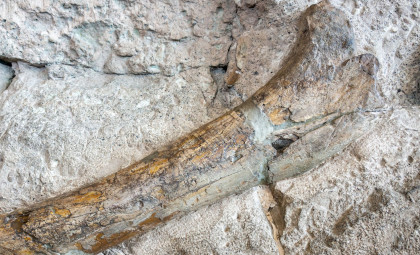
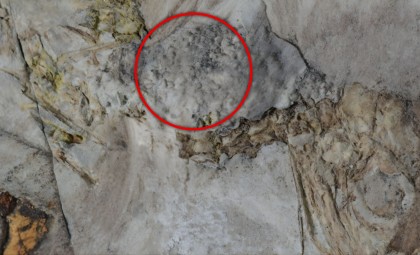
This finding introduces another member to the Troodontidae family, encompassing small to mid-sized theropods closely linked to avian lineages. Estimates suggest Dinevenator robustus grew up to 3 meters long and weighed roughly 140 kilograms, marking it as a large-scale troodontid. The fossil in question is an almost complete left frontal bone, cataloged as SMP VP-1955. It was excavated in 2005 from the De-na-zin Member of the Kirtland Formation within the San Juan Basin in northwestern New Mexico.
Initially, there was uncertainty regarding the fossil’s true classification. The specimen was first published in 2006 as a new species within the Saurornitholestes genus, a dinosaur belonging to the Dromaeosauridae family. However, subsequent research reassigned it to the Troodontidae lineage.

Tracing a Fossil With Multiple Identities
The journey of Dinevenator robustus reflects the scientific process of updating dinosaur taxonomy based on new findings. This single specimen has been variously interpreted as experts compared it with fresh dinosaur discoveries worldwide.
After its initial classification, doubts arose regarding its placement in the Saurornitholestes genus. By 2014, many agreed it was a troodontid, though its status as a distinct species remained debated.

A 2026 analysis proposed that the fossil might belong to Xenovenator, a related troodontid uncovered in Mexico. However, researchers Steven E. Jasinski and Robert M. Sullivan revealed in their recent study that the New Mexico fossil exhibited enough unique features to justify a new genus.
They officially named the dinosaur Dinevenator robustus, recognizing it as a singular species within its genus. Their comparative study, including the fossil, explored its evolutionary connections with other troodontids.
A Distinctive Troodontid Boasting a Sturdy Skull
The research placed Dinevenator among a group of large-bodied troodontids characterized by robust cranial structures. This cluster includes Xenovenator espinosai from Mexico and Albertavenator curriei from Canada. Published in the journal Fossil Studies on August 3, their work revises earlier ideas by positioning Dinevenator as the oldest known representative of these thick-skulled troodontids, rather than being closely linked to Xenovenator.

This discovery enhances understanding of troodontid diversity during the Late Cretaceous era. While many troodontid species were relatively small, Dinevenator robustus demonstrates that some members attained significantly larger proportions.
“This really helps us get a clearer picture of the diversity in this family of dinosaurs during the Late Cretaceous in North America, and it adds to our knowledge of dinosaurs that once roamed New Mexico,” noted to Dr. Steven Jasinski, paleontology curator at the New Mexico Museum of Natural History & Science and paleontologist at Harrisburg University.
Greater Dinosaur Diversity Surfaces in San Juan Basin
The San Juan Basin has yielded numerous species believed to be endemic to its prehistoric environments. This latest find also illustrates the connections among dinosaur populations across North America during the late Cretaceous, as various groups share evolutionary links with species from distant regions, revealing a rich history of migration and adaptation.
“The recognition of a distinct, large, robust, thick-skulled troodontid adds to the unique nature of the ancient ecosystems of the San Juan Basin,” the authors wrote in their study.

Dr. Anthony Fiorillo, executive director at the New Mexico Museum of Natural History & Science, emphasized how ongoing research continues to reshape perspectives on dinosaur evolution by reanalyzing prior findings in light of new evidence.
- Categories:
- Science


0 comments
Sign in to Comment