

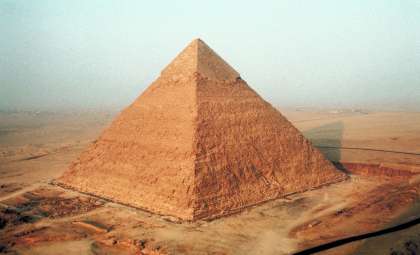
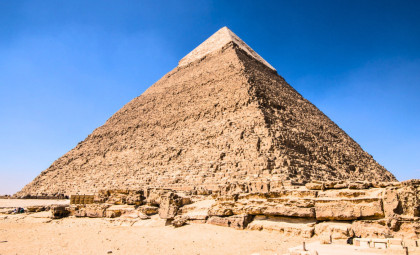
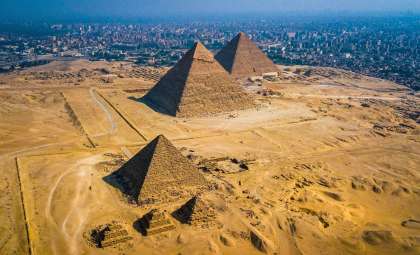
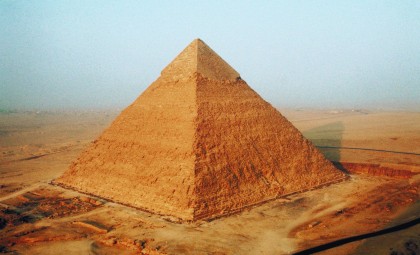
The limestone base of the Great Pyramid of Giza has remained obscured through much of its existence. Originally, the pyramid’s smooth exterior was created by polished casing stones. Over centuries, many of these outer stones were removed and repurposed for construction in Cairo, a process accelerated by a 1303 earthquake.
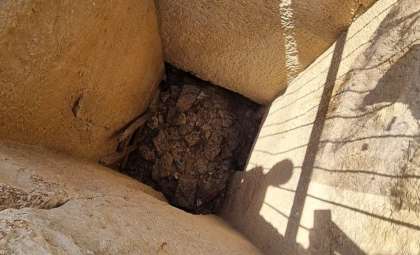
However, some casing stones survived because they had been covered by sand before they could be taken away.
Combining historical records with physical observations, University of Bologna engineer Alberto Donini set out to estimate the age of various pyramid surfaces. He evaluated the amount of erosion on stones exposed since their uncovering in 1303 and compared that with how much erosion might accumulate if surfaces had been exposed since the pyramid’s original construction, as discussed in this Great Pyramid article.

Key Insights from the Erosion Analysis
In January 2026, Donini published his findings on ResearchGate. He measured surface degradation at twelve sites near the pyramid’s foundation using a technique called the Relative Erosion Method (REM). This method contrasts erosion on casing-protected stones with those exposed to the atmosphere since construction.
The results challenged conventional timelines, suggesting exposure periods from 5,700 to upwards of 54,000 years, with an average estimated construction date as early as 22,941 BC.

Statistical analysis placed the construction window between 8,954 BC and 36,878 BC, suggesting a 68.2 percent probability. Donini proposed that the pyramid we associate with pharaoh Khufu might actually be a renovation of a much older structure, rather than its original construction.
Donini stresses that REM offers estimations, not precise dates. It provides a probabilistic range, offering scale rather than exact chronology. The research has yet to undergo formal peer review.
Challenges and Assumptions of the REM Approach
A critical assumption in the REM is the steady, consistent weathering rate of limestone. But Egypt’s environment has experienced major shifts, especially during the African Humid Period, when increased rainfall likely accelerated stone erosion.
More moisture would have influenced the breakdown of exposed limestone surfaces.

Additional factors complicate the erosion record, including varying wind, sand burial cycles, biological influences, and heavy tourism in recent centuries. REM also presumes the compared surfaces share identical composition and condition, a point not yet independently verified.
Conventional Dating Methods for the Pyramid
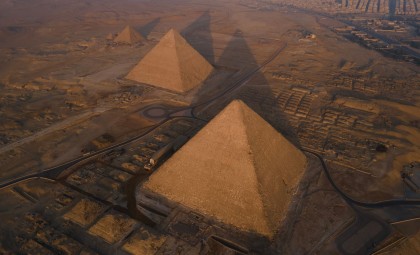
Established Egyptology does not rely solely on erosion estimates to establish the pyramid’s timeline. Archaeologist Mark Lehner told PBS that pyramid dating primarily depends on its context within Egypt’s architectural evolution over 3,000 years.
Pottery found at the Giza plateau corresponds closely with styles from the reigns of Khufu, Khafre, and Menkaure.
Radiocarbon dating aligns with this timeframe. Thomas Higham from the University of Oxford has described using seeds from Tutankhamun’s well-dated tomb and plant remains from beneath the Saqqara step pyramid—linked to King Djoser’s reign—to calibrate dating methods for Egyptian monuments. Contemporary inscriptions from tombs and quarries attribute the Great Pyramid's construction to Khufu, consistent with records from Egypt’s Fourth Dynasty.
Unlike erosion-based techniques, these methods are less sensitive to environmental fluctuations, as shifts in ancient rainfall wouldn’t alter radiocarbon results based on charcoal within the pyramid’s building materials.
- Categories:
- Science


0 comments
Sign in to Comment