

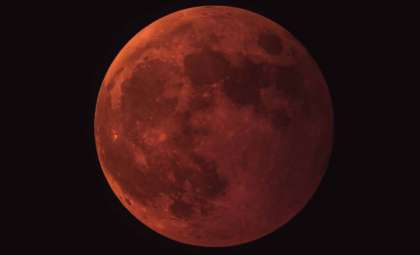
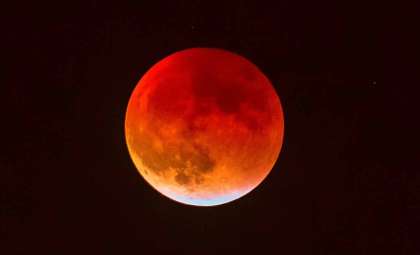
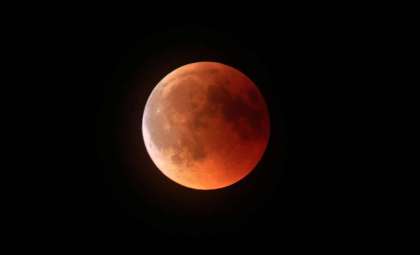
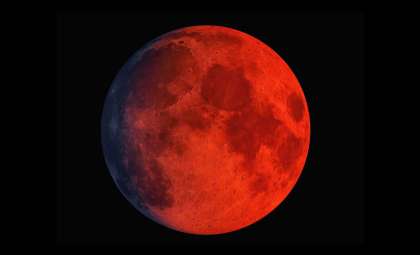
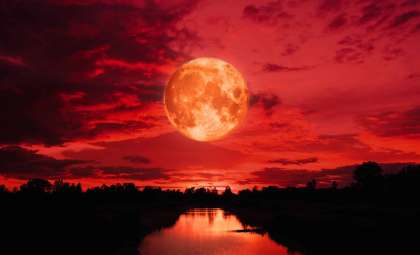
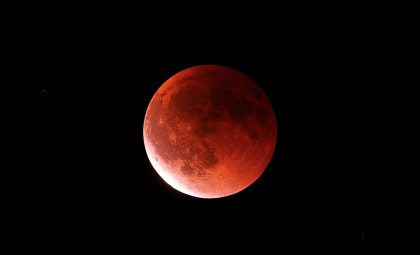
Later this week, viewers across the Americas, Africa, and Europe will witness a near-total lunar eclipse as Earth's shadow envelops almost the entire lunar surface. At its pinnacle, the eclipse will obscure 96.3 percent of the Moon, casting the Moon into a striking reddish hue often called a ‘blood moon’.
This event is scheduled for Thursday night and is visible over a broad swath of the globe. Unlike solar eclipses, this lunar event is safe to observe directly without protective gear, allowing enthusiasts to enjoy the gradual shading of the Moon with the naked eye.
This will mark the second and final lunar eclipse of 2026, following a total lunar eclipse in March. It offers a remarkable chance to witness the dynamic interplay between the Sun, Earth, and Moon as our planet’s shadow slides across the Moon.

NASA has confirmed that the event will be partially or fully observable throughout nearly every part of the United States, except select regions in Alaska. The NASA Scientific Visualization Studio has produced a detailed visibility map illustrating the eclipse phases across different locations.
The Moon's Journey Through Earth's Shadow Unfolds Overnight
The eclipse’s initial phase will commence around 9:23 P.M. EDT on Thursday. The most dramatic portion begins near 10:34 P.M. EDT, when the Moon starts to enter the umbra, the darkest segment of Earth's shadow. The event will reach its zenith at about 12:13 A.M. EDT on August 28, when Earth’s shadow blankets nearly the entire lunar surface, creating the near-total eclipse visible in affected regions.
A lunar eclipse occurs when Earth aligns directly between the Sun and Moon, blocking direct sunlight from striking the Moon and causing the Moon to move through different parts of Earth's shadow.
Visibility varies depending on location since the eclipse spans several hours as the Moon transitions through Earth's shadow. Depending on where you are, you may observe the eclipse's full progression or only its start, peak, or conclusion, contingent on whether the Moon is above the horizon at those times. Atmospheric conditions and local light pollution will also influence the clarity of the view.

What Causes the Moon’s Distinct Red Color During a Lunar Eclipse?
The Moon’s reddish tint during a blood moon results from sunlight passing through Earth’s atmosphere during the eclipse. Although direct sunlight is blocked, some light bends around Earth and reaches the Moon.
Shorter blue wavelengths scatter away more readily, while longer red wavelengths pass through Earth's atmosphere and illuminate the Moon’s surface. This filtered light imparts the Moon with its characteristic reddish glow during the eclipse’s darkest phase.
Scientific American describes this phenomenon as the cause of the “blood moon” nickname typically given to lunar eclipses. This term refers exclusively to the temporary color shift caused by the combined effects of sunlight, Earth’s atmosphere, and the lunar surface.
This event is a well-understood and predictable outcome of celestial alignment, with Earth’s shadow progressively covering the Moon as the three bodies align.
Tips for Observing the Upcoming Eclipse
To catch the eclipse, find a location with minimal light pollution and a clear view of the sky by the time the Moon enters Earth’s umbra at 10:34 P.M. EDT. Giving your eyes roughly 30 minutes to adapt to the dark can enhance the viewing experience.
No special tools are necessary, although binoculars or telescopes can deepen the experience by revealing more details as the shadow advances across the lunar surface. Watching this eclipse is perfectly safe during all stages.
According to the NASA eclipse calendar, 2027 will feature three penumbral lunar eclipses, where the Moon passes through Earth’s lighter shadow region, causing subtler effects than a total or nearly total eclipse.
The next total lunar eclipse won’t be until New Year’s Eve 2028, making this week’s near-total lunar eclipse one of the last opportunities in the near term to witness such a dramatic lunar transformation.
- Categories:
- News

0 comments
Sign in to Comment