

In an unassuming region of Pingjiang County, China, geologists have struck an extraordinary mineral jackpot. After penetrating previously unexplored depths, researchers uncovered rock samples exhibiting gold concentrations that are exceptionally rare in global mining operations.
Extended drilling efforts led by teams from the Geological Bureau of Hunan Province initially returned only rock cores. Once tested, some of these samples revealed remarkable gold content, with one containing an incredible 138 grams per tonne.
By comparison, many gold mines profitably extract gold at concentrations between 1 and 3 grams per tonne, while only the most significant deposits exceed 10 grams per tonne.


On November 24, 2024, authorities from the Geological Bureau of Hunan reported the detection of more than 1,000 metric tons of gold below the Wangu gold field. Their detailed surveys mapped 40 separate gold-bearing veins extending down to 3,000 meters. Proven reserves within these veins hit 300 metric tons. Valued at current market rates, this deposit could be worth approximately $83 billion, marking it the largest high-grade gold deposit ever recorded.
Atypical Location for a Giant Deposit
Pingjiang County is not a location that would normally be noted by mining experts. The largest "supergiant" gold deposits, often termed “tier one,” usually arise within well-studied geological hotspots like:
• South Africa’s Witwatersrand basin,
• Nevada’s Carlin Trend,
• Western Australia’s Pilbara region.
Central Hunan Province does not belong to any of these famed zones.
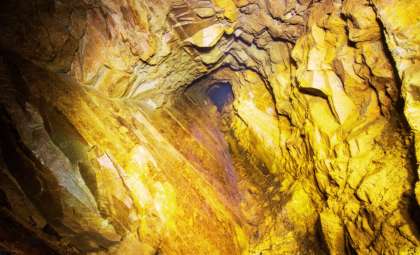
Ore specialist Chen Rulin from the bureau explained that drill core samples taken around 2,000 meters deep visibly contain gold rather than just microscopic traces detectable only in labs. To date, crews have drilled more than 65 kilometers of exploratory holes encircling the deposit and continue finding further concentrations of minerals.
Advanced techniques such as 3D geological modeling and other modern mineral prospecting methods aided these discoveries.

Following a January 2024 merger, the state-run Hunan Mineral Resources Group assumed management of the site, directing strategic mineral development within the province. Comprehensive exploration and mapping are expected to continue until 2026.
Nevertheless, the announced findings await independent validation. So far, no international mining firms have completed official assays on this deposit. Environmental impact studies and third-party geological audits also appear absent. Past experience shows reported discoveries often differ substantially from verified results.
Quartz Veins and Gold Concentrations: New Insights
A paper released by Monash University in Melbourne in September 2024, predating the Hunan provincial announcement, offered a fresh explanation for why gold amasses densely within quartz veins.
Traditional models of orogenic gold deposits describe gold forming gradually as dilute hydrothermal fluids precipitate minerals under varying temperature and pressure. However, this model struggles to explain the formation of visibly rich gold nuggets and extensive interconnected gold networks observed within quartz veins.
The Monash study highlights that quartz possesses piezoelectric qualities, meaning mechanical stress induces electrical charges on its surfaces. As the sole common mineral with this trait, quartz deep underground in tectonically active zones undergoes repetitive compression and release cycles, causing multiple electrical discharges.

Laboratory experiments and modeling by researchers showed these electric pulses generate enough voltage to attract dissolved gold electrophoretically from mineral-rich fluids, depositing it onto existing gold grains in quartz veins. Since gold conducts electricity effectively, initial grains act as accumulation points, growing larger with each cycle.
Although this research did not focus specifically on the Wangu site, the deposit's geological setting aligns perfectly with conditions described in the study: quartz veining at substantial depth within an active tectonic environment. This mechanism might clarify the unusually high gold grades discovered there.
Implications for China’s Gold Industry
Should this vast deposit be authenticated and developed, China could significantly boost its domestic gold output, strengthening its autonomy from international suppliers. This newfound resource may also enhance China’s influence over global gold markets, particularly amid rising prices and central bank reserve expansions.
To provide context, South Africa's South Deep Mine, a top gold-producing operation run by Gold Fields, holds about 900 metric tons of gold. If Wangu’s estimated quantity and superior grade prove accurate, it would surpass South Deep by more than 100 metric tons.

Mining economics favor deposits with greater ore grades because extracting metals from higher concentrations reduces the amount of rock and energy needed per ounce of gold, cutting costs and waste generation. Therefore, even if the Wangu deposit yields only a fraction of the reported grades, it would present a notable cost advantage in gold extraction.
Gold’s Expanding Technological Role
Gold’s value extends far beyond traditional bullion, jewelry, and central bank reserves.
In April 2024, researchers at Linköping University in Sweden developed "goldene," a one-atom-thick sheet of gold analogous in structure to graphene, demonstrating novel optical and catalytic features. Such advances point toward gold’s rising importance in photonic sensors, advanced catalysis, and quantum technologies.
While not directly related to the Wangu deposit, this breakthrough highlights increasing industrial demand for ultra-pure gold critical in microelectronics, aerospace manufacturing, and renewable energy systems requiring conductivity and resilience at the nanoscale.
Access to abundant, high-purity local gold sources could provide substantial value for businesses involved in these high-tech fields, well beyond commodity price considerations.
Whether Wangu ultimately becomes a strategic asset hinges on forthcoming independent verifications, environmental assessments, and infrastructure development in this remote region.
Additional drilling is planned to bring up more core samples—potentially revealing even greater gold quantities.
- Categories:
- News



0 comments
Sign in to Comment