

After nearly two thousand years submerged, a remarkably well-preserved Roman anchor has emerged from the seabed near Suffolk, fascinating maritime archaeologists. Encased in oxygen-deprived sand for almost 2,000 years, this iron and wood artifact is among only three pre-Viking anchors ever recovered outside the Mediterranean in northern European waters.
The discovery originated not from intentional archaeological excavation but routine seabed mapping linked to a current infrastructure project. Typically, wood and iron from the Roman era deteriorate rapidly underwater due to environmental factors and marine organisms, making this anchor, measuring over two meters long and weighing approximately 100 kilograms, an extraordinary direct link to ancient maritime operations. Scholars have largely relied on literary accounts and fragments rather than intact nautical equipment to understand this period.
This anchor was only one of several remarkable objects uncovered during the survey, offering a rare glimpse into millennia of activity beneath these waters.

Offshore Wind Survey Reveals Unexpected Archaeological Treasure
The story of the anchor begins with engineers rather than archaeologists. The item was first detected in 2018 during seafloor mapping efforts for ScottishPower Renewables’ East Anglia ONE offshore wind farm, located about 40 kilometers off the English coastline. According to ScottishPower Renewables, a protective exclusion zone was established around the find, preserving it undisturbed while construction proceeded elsewhere. The anchor was only retrieved in 2021, beginning a careful conservation process.
Stuart Churchley, Marine Planning Archaeological Officer at Historic England, emphasized that the extensive scale of the wind farm survey was crucial to the anchor’s discovery, noting that large portions of the southern North Sea had never been mapped at such detail previously.

Preserved By Natural Burial for Nearly Two Thousand Years
In typical marine environments, objects like this rarely endure for centuries. Saltwater corrodes metals swiftly, and organisms rapidly consume exposed wood. The anchor’s preservation owes itself to being buried in sediment. As published in the journal Heritage, a thick sediment layer created an anoxic zone surrounding the object, depriving it of oxygen.
This oxygen-starved environment dramatically reduced the decay process. The chemical and biological reactions that normally degrade submerged wood and metal slowed drastically, leaving the iron relatively intact and much of the wooden portion sufficiently preserved for detailed study.

Conservation efforts are currently underway by Maritime Archaeology Ltd alongside experts from Mary Rose Archaeological Services, with material scientists from Historic England assisting in the artifact’s analysis, treatment, and dating.
Concrete Evidence of Roman Maritime Activity
While historians have long understood that Roman Britain heavily relied on maritime transport—and that East Anglia’s waters bustled with ship traffic—most knowledge has come from documents and scattered artifacts rather than whole ships or their gear. According to Brandon Mason, a maritime archaeologist at Maritime Archaeology, who spoke with Arkeonews,
“Everything points to this being a Roman anchor of almost 2,000 years old, which is an incredibly rare piece of history. If this date is confirmed, it would be hard to overstate its significance – we only know about three pre-Viking anchors from northern European waters outside the Mediterranean region and only two actually survived.”
During the Roman occupation, the coastline was patrolled and supplied to support advancing legions; later, its role shifted to defending the east and south coasts against Saxon and Frankish incursions. Meanwhile, merchant vessels transported metals, pottery, and grain across the Channel, as also reported by BBC Newsround.

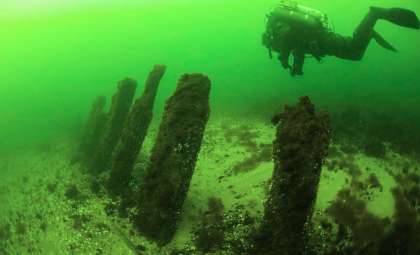
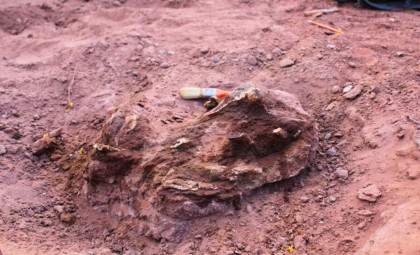
Beyond the anchor, the same survey uncovered a World War I German submarine lost for decades, along with a Neolithic wooden walkway and platform with timbers preserved for more than 4,000 years under similar anoxic conditions. Even older remains include a 6,000-year-old aurochs skull, revealing that this seabed holds an extended, rich archive of natural and human history far exceeding expectations tied to the wind farm construction.
- Categories:
- News




0 comments
Sign in to Comment