

During his work involving anesthesia in mice, neuroscientist Li Zhang observed an unusual behavior he couldn’t initially explain. When an anesthetized mouse was placed back into its cage, its awake cage mate would often investigate the unconscious companion’s face through sniffing and gentle biting, resembling an attempt to stimulate recovery—akin to administering basic first aid.
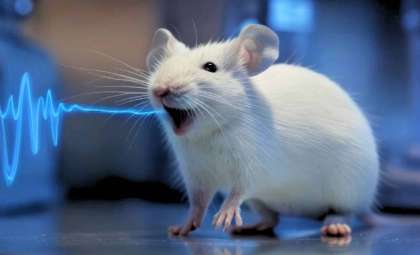
This curious behavior has now been formally investigated. Zhang and his team at the University of Southern California detailed their research in the journal Science, documenting a consistent pattern of actions performed by mice towards their anesthetized cage mates that seem to help open airways and accelerate awakening.
In the controlled tests, a mouse was placed with two cage mates: one anesthetized and unresponsive, the other awake and moving. The test subject showed a strong preference for interacting with the unconscious individual.

This interaction developed into a series of behaviors, starting with sniffing and grooming and progressing to biting around the mouth area. Remarkably, in over half the instances, the awake mouse pulled the tongue of the anesthetized partner.
The Effectiveness of Tongue Pulling
Pulling the tongue proved to be a meaningful action. The investigators discovered that this movement helped to keep the airway open, and when small objects were inserted into the mouths of unconscious mice, the tongue-pulling maneuver removed the obstructions in nearly 80 percent of cases.
“This was the most unexpected aspect of the research,” said Huizhong Whit Tao, a USC neuroscientist and co-author. “The benefits of this behavior were clear.”

According to Whit Tao, this conduct seems to be innate. These mice had no prior exposure to unconscious peers and no chance to learn these sequences from others. “It appears that mice can intentionally perform this set of behaviors,” she explained. “This is the first evidence of such emergency-like reactions in animals.”
The mice also discriminated whom they helped, acting more frequently toward known cage mates than strangers, and ceasing the behavior once the anesthetized mouse regained consciousness. Animals that received such care woke up sooner than those left alone. The actions were sometimes directed at deceased mice temporarily, but rarely toward awake or sleeping animals.
Are These Actions Driven by Compassion or Curiosity?
On a neurological level, the study identified the role of oxytocin pathways as essential in triggering these recuperative behaviors, linking them to social-helping circuits found in many species.
James Burkett, a neuroscientist at the University of Toledo, who was not part of the research, regarded the neurological findings as the study's highlight. “The study convincingly shows engagement of social brain networks,” he stated.
Burkett also noted the importance of the mice responding preferentially to familiar companions. “This behavior is not a reflex; it considers the situation and individual identity,” he explained. Still, he cautioned against assuming intentionality: “From observations alone, we can't conclude these mice intend to help; we only know they behave in ways that benefit a peer in need.”
Another possible explanation is curiosity. A non-responsive mouse might naturally be more interesting to explore.
To examine this, the team repeated the experiment over five days. If novelty motivated the behavior, responses would decrease over time; however, they observed no decline—in fact, a slight increase occurred.
Ongoing Debate and Perspectives
Peggy Mason, a neuroscientist at the University of Chicago unaffiliated with the study, differentiated between accidental benefit and deliberate help. “If I drop $20 unknowingly and someone else picks it up, they've been helped, but I haven't helped them,” she remarked. “The behavior is clear, but the interpretation is debatable.”
Mason also pointed out that habituation to novelty might extend beyond five days, so curiosity can't be fully ruled out.
Cristina Márquez of the Center for Neuroscience and Cell Biology in Portugal noted she hadn’t observed such behaviors in her lab since mice were returned to their companions fully awake. Nonetheless, the consistency across studies impressed her.
“Three separate labs reporting similar behaviors suggest this is a solid finding,” she told New Scientist, while advising caution about inferring human-like intentions in animals.
With three independent research efforts converging on this behavior and its underlying neural mechanism, which involves widespread oxytocin circuits, Zhang and Whit Tao propose that such revival-like actions may be more common in animals than previously thought.
Whether these behaviors occur outside laboratory settings remains a question for future research.
- Categories:
- Science








0 comments
Sign in to Comment