

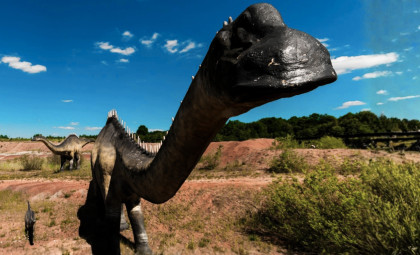
While excavating for a road-rail terminal in Davinópolis, within Maranhão state, Brazil, a construction crew uncovered fossils that date back around 120 million years. Researchers have since named this enormous creature Dasosaurus tocantinensis, a sauropod stretching approximately 20 meters in length, whose closest known counterpart intriguingly originated from what is now Spain.
Detailing their findings in the Journal of Systematic Paleontology, scientists emphasize that this discovery is more than just another dinosaur skeleton. It challenges prior assumptions about the prehistoric fauna of Maranhão. The remarkable size and preservation quality of the fossil make this a significant milestone in the region’s paleontological record.
A Monumental Discovery for Maranhão’s Dinosaur Record
Until this find, dinosaur remains from Maranhão tended to be relatively modest in scale. According to Elver Luiz Mayer, a professor at the Federal University of the São Francisco Valley involved in the research:

“It’s the largest known dinosaur for Maranhão, which has other species, but not sauropods like this one; rather, it has smaller ones, such as the diplodocid Amazonsaurus maranhensis, which was about 10 meters long.”
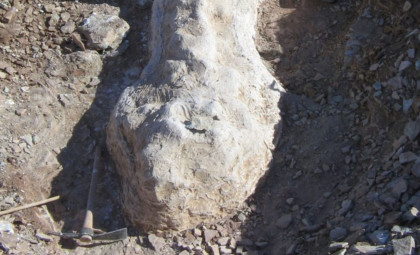
Mayer’s background typically lies in the study of Quaternary mammals. He became linked to the project in 2021 when archaeologists overseeing the Davinópolis location under environmental rules stumbled upon fossilized bones they initially thought belonged to more modern megafauna. The fossil’s deep burial prompted Mayer to investigate further, stating:
“Given its depth of about eight meters, I realized that it was much older. The age of the geological formation was already known from previous research and indicated that it was material from the transition from the Lower to the Upper Cretaceous, about 120 million years ago.”

Building upon this, Mayer gathered a team of specialists. The fossil, now housed at the State Center for Natural History and Archaeology Research in São Luís, represents a rare and near-complete specimen. Max Langer, a University of São Paulo professor and co-author of the study, remarked:
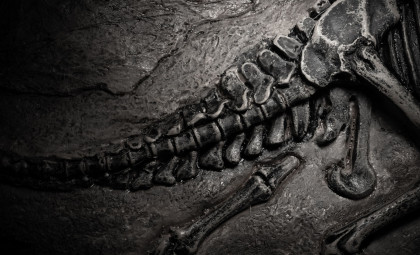
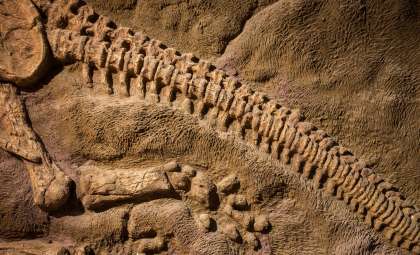
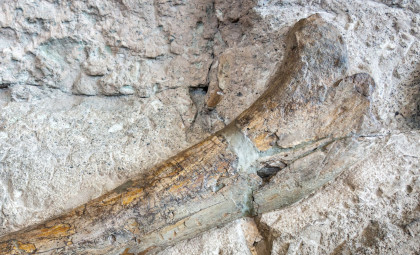
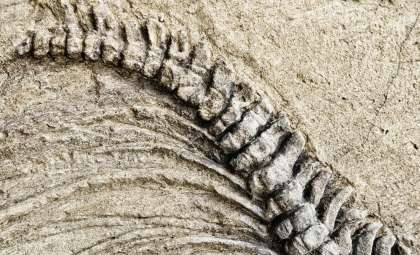
“Because it includes tail vertebrae, a 1.5-meter femur, ribs, foot bones, and arm and leg bones, this is considered a relatively complete specimen. We believe there are more fossils from this same specimen yet to be excavated at the site.”
A Surprising Link to Ancient Europe
One of the study’s most fascinating revelations concerns the dinosaur’s lineage. Dasosaurus tocantinensis is most closely related to a species that inhabited what is today Spain, then a chain of islands. Scientists hypothesize that ancestors of the Maranhão species migrated into South America through North Africa around 140 to 120 million years ago, when these continents were joined as part of the supercontinent Gondwana.
The dinosaur’s name honors its native region: “Daso” means “forest,” referencing the thick woods early Portuguese explorers called “maranhão.” “Tocantinensis” alludes to the Tocantins River near the excavation site.

Insights Into Dinosaur Growth Patterns
Researchers Tito Aureliano and Aline Ghilardi from the Federal University of Rio Grande do Norte studied the bone microstructure. Their analysis revealed growth patterns combining traits from older sauropod groups and those typical of titanosaurs, indicating that some growth mechanisms developed earlier than once believed — shedding light on how these dinosaurs could achieve such gigantic proportions.
Langer highlights the vulnerability of Brazilian fossil sites during construction efforts:
“If we map Brazil’s fossil sites, we’ll see highways and quarries,” he says, stressing that specialized monitoring remains essential but inconsistent. Mayer agrees, calling for closer cooperation between developers and researchers “to reconcile construction projects with federal legislation on fossils.”

Efforts to resume excavations at the Davinópolis site are underway, with much of the giant Dasosaurus still entombed underground.
- Categories:
- Science

0 comments
Sign in to Comment