

Rocket Lab has revealed GHOST, an innovative mobile spaceport system crafted to facilitate launch operations anywhere worldwide using transportable equipment contained within standard shipping containers.
This novel solution centers on the company’s Electron orbital rocket and the HASTE hypersonic test vehicle, enabling launches to be conducted nearer to mission sites rather than relying solely on fixed launch facilities. This development marks a move towards agile spaceflight operations, particularly valuable for missions demanding quick deployment, enhanced national defense, or autonomous orbital access.
Flexible Launch Operations Enabled by a Modular Mobile Spaceport
GHOST aims to transform how launch facilities are deployed by packaging all essential infrastructure into a transport-ready system. Instead of building permanent complexes for each location, Rocket Lab offers a modular approach that supports varied launch campaigns worldwide.

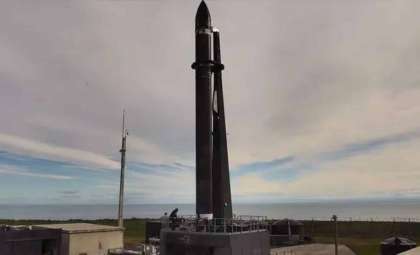
Based on information from Rocket Lab, GHOST was developed in response to customer demand for more mobile launch setups, particularly from users of the HASTE vehicle. Rocket Lab already manages facilities in New Zealand and Virginia, and is preparing additional launch possibilities at the Pacific Spaceport Complex in Alaska.
According to representatives from Rocket Lab, “Encased fully in standard shipping containers, GHOST deploys complete rockets, launch infrastructures, ground support, and range control equipment wherever needed worldwide.”
This portable infrastructure is suited for missions with strict launch windows, including defense testing and government projects requiring independent space access. By minimizing dependence on fixed infrastructure, GHOST opens the door to launch capabilities in previously unsupported areas.
Rocket Lab’s solution aligns with a wider industry move towards adaptable launch infrastructure. As satellite launches, technology demos, and security operations increase, rapid-response launch options are becoming essential for agencies and companies.
Electron and HASTE Form the Basis of This Deployable Launch System
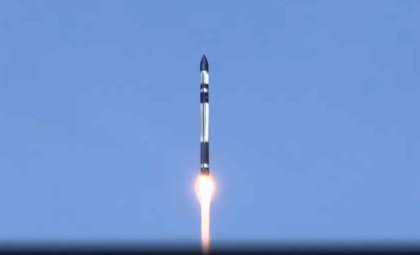
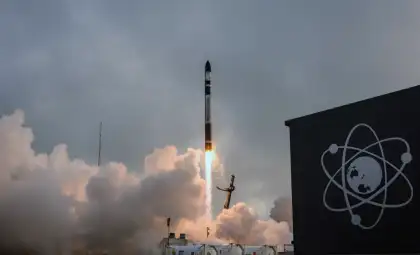
GHOST leverages two of Rocket Lab’s existing vehicles with distinct purposes. The Electron rocket is the company’s primary vehicle for launching small satellites into orbit, supporting commercial and governmental payloads.
Measuring about 59 feet (18 meters) tall, Electron’s debut flight was in 2017. Since then, it has completed numerous missions, cementing Rocket Lab’s leadership in dedicated small-satellite orbital launches, particularly for customers requiring direct orbit insertion.
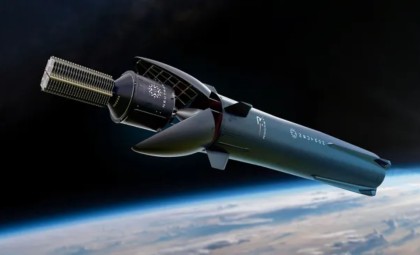
The second vehicle integrated into the GHOST platform is HASTE (Hypersonic Accelerator Suborbital Test Electron), a suborbital vehicle derived from Electron designed for clients testing hypersonic flight technologies.
During Rocket Lab’s Q2 2026 earnings call, CEO Peter Beck highlighted the company’s plans to extend the deployment possibilities of these rockets with movable launch infrastructure.
“Electron and HASTE revolutionized small orbital launch and hypersonic testing. Now we’re making it easier to deploy them wherever they’re needed most, whether that’s for missile defense testing or sovereign orbital launch capability,” Beck said.
Combining Electron, HASTE, and GHOST yields a versatile system supporting various mission types without requiring each user to build dedicated launch facilities. This approach enhances operational flexibility for missions in volatile or fast-evolving scenarios.
Expanding Launch Reach with a Global Network Strategy
Currently, Rocket Lab operates out of established sites, including those in New Zealand and Wallops Island, Virginia. Additional infrastructure is being readied to accommodate future operations, especially for the larger Neutron rocket.
GHOST takes this further by enabling Rocket Lab to create an interconnected global launch network that moves beyond traditional spaceports. This allows launches to be conducted closer to customers, operational zones, or strategic points where permanent launch sites are impractical.
“We’ve mastered the art of building launch sites,” Beck remarked. “Now we’re making them deployable worldwide.”
The system will be employed for two future launch pads at the Pacific Spaceport Complex in Alaska, demonstrating its ability to complement both current and new launch facilities.
This advancement coincides with Rocket Lab’s ongoing preparation to introduce Neutron, a larger, partially reusable rocket aimed at entering a new segment of the launch market. Although Neutron’s development timeline has extended, Beck noted significant progress has been made in testing and hardware readiness.
- Categories:
- News




0 comments
Sign in to Comment