

A collection of mundane bone fragments found in a Romanian cave has unveiled an unexpected discovery: a set of Neanderthal tools. Analyzing more than 10,000 pieces of animal bones, researchers identified 83 specimens exhibiting signs of human modification.
For years, the outdated portrayal of Neanderthals as primitive beings has been challenged by findings across Europe and Asia, showing advanced behaviors and technologies previously thought exclusive to modern humans. Yet at the Vârghiș Gorges site, known as Abri 122/1200 in central Romania, despite extensive excavations and numerous stone artifacts, bone tools had remained elusive.
This absence intrigued Monica Mărgărit from Valahia University of Târgoviște and her team, who aimed to determine if this lack was an authentic aspect of Neanderthal activity or a result of how archaeologists examined the evidence. Their findings, featured in the Journal of Quaternary Science, came from a fresh approach to studying the ancient bones.

The Renowned Cave’s Stonework Legacy
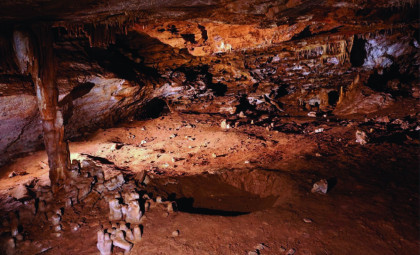
Situated within the limestone formations of the Vârghiș Gorges, Abri 122/1200 is a site of archaeological importance. Dating shows human presence spanning multiple Paleolithic periods, starting around 230,000 years ago. The site has produced over 1,000 lithic artifacts crafted mainly from local quartzite, basalt, and lydite or argillite. Accompanying these are fragmented remains of large herbivores.
Evidence of deliberate stone shaping is prominent, including the use of Levallois technique, which involves preparing a stone core so that a striking blow detaches a flake of a specific form, showcasing advanced planning. Despite this, bone tools found at other Neanderthal locations had never been recovered here.

Uncovering Human Marks on Ancient Bones
Bones often display damage caused by carnivore activity or environmental factors such as plant growth, water flow, sediment pressure, and foot traffic, which can resemble deliberate shaping. To distinguish authentic tool modifications from natural alterations, the team analyzed bone fragments under a microscope, focusing on specific patterns like scratches, polish, rounded edges, and impact damage. They also produced experimental bone tools to compare wear patterns with those on the archaeological samples.
This rigorous examination revealed 83 fragments — less than 1% of the total collection — bearing signs of purposeful human use. Some acted as retouchers, pressed or struck against stone edges to hone tools. Others exhibited smoothing consistent with processing softer materials such as hides or plants. A few wedge-shaped pieces were found alongside two potential hammer-like tools.

Minimal Alteration Tools Reflect Immediate Use
The research notes that most bones show limited technological modification, implying they were selected and employed largely in their natural form rather than intentionally shaped. These were practical items chosen for specific tasks without extensive crafting into standardized instruments.
This utilitarian approach likely explains why such tools went unnoticed for years. Stefan Vasile, a lecturer from the University of Bucharest, explained to Phys.org:
“I don’t mean to be overly critical of the methods used in the past by archaeologists,” adding that: “but many times, only the larger or more complete bones were recovered.”

This discovery adds the Carpathian region to the broader distribution of Neanderthal bone tool use, which includes sites in France, Spain, and even Siberia’s Altai Mountains. It highlights that Neanderthal craftsmanship in this part of Europe was simply overlooked rather than absent.
- Categories:
- Science











0 comments
Sign in to Comment