

Researchers are gearing up for an unprecedented mission to study asteroid Apophis as it approaches Earth closely in 2029. This event offers a unique chance to observe the asteroid’s behavior during a near encounter and advance our understanding of asteroid dynamics and planetary defense.
An Uncommon Chance To Study A Near-Earth Asteroid In Detail
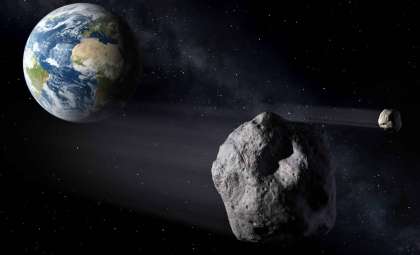
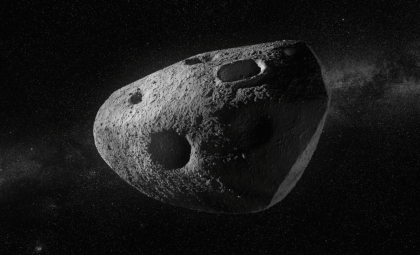
Asteroid 99942 Apophis is predicted to fly within roughly 31,000 kilometers from Earth’s surface on April 13, 2029. This proximity is closer than many of our geostationary satellites, enabling scientists to investigate this space rock with extraordinary resolution. Earlier estimations had raised concerns about potential impacts, but refined tracking confirms that Apophis poses no collision risk during this approach.
Scientists are leveraging this event as a natural experiment rather than attempting to divert the asteroid’s orbit. Their missions aim to study the asteroid’s structure, motion, and gravitational interaction with Earth in detail. Insights from this encounter are expected to enrich knowledge on asteroid formation, interior features, and how these bodies evolve under gravitational forces.

At a recent workshop dedicated to the exploration opportunities presented by Apophis, experts discussed a fleet of spacecraft working together to observe the asteroid before, throughout, and following its close approach. These coordinated efforts aim to document changes in the asteroid induced by Earth's gravitational influence.
Launching A New Chapter In Asteroid Exploration
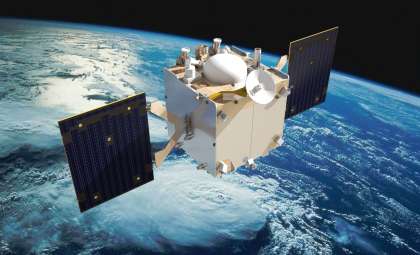
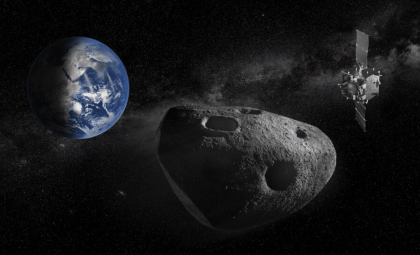
The forthcoming close pass has inspired plans for several spacecraft to simultaneously examine Apophis. The vision includes a network of missions approaching the asteroid from multiple directions, each equipped to collect diverse types of data. Instruments will analyze surface characteristics, rotational dynamics, potential shape alterations, and the asteroid's response to Earth's gravity.
Data collected during the flyby will enhance future planetary defense strategies. Although Apophis itself is not a threat, understanding its reactions will guide how scientists interpret the behaviors of comparable asteroids during close encounters. This research is poised to refine asteroid tracking models and hazard predictions.

Scientific American has highlighted how this initiative marks a shift toward coordinated, multi-spacecraft campaigns to monitor Apophis. This method resembles an orchestrated observational network rather than relying on a single mission, with complementary instrumentation providing comprehensive coverage of the asteroid’s flyby.
At a workshop held in June in Padua, Italy, asteroid expert Richard Binzel emphasized the exceptional potential of this mission. "It's remarkable," Binzel noted. "What seemed like a quiet period has evolved into discussions about 'air traffic control' for Apophis."
Earth Provides A Unique Natural Laboratory For Space Science
The 2029 close encounter will allow scientists to witness firsthand how Earth's gravity influences an asteroid, offering rare data that can’t be easily replicated in laboratories. Slight gravitational perturbations on Apophis will be monitored to reveal its internal properties and structure.
A key focus is observing how the asteroid’s surface and spin might change through the event. Detecting subtle alterations can shed light on the physical forces affecting asteroids across our solar system, revealing how multiple planetary passes impact their long-term evolution.
This mission concept represents a shift in planetary science’s outlook, turning near-Earth asteroids from mere hazards into valuable research subjects that hold clues about the solar system’s origins.
Scientists engaged in planning the missions recognize Earth’s role as a natural experiment site. "Earth offers us this experimental setting... all we have to do is deploy the proper instruments," DeMartini explained.
Apophis Will Safely Pass Earth Amid Extensive Scientific Scrutiny
Despite the media attention, experts continue to stress that Apophis will not impact Earth. The upcoming close approach presents an exceptional scientific window, not a cause for alarm. Long-term, precise orbital tracking has given researchers strong confidence in the asteroid’s safety.
"Apophis is assuredly going to fly by Earth without incident," Binzel reiterated during his workshop remarks.
This event will showcase how agencies and scientists can collaborate to conduct complex observations of near-Earth objects. Advances in spacecraft capabilities promise even greater precision in future asteroid reconnaissance missions.
As Apophis revisits Earth’s vicinity in 2029, it will be among the most intensively studied asteroids ever. The insights gained from this brief but detailed encounter could shape asteroid science and planetary defense for many years to come.
- Categories:
- Space





0 comments
Sign in to Comment