

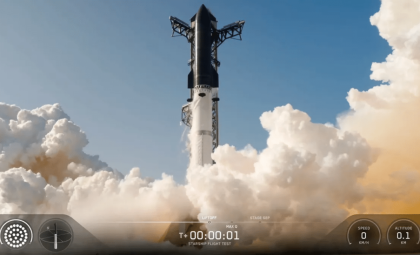
A recent video unveils a striking new vantage point of SpaceX’s Starship, captured not from ground cameras or onboard views but from orbit by one of the company’s advanced Starlink satellites. This footage offers a novel glimpse of the colossal spacecraft, highlighting both its impressive scale and the evolving capabilities of SpaceX’s satellite network.
An Orbital View of the Largest Rocket Ever Built
Historically, Starship launches have been documented through fixed ground cameras, chase planes, or cameras mounted on the vehicle itself. This latest material flips that perspective, showing the rocket as seen from orbit. Utilizing a next-generation Starlink satellite, SpaceX captured Starship against Earth’s backdrop, producing both visually remarkable and technically insightful imagery. Such orbital vantage points emphasize the rocket’s huge size and demonstrate how satellites in space can provide continuous monitoring beyond the limits of terrestrial observation.
As SpaceX pushes Starship forward for ambitious missions to the Moon, Mars, and farther destinations, independent orbital observations may prove invaluable for real-time engineering assessments. This event also underscores the rapid evolution of commercial space infrastructure, where satellites initially built for communication are being equipped to fulfill diverse operational functions. These advancements might pave the way for spacecraft inspections, tracking orbital traffic, and enhancing mission safety amidst an increasingly congested low Earth orbit environment.

View of Starship in space from a Starlink V3 satellite on Flight 13.
— SpaceX (@SpaceX) July 31, 2026
This composite is made of imagery from four separate cameras on a single satellite. Six of the satellites were equipped with cameras to scan Starship’s heat shield and transmit imagery down to operators to… pic.twitter.com/sNTHHz5vLr
The Broader Significance of This Orbital Footage
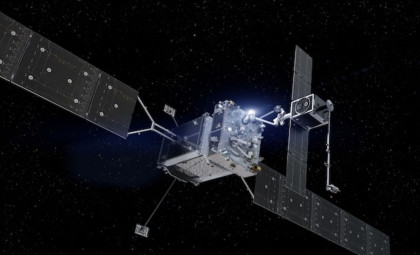
This newly unveiled video is more than a striking space photograph. It signifies the enhanced technological prowess of Starlink’s latest satellites, revealing SpaceX’s move to expand the operational capabilities of its orbital fleet. Modern satellites are increasingly outfitted with advanced sensors and imaging technology that complement their communication roles, enabling them to play multiple roles during missions. Capturing another spacecraft orbiting Earth demands precise orbital positioning, perfect timing, and sophisticated optical systems able to handle difficult lighting scenarios.
The success in filming Starship indicates that these technologies are maturing for practical use. Future deployments could see satellites aiding spacecraft launches, following vehicles post-separation, or helping troubleshoot anomalies from novel vantage points. The capacity to monitor spacecraft externally throughout different flight stages marks a significant step toward improved mission oversight, especially as reusable space vehicles become more frequent and launch cadence accelerates.
Coverage by Space.com Highlights Starlink’s Expanding Role
According to Space.com, this video was obtained by one of SpaceX’s advanced Starlink satellites, showcasing how these spacecraft offer capabilities well beyond broadband service. Though Starlink’s primary mission revolves around communications, this example demonstrates how onboard technologies are evolving to support various space operations. The report emphasizes the rarity of such orbital images of Starship and highlights the commercial satellites’ growing versatility.
This progress mirrors a larger trend within the aerospace industry, where satellites increasingly balance multiple mission objectives. As constellations expand and platforms become more sophisticated, they are poised to assist with scientific data gathering, navigation enhancement, environmental studies, and spacecraft tracking—all alongside their initial functions. This shift promises to revolutionize real-time monitoring of launches and orbital activities.
Envisioning Future Space Mission Networks
The footage also points to a future where space missions are deeply integrated. Rather than standalone spacecraft, upcoming missions might rely on interconnected satellite networks that observe, communicate, and support one another throughout flight operations. For SpaceX, which aims for frequent Starship launches ferrying cargo and crews beyond Earth, a satellite system providing supplementary situational awareness could prove strategically valuable.
Such autonomous orbital observations could bolster post-flight engineering analysis, elevate mission safety standards, and deliver new scientific insights on how spacecraft endure space conditions. This remarkable video not only captures one of humanity’s most ambitious rockets but also highlights the arrival of commercial satellites equipped to play multifaceted roles in humanity’s expanding journey through space.
- Categories:
- News




0 comments
Sign in to Comment