

SpaceX is working to retrieve an intact Starship from the Indian Ocean after its 13th test flight ended with a surprising development: the spacecraft touched down in one piece. Although the recovery mission faces serious challenges, the floating craft provides a rare chance for engineers to examine a vehicle that withstood full atmospheric reentry.
Spacecraft Designed for Space Battles Harsh Ocean Conditions
Starship Flight 13 took off from SpaceX’s Starbase facility in South Texas on July 24, 2026, sending the world’s largest rocket through another suborbital test aimed at advancing its reusability. The Super Heavy booster safely descended into the Gulf of Mexico, while the 171-foot (52-meter) upper stage, called Ship, splashed down in the Indian Ocean near Western Australia as planned. However, instead of breaking apart in the water, the spacecraft remained largely intact. This unexpected outcome left SpaceX with precious post-flight hardware drifting thousands of miles from Texas and an opportunity for close inspection.
SpaceX promptly initiated a recovery mission and began towing the massive spacecraft toward a port in Western Australia. On August 7, the company revealed the recovery team faced

“challenging conditions and increasingly rough seas” while trying to move the 52-meter vehicle. Images released by SpaceX showed the battered Ship still recognizable after roughly two weeks in the ocean. Yet surviving reentry and splashdown did not mean it could survive an extended tow. Elon Musk acknowledged that the operation was deteriorating, writing that “Unfortunately, ship recovery is not looking good right now.”
Even if the spacecraft is never brought ashore, this attempt has given engineers a unique opportunity to study hardware that normally would sink and become unreachable after such tests.
The SpaceX Recovery team is still working to recover Flight 13’s Starship from the Indian Ocean. They’ve been overcoming challenging conditions and increasingly rough seas as they attempt to guide the 52m long spacecraft to port pic.twitter.com/ECT5FyCvr7
— SpaceX (@SpaceX) August 7, 2026
Flight 13 Offers Insights Previous Tests Could Not Provide
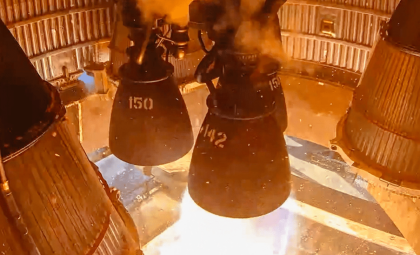
The significance of the floating Starship surpasses the possibility of full recovery. While test flights yield extensive data streams, visual inspection of the flown craft reveals damage and wear patterns that instruments alone can’t fully capture. According to Musk, SpaceX collected “close-up photos of critical regions of the heat shield and engines for future upgrades” during the salvage operation. These images will help compare actual post-reentry conditions to those predicted by onboard sensors and ground monitoring.
This is crucial for the heat shield, as Starship relies on a reusable upper stage capable of repeatedly surviving the intense heat of orbital reentry. Its stainless-steel hull is protected by thermal tiles designed to endure extreme temperatures during descent, but any missing tiles or gaps expose vulnerable areas to potentially destructive heat.
Therefore, flight tests have focused heavily on evaluating the shield’s behavior under real conditions rather than just proving launch capability. Flight 13 delivered another rigorous examination and, uniquely, left the spacecraft accessible long enough for detailed photography. Even if the entire vehicle cannot be retrieved, the data gained at sea represents valuable information for improving future designs. For a rapidly evolving program, gaining insights can be just as important as recovering hardware.
Musk Suggests Heat Shield Challenge Is Nearing Resolution
The ocean recovery came shortly after Musk signaled significant progress on a long-standing difficulty for Starship’s design. During SpaceX’s earliest quarterly earnings briefing on August 4, he commented, “I don’t want to jinx it or anything, but I think I’d consider the heat shield problem solved at this point.” This is an important milestone since thermal protection is vital to SpaceX’s vision of a quickly reusable spacecraft. A rocket that survives launch but needs heavy refurbishment after each reentry cannot meet the rapid turnaround goals.
The thermal demands differ between the Super Heavy booster and the upper Ship stage: while the booster endures low-velocity atmospheric return, the upper stage must survive high-velocity orbital reentry. SpaceX aims for Ship to return to the launch pad for catch-and-reuse rather than ocean disposal. Although Flight 13 didn’t complete this full cycle, the intact splashdown provides valuable real-world data on heat shield performance. Musk’s confidence indicates recent upgrades may have moved the system closer to operational reliability, but more flights and recovery tests are needed to confirm this progress across various conditions.
Flight 13 Demonstrated Starship’s Future Payload Capabilities
Besides recovery efforts, Flight 13 achieved another milestone. During its brief space operation, Ship deployed 20 functional Starlink V3 satellites, illustrating the payload role SpaceX envisions for Starship on a much larger scale. Though these satellites were not intended for long-term orbit and reentered the atmosphere on July 24, their release demonstrated Starship’s ability to carry and deploy the larger next-generation Starlink constellation.
Starlink V3 satellites are critical to Starship’s economics and mission goals since they are bigger than previous Starlink versions and designed to leverage Starship’s heavy-lift capacity. SpaceX plans a vast satellite mesh network and expects Starship to be the main vehicle responsible for delivering these larger units en masse.
This makes Flight 13 more than a reentry test: it integrated launch, orbital operation, payload deployment, descent, and splashdown into one comprehensive experiment. The unexpected survival of Ship after splashdown provided engineers with an unprecedented chance to study the same spacecraft post-mission rather than losing it to the ocean.
Recovery Challenges Highlight Limits of Ocean Landings
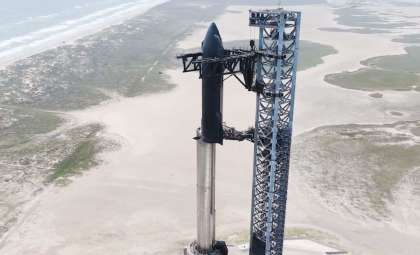
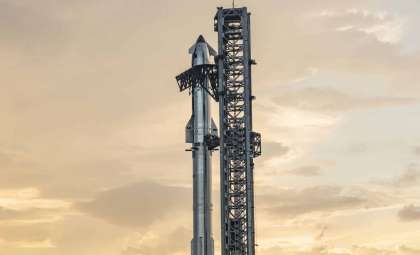
The state of the spacecraft underscores why SpaceX views ocean splashdowns as interim tests rather than permanent recovery methods. Standing roughly 408 feet (124 meters) fully assembled, Starship is designed for total reusability with both Ship and Super Heavy intended for rapid turnaround. Leaving a 52-meter rocket stage adrift subjects it to ocean hazards unrelated to spaceflight: waves exert structural stresses, saltwater may corrode parts, weather complicates access, and towing an object not meant to operate as a vessel is extremely difficult. The longer the recovery drags on, the more the ocean can degrade hardware that has already endured launch, reentry, and impact.
SpaceX’s remarks about increasing rough seas clarify why a vehicle that passed its test can still be lost at sea during recovery. Musk’s cautious update on August 7 suggests that the company might have to rely on photos and assessments made offshore rather than bringing Ship back to land. While this limits detailed teardown and study, Flight 13’s mission success remains intact: Ship endured long enough for critical documentation of its engines and heat shield. In experimental flight programs, even an incomplete recovery can yield crucial insights that guide the design of upcoming vehicles.
- Categories:
- News








0 comments
Sign in to Comment