

Advanced 3D simulations have revealed a period between 4.4 and 4.3 billion years ago when Earth’s early environment may have been ideal for chemical processes preceding life. The peak of these conditions appears to be around 4.33 billion years ago. It is important to note this timeframe marks likely favorable conditions, not the definitive start of life.
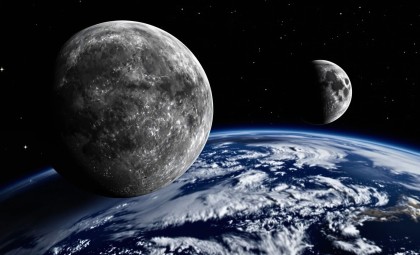
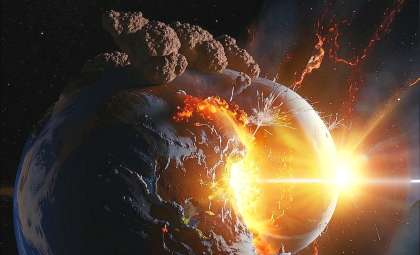
In its infancy, Earth endured severe bombardment from asteroids, comets, and leftover planetesimals, generating immense heat capable of sterilizing surface layers and eradicating life's precursor compounds.
Since delicate biological molecules require stable conditions over time to form and function, researchers focus on the “RNA World” hypothesis — a stage before DNA’s genetic dominance when RNA possibly carried genetic codes and catalyzed key biochemical reactions, making it a strong candidate for early life’s foundation.

Simulating a Billion-Year Impact History
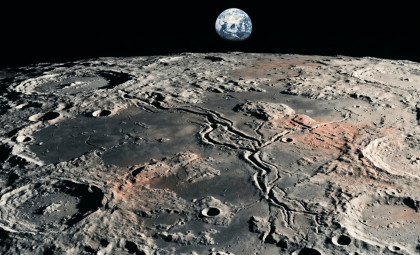
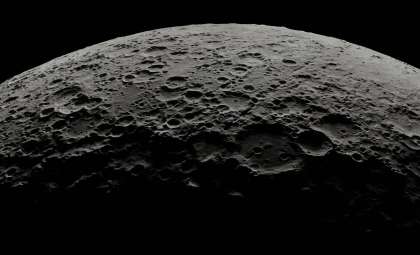
The research, featured in Nature Communications, modeled the thermal effects of impacts on Earth’s crust from 4.5 to 3.5 billion years ago. Using lunar crater counts and the presence of iron-affine, highly siderophile elements in the mantle, various impact scenarios were tested to constrain the bombardment intensity.
Co-lead author Oleg Abramov, planetary scientist at the Planetary Science Institute, explained this method diverges from previous geochemical and biomolecular research or atmospheric models of Earth’s earliest epochs.
The simulated crust temperatures were then compared to thresholds for RNA and key biomolecules’ stability, while hydrothermal activity was tracked. Findings indicate repeated global sterilization events persisted until about 4.4 billion years ago.

The End of Crustal Temperature Resets
Prebiotic chemical processes require sustained stable temperatures, rather than intermittent cooling between impact episodes, Abramov noted. Prior to 4.4 billion years ago, cooled crust segments could be reheated by subsequent impacts, effectively resetting conditions.
Eventually, "never-sterilized" regions emerged that remained below a critical temperature of 110°C. These stable zones expanded as impacts dwindled, accounting for more than half of the Earth's modeled shallow crust by 4.25 billion years ago.
Hazards and Opportunities in Early Bombardment
While impacts posed threats to fragile molecules, they also fostered environments conducive to pre-life chemistry. Circulating water in hot, fractured rock can create hydrothermal systems, uniting water, heat, and chemical energy sources—conditions long considered critical for life's chemical precursors.
Approximately 4.3 billion years ago, the simulation identified peak activity of connected impact-induced hydrothermal networks, coinciding with the growth of stable crustal zones where complex molecules could persist amid waning bombardment.

Balancing the detrimental and beneficial consequences of impacts, the authors concluded:
“These criteria point to the Earth becoming suitable for an early stage of life between 4.4 and 4.3 billion years ago, with optimal conditions at approximately 4.33 billion years ago.”
- Categories:
- Space



0 comments
Sign in to Comment