

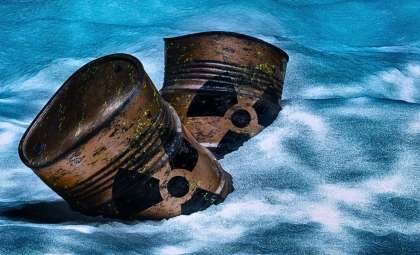
Researchers have ventured into the Northeast Atlantic, revealing a long-concealed underwater graveyard containing thousands of radioactive waste barrels, some severely corroded and leaking contaminants into the surrounding seabed.
This significant find occurred during the NODSSUM expeditions, where the team employed the Nautile submersible to investigate an expansive dumping ground holding upwards of 200,000 barrels abandoned in the latter half of the 20th century.
Previously, access to these sites was limited to indirect studies; these recent dives have provided an unprecedented close-up view of the barrels’ degradation status alongside the marine life colonizing the area.

While the mission exposed notable damage to the containers, the full extent of radioactive leakage impact remains uncertain pending detailed lab analysis on how radioactive substances are dispersing and potentially accumulating in marine organisms.
An In-Depth Examination of Long-Abandoned Nuclear Waste Disposal Zones
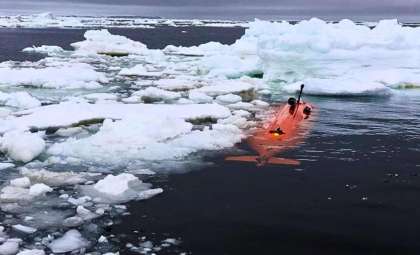
The vessel "Pourquoi Pas?" hosted approximately 30 scientists during a month-long journey conducted from May 27 to June 28, 2026. Utilizing the Nautile submersible, the researchers completed 20 dives below 15,400 feet to reach aged disposal sites. The NODSSUM project team reported observing barrels showing notable corrosion, with some leaking material visible on the muddy seabed.
This investigation offers scientists a direct perspective on the current environmental state surrounding these barrels, previously reliant mainly on remote data and seafloor mapping. Despite the toxic backdrop, diverse marine species such as anemones, sponges, crabs, and other deep-sea life forms have established themselves on or near the containers.

Detecting Radioactivity Sparks Further Inquiry
During the dives, measuring devices recorded elevated levels of radionuclides associated with the submerged waste compared to the background levels typical of the location. Key radioactive isotopes monitored included cobalt-60 and niobium-94, which serve as markers for nuclear waste, alongside others like cesium-137 and americium-241.
These preliminary findings require comprehensive interpretation. According to the French National Centre for Scientific Research, some detected radionuclides could originate from prior nuclear weapon tests or accidents, complicating attribution solely to the barrels.

Samples of sediment, water, and marine organisms were collected near the disposal zones to evaluate the behavior and spread of radioactive substances within this abyssal ecosystem. Comparative studies with natural habitats in proximity are also underway.
Unearthing the Atlantic Ocean’s Neglected Radioactive Waste History
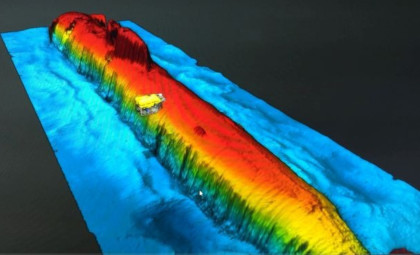
This recent investigation was enabled by prior autonomous underwater vehicle surveys conducted by Ulyx in 2025. Official NODSSUM documentation reveals the mapping campaign identified 3,355 barrels, collected 5,000 liters of water samples, retrieved 345 sediment cores, and gathered biological samples from 34 fish and crustacean species. These findings informed targeted inspections during the Nautile dives.
The barrels represent only a fraction of a broader nuclear waste disposal saga in the Atlantic. Multiple nations deposited radioactive materials here in the post-WWII era. Records cited by CNRS indicate France alone dumped over 46,000 barrels in 1967 and 1969. These containers were not intended for permanent containment but rather to slowly release and dilute their radioactive contents over time.

Upcoming research will focus on laboratory analyses to quantify the extent of radioactive contamination and its incorporation into deep-sea habitats.
- Categories:
- News






0 comments
Sign in to Comment