

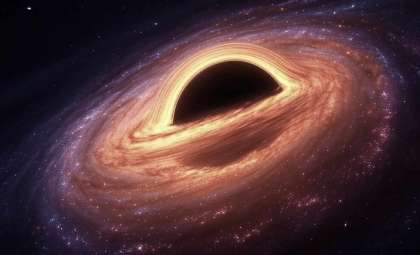
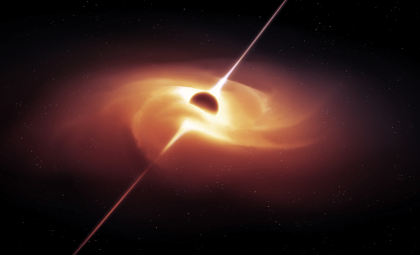
A supermassive black hole located in the galaxy NGC 1275 emitted a powerful X-ray flare, which was followed nearly 300 days later by an intense radio outburst, unveiling a rare link between black hole accretion activity and energetic cosmic jets, as detailed in a new study submitted to arXiv.
Using almost 20 years of data from NASA’s Swift X-ray Telescope alongside continuous radio observations, astronomers obtained unique insights into how processes near a black hole can affect distant jet structures extending into space.
Unprecedented X-Ray Burst From NGC 1275’s Core
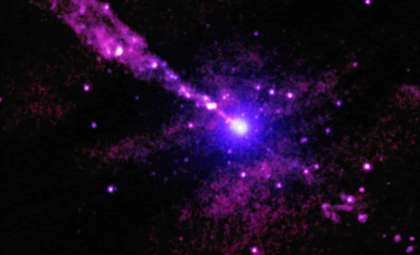
Led by Sarah Ketchum at the University of Michigan, the research team evaluated extensive Swift monitoring data. Although the Chandra X-ray Observatory has provided detailed images of NGC 1275, its less frequent observations miss fast, dynamic variations.

The archive revealed the most intense X-ray flare ever detected from this galaxy, commencing approximately in February 2023, when the black hole’s X-ray intensity roughly doubled.
This flare persisted under 60 days and showed evidence of at least two distinct bursts, each rising and fading within about five days, highlighting rapid variability in the X-ray emitting region.
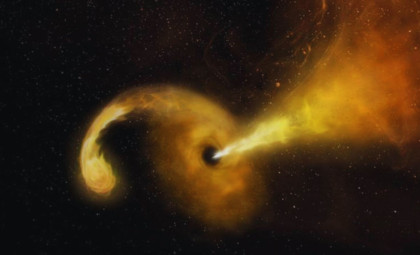
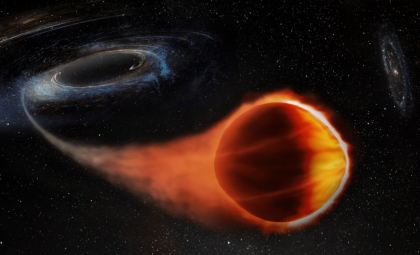
Researchers explored several scenarios to explain this outburst. One hypothesis was a tidal disruption event, where a star is ripped apart by the black hole’s gravity when it ventures too near.
However, the light curve did not match the typical decline seen in tidal disruption events, leading them to reject this cause for the flare.
Instead, the team believes fluctuations in the accretion rate or disturbances occurring further along the jet are the most plausible origins.
Correlating X-Ray Signals With Subsequent Radio Flares
Submitted to the arXiv preprint server on August 13 and accepted by the Astrophysical Journal Letters, the study compared X-ray data alongside radio monitoring to investigate the connection between central black hole activity and jet behavior.
The analysis uncovered a radio flare emerging around 296 days after the X-ray event, marking a rare quantified delay between activity near the black hole and radio jet brightening far out.
This delay could indicate the travel time for material moving outward from the immediate vicinity of the black hole to more distant regions where radio emission originates.
Another interpretation is that the lag reflects alterations propagating along the jet, with processes near the black hole requiring time to influence downstream jet components before producing detectable radio signals.
The exact cause remains unclear, with the X-rays potentially arising from the corona surrounding the black hole or from interaction zones farther along the jet.
Insights Into Black Holes’ Impact on Galaxy Evolution
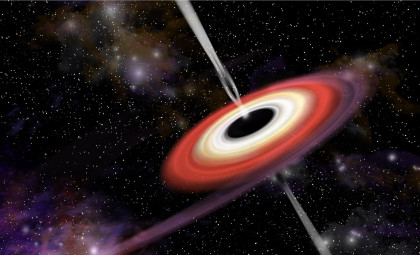
How material feeding black holes leads to jet formation remains a major puzzle in astrophysics. Jets launched from active black holes extend thousands of light-years, reshaping gas within host galaxies.
In NGC 1275, the black hole has sculpted cavities and structures within the gas of the Perseus Cluster, influencing the reservoir of gas available for future star birth.
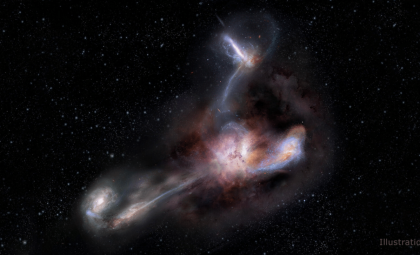
Understanding jet formation and evolution aids in unraveling the role black holes play in galaxy development. The new coordinated data from Swift and radio telescopes demonstrate how long-term observations are vital for detecting such delayed responses.
Future multiwavelength campaigns combining X-ray and radio instruments promise to capture additional instances of this time-lagged interaction between black hole activity and jet emission.
The team aims for sustained monitoring of systems like NGC 1275 to further decode the physical mechanisms linking the black hole’s vicinity with extensive jet structures extending into intergalactic space.
- Categories:
- Astronomy





0 comments
Sign in to Comment