

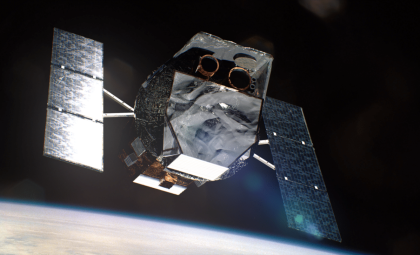
NASA’s initiative to prolong the operational lifespan of the Swift space telescope hit a significant challenge when the Link servicing spacecraft encountered hardware malfunctions while in orbit, according to reports from NASA and coverage by Ars Technica. The mission remains ongoing as engineers strive to stabilize the vehicle and assess whether the mission can proceed with its planned orbital rendezvous and docking procedures.
Link Loses Two Reaction Wheels Amidst Swift Rescue Effort
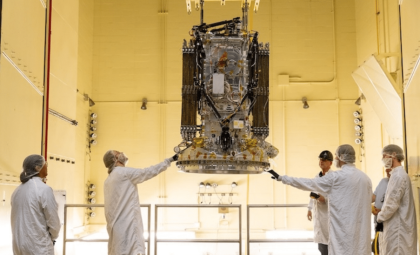
The Link spacecraft, built by Katalyst Space Technologies for NASA’s pioneering servicing mission, is designed to intercept and connect with the aging Swift observatory, aiming to extend its operational capabilities by correcting its orbit.
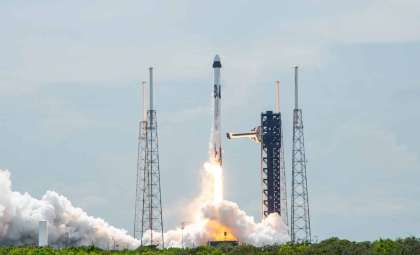
Following weather delays and launch vehicle troubleshooting, the spacecraft was deployed on July 3. The project was executed under intense time constraints due to the decaying orbit of Swift, which limited the intervention window.

Shortly after orbital insertion, the Link spacecraft experienced difficulties with its attitude control, a system reliant on reaction wheels that adjust spacecraft orientation without expending fuel, essential for precise maneuvers during orbital operations.
NASA confirmed that two out of Link’s three reaction wheels failed to operate. The agency noted: “Initial assessments reveal that two of Link’s three reaction wheels are non-functional, accompanied by partial impairment in its cold gas thruster system.”
Nonetheless, Link remains powered and maintains communication with mission teams. This allows engineers the necessary time to assess the spacecraft's status and adapt mission strategies accordingly.
LINK, the robotic spacecraft from Katalyst Space designed to boost our Swift mission’s orbit, experienced issues with attitude control over the weekend, causing the spacecraft to spin and resulting in sporadic communications. The team is working to stop LINK’s spin over the next… pic.twitter.com/uCu1hS7FxT
— NASA Universe (@NASAUniverse) July 28, 2026
NASA Adjusts Mission Plans to Accommodate New Challenges
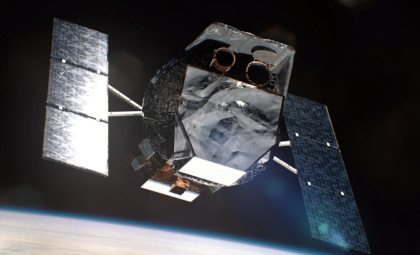
The mission’s core objective was to showcase the ability of commercial spacecraft to service a scientific satellite, protecting the scientific output of Swift, a telescope launched in 2004 to observe gamma-ray bursts and other energetic cosmic events.
This project extends beyond a simple salvage operation, acting as a vital proof-of-concept for future in-orbit servicing systems capable of maintaining and upgrading space assets already deployed.
Before these complications arose, Shawn Domagal-Goldman, head of NASA’s astrophysics division, emphasized the mission’s pioneering significance. “From a programmatic perspective, this mission already achieves success by attempting the task,” he said.
Currently, NASA is evaluating how Link’s impaired condition impacts navigation, approach protocols, and the eventual docking procedure. Achieving stability is critical before proceeding with close proximity maneuvers around Swift.
NASA outlined forthcoming steps: “Once stable attitude control is restored and the spacecraft’s systems are thoroughly assessed, Katalyst will update Link’s guidance, navigation, and control algorithms to match its new capabilities. Collaborating closely with NASA, they will investigate modified approaches to safely rendezvous and make contact with Swift, contingent on Link’s health.”
Demonstrating the Future of Commercial Satellite Servicing
This Swift rescue represents one of the earliest efforts to deploy a commercial spacecraft for a sophisticated satellite servicing mission.
NASA chose Katalyst’s solution to explore how the private sector can play a role in maintaining space assets over extended periods. The potential to repair, reposition, or upgrade satellites on orbit could revolutionize long-term space mission management.
The Link team expected potential technical difficulties. Kieran Wilson, Katalyst’s lead investigator, previously discussed the critical importance of sustaining core spacecraft functionality during challenging operations.
“Past programs experienced setbacks with power and communication systems,” Wilson noted. “Ensuring that the spacecraft works at a fundamental level provides flexibility to address issues that may emerge during rendezvous and complex dynamic operations.”
Currently, this approach is under real-world test as engineers depend on Link’s remaining functional systems to restore operations and adjust the mission plan rather than cancel the endeavor.
Mission Perseveres Despite In-Orbit Technical Failures
Although Link’s condition poses a significant challenge, its available power and continuous communication permit mission teams to explore viable solutions.
Future mission progress hinges on whether Katalyst can regain sufficient control to navigate Link safely toward Swift. Precise orbital maneuvers are critical as minor navigation errors could jeopardize the mission.
Regardless of the final outcome, the mission presents invaluable lessons for upcoming spacecraft servicing projects. NASA and Katalyst are leveraging the situation to understand how commercial spacecraft can adapt to unforeseen problems post-launch.
The Swift servicing endeavor has evolved from a straightforward demonstration into a dynamic trial of spacecraft durability, real-time mission planning, and adaptive problem-solving in space.
- Categories:
- Nasa






0 comments
Sign in to Comment