

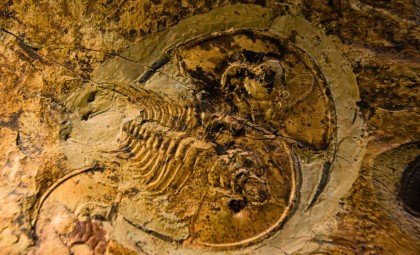
After spending 20 years investigating over 7,500 marine fossils, scientists have uncovered why fossils from vastly different periods often coexist within the same geological layer. The key element influencing this occurrence is the rate at which sediment accumulates on the ocean floor.
This occurrence, termed time averaging, plays a crucial role in paleontology. When remains such as shells or bones from creatures that existed centuries or even millennia apart mix within one layer, it complicates efforts to interpret the historical timeline recorded in the rocks. Some fossil sites portray a precise instant in time, while others represent a gradual deposit of remains over centuries, blending separate generations into a single snapshot.
This understanding profoundly affects what paleontologists can deduce. Daniele Scarponi, associate professor at the University of Bologna, emphasized that recognizing the timespan represented by a fossil bed is essential before analyzing it. He likens some deposits to the quickly covered ruins of Pompeii, preserving a moment frozen in time, whereas others resemble a multi-generational cemetery with remains slowly layered across many years.

Both environments yield valuable insights, but the data types differ, making it vital to evaluate the degree of mixing before interpreting any fossil record.
How Burrowing Creatures and Sediment Interact in Preservation
Multiple factors contribute to time averaging. The seafloor is riddled with extensive burrows from animals like clams, shrimp, sea stars, sand dollars, snails, and worms. These organisms’ continuous burrowing, known as bioturbation, disturbs sediment and any fossils within it, mixing remains together.
Durability is a major factor as well. Most organisms never become fossils because they decay or are scavenged before burial. Thus, the fossil record heavily favors hard parts like shells and bones, which themselves must be buried swiftly enough to avoid degradation.

Biological productivity also influences fossil abundance since more prolific areas yield more remains. However, the research shows that the sedimentation rate overwhelmingly governs how fossil layers accumulate and mix.
A Unique Two-Decade International Effort
Acquiring enough data to rigorously examine this issue was once impossible for any one laboratory. Dating methods like radiocarbon and amino acid analysis come with high costs, limiting most labs to a small number of specimens, insufficient for global-scale studies.
This investigation became feasible through an extraordinary collaboration. Research teams from Australia, Austria, the Bahamas, Brazil, Italy, Germany, Slovakia, and the United States had independently conducted fossil dating with similar protocols. When combined, their extensive datasets provided an unprecedented opportunity for comprehensive analysis.

Michal Kowalewski, co-lead author and Thompson chair of invertebrate paleontology at the Florida Museum of Natural History, explained in a museum press release:
“Nothing on this scale has ever been attempted before because it’s simply not feasible to do so, but thanks to the fact that we had a whole bunch of teams that worked on similar topics and used similar methods, we were able to compile it.”
Sedimentation Rate Emerges as the Leading Factor
To determine the chief influencer, the team modeled fossil age distributions considering different intensities of bioturbation, sediment deposition, and fossil degradation. They then matched these simulations to the radiocarbon-dated fossil age ranges. Published in the Proceedings of the National Academy of Sciences, the findings firmly established sedimentation rate as the most accurate predictor of a fossil bed’s time resolution. Rafal Nawrot, a paleontologist at the University of Vienna, reflected on how striking it is:
“how much time a bunch of fossils collected from a single sediment layer can represent. In some cases, well-preserved fossil organisms that are found next to each other might have lived hundreds or thousands of years apart.”
When shells or bones become buried rapidly by sediment, there is less chance that remains from different generations will be found together. Kowalewski summed up the discovery succinctly:
“Sometimes life turns out to be more exciting than you thought,” he said, adding that: “In this case, the outcome is beyond any dreams we may have had when we started.”
- Categories:
- Science



0 comments
Sign in to Comment