

Fragments of two ancient leg bones discovered beneath the waters near Taiwan reveal that some Denisovans were notably tall, possibly nearing two meters, with body mass comparable to the largest humans from the Pleistocene epoch. These specimens, designated Penghu 2 and Penghu 3, were extracted from the seabed of the Penghu Channel, situated between Taiwan and the mainland of China. Through examination of ancient proteins embedded in the fossils, scientists confirmed their Denisovan origin.
Denisovans, extinct relatives of Neanderthals, represent a distinct branch of the Homo genus. Despite genetic insights shedding light on their past, physical remains have been sparse, creating challenges in reconstructing their body morphology.
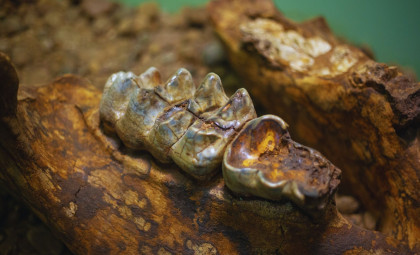
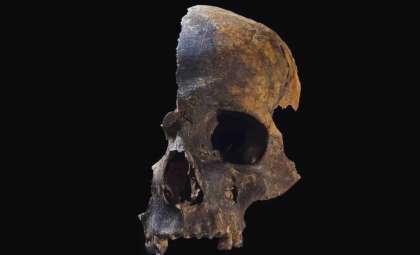
Prior knowledge of Denisovans came primarily from scattered finds such as a skull fragment, jawbones, teeth, and a finger bone at sites like Denisova Cave in Siberia, Xiahe in Tibet, and Harbin in China. Until now, details about their general body proportions and size have remained elusive, according to researchers from the University of Tokyo and the National Museum of Nature and Science.

New Evidence Points to Enormous Denisovan Physiques
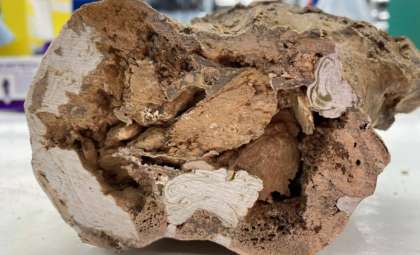
The investigation centered on two fossilized leg bones: a femur and a tibia. These substantial bones enabled the team to approximate the stature and weight of the individuals they belonged to. Through protein analysis, they discovered a collagen type uniquely associated with Denisovans. Dating techniques place these remains between 45,000 and 43,000 years old, correlating with other local fossil finds.
The findings were striking: the individual represented by Penghu 2’s femur likely measured about 180 centimeters tall and weighed roughly 83 kilograms. The Penghu 3 tibia owner may have stood close to 190 centimeters and weighed approximately 91 kilograms.

These dimensions position these Denisovans among the tallest humans of the Pleistocene. The study, posted on bioRxiv on August 8, 2026, suggests their size matches or surpasses some of the largest ancient individuals known from Africa and Europe, significantly exceeding earlier Homo erectus and Stone Age modern humans from East Asia.
Exploring Why Denisovans Near Taiwan Were So Large
This discovery prompts inquiries about why these Denisovans developed such considerable physiques in a region where smaller body sizes might have been anticipated. Located near Taiwan at roughly 23 degrees north latitude, the fossil site contradicts Bergmann’s rule, which posits that colder climates generally drive larger body sizes, while tropical zones favor smaller ones. The researchers hypothesize that the Denisovans’ robust size may reflect their lifestyle—particularly hunting and a protein-rich diet.
Evidence from the Tibetan Plateau reveals they hunted numerous animals including Caprinae like goats and sheep as well as large herbivores and carnivores. Chemical signatures in the Penghu 3 bone imply a heavy reliance on meat consumption.
“However, Denisovan’s body architecture such as body size and proportion, skeletal robusticity, as well as their general postcranial morphology remain unknown, except for hypothetical inference based on their DNA, due to the paucity of their postcranial remains,” explained the authors.

The team proposes that these larger bodies could have facilitated hunting by granting physical advantages and supporting specialized strategies and tools distinct from contemporary Homo sapiens groups.
Familiar Bone Trait Provides New Clues About Denisovans
The Penghu 2 femur revealed a surprising anatomical feature: a pronounced bony ridge called a pilaster on its posterior side, a structure commonly found in modern humans and linked to particular locomotion and load-bearing patterns.
“Although genetic basis of femoral pilaster remains unknown and this hypothesis must be tested ultimately by genomic data from Denisovan fossils, it does not contradict with the genomic evidence of Denisovan introgression into modern humans in southern Asia, and chronological overlap between Penghu 3 and the earliest modern humans in this region,” they explained.
Scientists consider two possibilities: the trait may have evolved independently in Denisovans and modern humans due to similar functional needs, or it might reflect gene flow between the populations. This idea aligns with previous findings of Denisovan DNA present in some Asian modern human groups. Additional genomic data from Denisovan specimens will be crucial to explore this link further.
According to the research team, these two leg bones demonstrate that some Denisovans were not only genetically unique but also physically formidable, providing new perspectives on this extinct human lineage.

- Categories:
- Science






0 comments
Sign in to Comment