

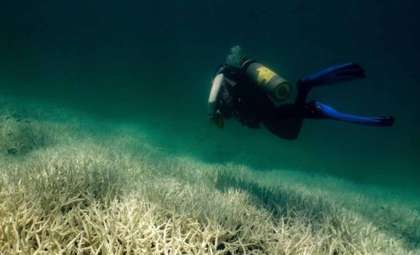
Coastal marine ecosystems may be subjected to significantly more extended heat exposure during ocean heatwave events than previously recognized. Recent research reveals that the warm conditions typically linked to these heatwaves can persist for extended periods, stretching the impact well beyond the generally acknowledged event duration.
Scientists affiliated with William & Mary’s Virginia Institute of Marine Science (VIMS) and the Batten School of Coastal & Marine Sciences analyzed comprehensive temperature records from 20 U.S. estuaries to gain deeper insight into the temperature stresses marine organisms face. Their findings, detailed in Communications Earth & Environment, propose a novel approach that considers not only the heatwave itself but also the warmer conditions that precede and follow it.
Typically, marine heatwaves are marked by fixed temperature thresholds and specific start and end points. However, the team discovered that elevated water temperatures often linger beyond the officially designated heatwave timeframe.

Extended Duration of Ocean Heatwaves
Marine heatwaves frequently manifest as part of broader warming episodes rather than isolated temperature spikes. These wider warm periods often extend beyond the conventional boundaries used to define heatwave events.
“We started to notice these warm-water anomalies on either side of marine heatwaves and realized that they’re actually embedded within larger periods of warm water,” explained lead author Ricardo Utzig Nardi. “It sounds obvious, but studies usually focus only on the marine heatwave window, and that’s not an accurate representation of real-world conditions.”
By examining over 2,580 marine heatwave events documented over two decades across 20 estuaries in the United States, the researchers highlighted that conventional assessments often underestimate total heat exposure by focusing solely on the official heatwave period.

The study team noted that these additional warm periods surrounding heatwaves can contribute as much or even more cumulative heat stress than the heatwave event itself.
“We can no longer look at marine heatwaves in isolation when assessing the impact of warming events on coastal and oceanic ecosystems,” said Piero Mazzini. “We must acknowledge the larger framework in which they exist, and this research provides a way to do just that.”
The Impact of Prolonged Heat on Marine Ecosystems
To better quantify the overall thermal load on marine ecosystems, the researchers devised an approach that combines the official marine heatwave interval with the adjacent periods of elevated temperatures. Ricardo Utzig Nardi described the relevance of this cumulative measure by drawing an analogy to sun exposure.
“Consider spending time in the sun,” he said. “Your risk of sunburn depends on both sunlight intensity and how long you’re exposed to it. A few minutes may cause little harm, but hours of exposure can take a toll.”
The research suggests that marine species’ reactions hinge not only on peak temperature but also on how prolonged those conditions remain. Extended warm periods can exert additional stress, especially when other environmental challenges are present.
The team also found that the warm intervals before and after a heatwave are largely independent of the heatwave itself. This indicates that limiting heat exposure assessments to the heatwave window risks overlooking essential details about temperature conditions experienced by ecosystems.
According to a report from the Virginia Institute of Marine Science, the analysis relied on long-term temperature data from NOAA’s National Estuarine Research Reserve System. These extended datasets allowed the team to detect extensive warming trends not visible through shorter observations.
Characterizing Marine Heatwave Patterns
The study categorized marine heatwaves into two distinct types based on the duration of the encompassing warm periods. Approximately two-thirds fell into the “individual” heatwave category, occurring within shorter spans of elevated temperatures extending roughly 60 days beyond the official heatwave interval.
The remaining events were identified as “compound” heatwaves, forming part of far longer warming phases that lasted about 90 days before and after the heatwave itself. These compound events resulted in over three times the total heat exposure compared to the heatwave alone.
“As you can see, these are remarkably long periods of thermal exposure,” explained Mazzini. “Many laboratory experiments simulate marine heatwaves by increasing temperatures for a few days or weeks in total. Our findings demonstrate that while these experiments hold value, they often fail to capture the prolonged thermal exposure organisms experience in nature.”

The authors emphasize that incorporating these extended warming durations into studies could improve the design of laboratory experiments, enabling them to more closely mirror real environmental conditions. Widening the scope to include cumulative heat exposure may also refine evaluations of ecosystem responses to ongoing temperature changes.
- Categories:
- Science






0 comments
Sign in to Comment