

Beneath the ocean’s surface, specialized rubber strips known as GINA gaskets hold back seawater by enduring intense compression forces. These gaskets were engineered with an anticipated lifespan of a century, forming the core of numerous submerged tunnel systems. For years, predictions seemed sound.
However, those forecasts overlooked a crucial factor.
Researchers from Shijiazhuang Tiedao University in China extracted gasket samples from the Yuliangzhou tunnel and subjected them to simulated underground conditions that replicated both seawater immersion and the continuous mechanical pressure caused by massive steel tunnel segments pressing together.

Their findings, detailed in Tunnelling and Underground Space Technology, revealed that the forecasted 100-year sealing effectiveness is overestimated by approximately 35 percent.
Limitations of Previous Models
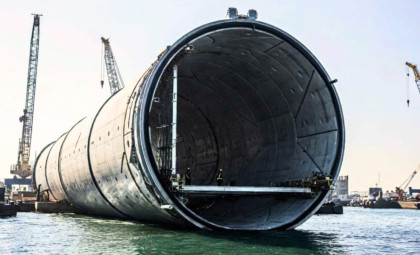
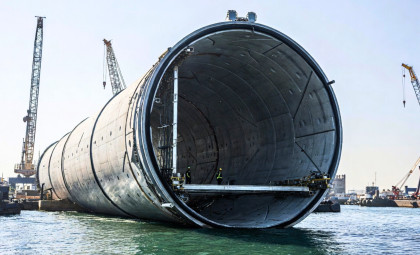
Immersed tunnel construction involves assembling prefabricated concrete segments that are floated to locations, submerged into trenches on the seabed, and joined underwater. The GINA gasket is compressed tightly between steel faces as these sections come together, creating the watertight seal intended to last a hundred years.
Past durability analyses considered exposure to seawater exclusively, estimating that after 100 years, these gaskets would maintain about 2.32 megapascals of sealing pressure.
The team at Shijiazhuang developed a bespoke compression apparatus to imitate the persistent mechanical load of tunnel joints. Once combined with seawater exposure, their testing projected a decreased sealing pressure of 1.51 megapascals after a century—corresponding to a 67.66 percent loss in sealing effectiveness over time.

"The GINA gasket serves as the critical waterproofing barrier for immersed tunnel joints, directly determining the structure's hundred-year sealing reliability," the authors noted.
The Illusion of Hardened Rubber
One complicating factor is that as the gasket rubber ages, its hardness rises by 14.18 percent and density increases by 5.88 percent. To a cursory inspection, this might appear as sound material, yet internally, molecular bonds degrade.
The polymer network responsible for rubber’s elasticity—the key property enabling effective compression and sealing—weakens. The temperature threshold at which the rubber stiffens climbs by nearly 5.8 degrees Fahrenheit. Consequently, though the material feels more solid, it is losing its ability to maintain the essential contact pressure needed to prevent leaks.
The progression of wear was classified into three stages: an initial sharp decline in sealing force, a gradual mid-phase reduction, followed by a tapering decrease. Accelerated aging tests detected internal damage within 90 days, indicating that significant deterioration happens long before outward signs manifest.
Seal Failure Begins at the Lower Edge
Sealing pressure is unevenly dispersed across the gasket surface, with the lower edge bearing less compression. This uneven stress distribution becomes critical as the gasket ages. Prior research on the Yuliangzhou tunnel indicated that waterproofing fails once joint gaps exceed about 1.85 inches. Furthermore, joint rotations exacerbate the issue by altering contact positions and reducing pressure at this vulnerable lower edge.
This geometric factor implies that assessing gasket condition based solely on surface chemistry or hardness is insufficient. The gasket can appear intact yet fail to exert the contact stress necessary to block water.
Despite the revised sealing pressure after 100 years falling to 1.51 megapascals, this still surpasses the minimum functional threshold of 0.61 megapascals defined by the researchers. Although the seals remain operational within these limits, the diminished margin and earlier onset of performance decline suggest that maintenance schedules and inspection intervals might require updating to reflect these more conservative estimates.
The full study is available in Tunnelling and Underground Space Technology through ScienceDirect. The research was conducted at Shijiazhuang Tiedao University.
- Categories:
- News









0 comments
Sign in to Comment