

Approximately 300 million years ago, enormous insects with wingspans nearing 70 centimetres dominated Earth's prehistoric wetlands. A recent investigation questions the prevailing belief that elevated oxygen levels in the atmosphere were solely responsible for their colossal size.
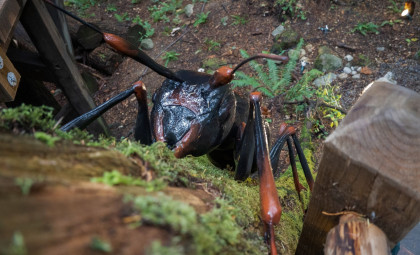
This remarkable group includes Meganeura monyi, recognized as one of the largest known flying insects. Resembling massive dragonflies, these creatures were actually part of an extinct lineage known as Meganisoptera or griffinflies.
Scientists have long debated the factors behind the immense size of these insects. The dominant theory suggested that the heightened oxygen content during the Carboniferous era enabled them to surpass the limitations imposed by their unique respiratory structures.

Unlike mammals, these insects do not possess lungs. Instead, they breathe through external openings leading to internal tubes that directly diffuse oxygen to their tissues. As insect size increases, this respiratory design becomes less efficient, making the large dimensions of griffinflies an enduring scientific puzzle.
Exploring the Era of Giant Insects and Elevated Oxygen
During the time of Meganeura monyi, Earth was dominated by vast wetlands and dense forests. This insect, a formidable aerial predator, soared with a wingspan close to 70 centimetres. Its imposing size stands among the largest arthropods preserved in the fossil record, contrasting sharply with the much smaller size of modern insects—a difference often attributed to shifts in atmospheric composition.
The Carboniferous period featured oxygen levels that exceeded 30 percent, compared to today’s 21 percent. Extensive forests contributed massive amounts of organic matter, some of which was sequestered underground rather than decomposing back into the atmosphere.

This gave rise to the hypothesis that higher oxygen availability facilitated the growth of larger insects. Research from the University of California, Santa Cruz, noted that the emergence of giant insects coincided with these oxygen-rich periods, though direct causation remains difficult to confirm due to fossil record limitations.
Reevaluating a Longstanding Hypothesis
A study published in 2026 in Nature took a closer look at a crucial aspect of the oxygen hypothesis: whether the muscular systems responsible for insect flight required a proportionally larger oxygen supply as body size increased. Led by Edward Snelling from the University of Pretoria, the team examined 1,320 microscopic images covering 44 species across ten insect orders, focusing on tracheoles—the tiny tubes transporting oxygen directly to tissues.
Contrary to expectations, tracheoles accounted for roughly 1 percent or less of the flight muscle volume. Despite a body mass increase by a factor of 10,000 among the species examined, the relative tracheole volume expanded only by a mere 1.8 times.

The findings demonstrate that although larger insects make minor structural changes to their respiratory system, these adjustments are relatively insignificant. Snelling stated:
“If atmospheric oxygen really sets a limit on the maximum body size of insects, then there ought to be evidence of compensation at the level of the tracheoles. There is some compensation occurring in larger insects, but it is trivial in the grand scheme of things.”
Examining the Decline of Giant Insects
Scientists continue exploring other factors that may have influenced the rise and extinction of these enormous insects. The mechanical limits of their exoskeletons, flight challenges, and shifting environmental conditions are all implicated. Another perspective, brought forth by researcher Wilco Verberk, highlights the impact of elevated oxygen on aquatic larvae stages.
“So a larval perspective might lead to a better understanding of why these animals existed in the first place,” he argued as reported by National Geographic, “and maybe why they disappeared.”

Additionally, evidence suggests that the evolution of birds influenced insect size reduction. Fossil data show insects shrinking after bird emergence, even during periods when oxygen remained relatively plentiful. Smaller body sizes may have allowed insects to improve agility in an environment with new aerial predators.
The tale of Meganeura reveals that multiple factors shaped the largest insects ever to exist. While elevated oxygen levels provided suitable conditions, the complete story of their gigantism involves a complex interplay of biological and environmental influences still under investigation.
- Categories:
- Science









0 comments
Sign in to Comment