

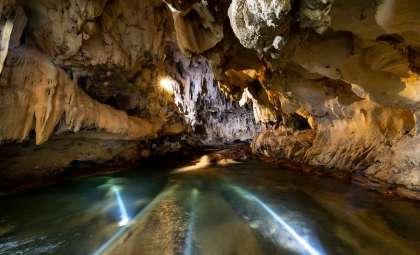
Concealed deep underground in Romania for over 5 million years, a remarkable ecosystem has come to light, sustaining life without any sunlight. Within Movile Cave, researchers have discovered dozens of exclusive species thriving under conditions similar to those found in some of the most extreme environments beyond our planet.
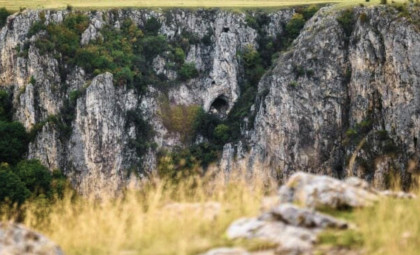
Identified in 1986 amid preparations for a power plant, Movile Cave surprised the team with an ancient sealed chamber isolated from the surface for approximately 5.5 million years.
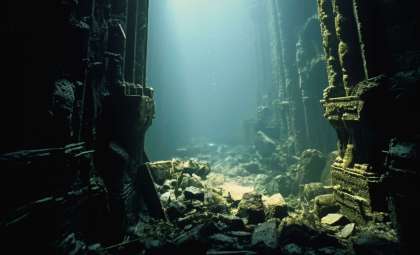
This subterranean environment immediately sparked scientific intrigue. Despite the absence of sunlight, scarce oxygen, and elevated levels of gases like carbon dioxide and methane, a complex ecosystem developed undetected in the cave’s darkness.

Life Powered by Chemicals Instead of Sunlight
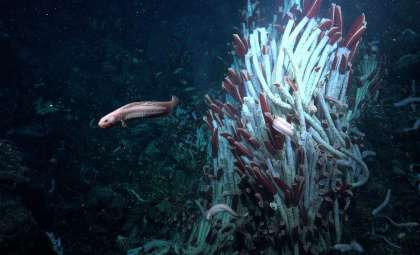
Unlike most ecosystems reliant on sunlight, Movile Cave operates on a different energy source. At the foundation of its food chain reside chemosynthetic bacteria, tiny organisms that generate energy by oxidizing chemicals rather than through photosynthesis. These bacteria consume compounds such as hydrogen sulfide, methane, and ammonium found in the cave, forming microbial mats across the walls, floor, and submerged surfaces to sustain the cave’s other inhabitants.
The cave’s environment is extremely demanding, maintaining 100% humidity, high carbon dioxide concentrations, and oxygen levels about one-third of atmospheric conditions on the surface. While these factors would be lethal to most creatures, a specialized community has adapted to live in this secluded realm.

Investigating this underground habitat is challenging. Scientists must wear protective gear to navigate the cave’s narrow tunnels, which stretch roughly 780 feet. As noted byPopular Mechanics, the toxic atmosphere and difficult access restrict research, allowing only a handful of experts to study its secluded ecosystem.
Studies of the cave have uncovered at least 123 new fungi species and 53 newly identified animal species, many endemic to the cave alone. The fauna includes gastropods, nematodes (thread-like worms), small crustaceans, centipedes, beetles, water scorpions, leeches, and spiders.
Adaptations to Millions of Years in Darkness
Extended life in complete darkness has profoundly influenced the cave’s inhabitants. Numerous species have lost their eyesight, as vision offers little advantage underground. Instead, they rely on tactile and chemical cues to navigate. Many creatures have also evolved to appear pale or transparent, as coloration serves no purpose below the surface.
The ecosystem’s most well-known occupant is a 2-inch carnivorous centipede, often dubbed the “king of the cave.” This apex predator preys on other small cave-adapted animals.

A 2020 study in ZooKeys detailed the cave’s distinctive invertebrate assemblage, emphasizing the evolutionary adaptations enabling survival in perpetual darkness. This ecosystem exemplifies a world almost disconnected from typical surface life, shaped uniquely by its subterranean environment.
An Ancient Underground Habitat Offers Insights on Alien Life
Researchers investigate this cave to understand how life endures in seemingly hostile settings. The site illustrates that organisms can thrive without sunlight, relying instead on chemical energy sources.
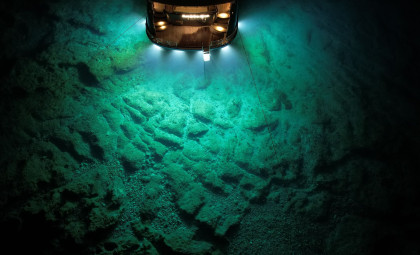
This knowledge informs studies related to icy moons such as Europa and Enceladus, both believed to harbor hidden oceans beneath their icy crusts. Research on Enceladus has revealed gaseous plumes containing carbon dioxide, methane, and nitrogen, sparking increased interest in the potential for microbial life within these alien seas.

While Movile Cave does not prove extraterrestrial life, it broadens our understanding of the environments where life can persist, revealing that sunlight is not the sole energy foundation for living ecosystems.
- Categories:
- Science


0 comments
Sign in to Comment