

Recent findings propose that the enigmatic little red dots identified by NASA’s James Webb Space Telescope may reflect a fleeting phase of vigorous supermassive black hole activity rather than representing a distinct galaxy type. Featured in The Astrophysical Journal, the study spotlights the galaxy WISEA J123635.56+621424.2, dubbed the Saguaro, as a potential evolutionary link connecting early universe red sources with galaxies surrounding active black holes today.
Insights from the Saguaro Galaxy on Little Red Dot Development
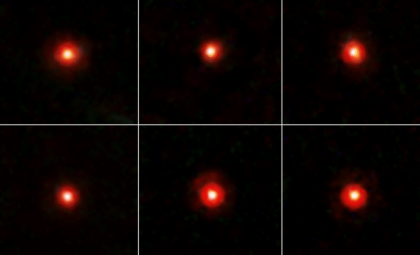
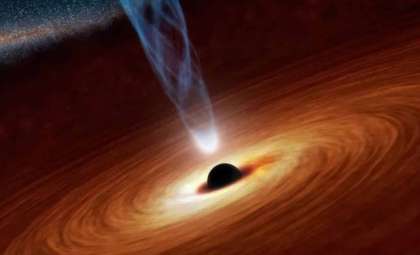
Discovered by Webb in 2022, little red dots have puzzled astronomers seeking to decode the universe’s formative epochs. These dense, intensely red objects observed at high redshift imply their light has traversed most of cosmic time to reach us. Many experts hypothesize these entities relate to active galactic nuclei, where supermassive black holes engulf nearby material, emitting vast energy.
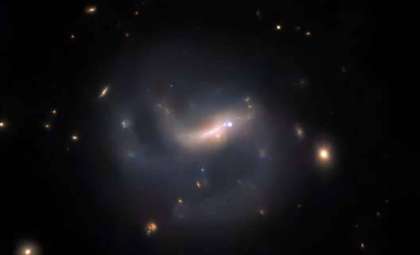
Leading this investigation, Pierluigi Rinaldi from the University of Arizona’s Steward Observatory, now affiliated with the Space Telescope Science Institute, examines a unique lower-redshift specimen to clarify the fate of these objects. The focus is on the Saguaro, a spiral galaxy resembling the iconic desert cactus for which it’s named. Sitting at a redshift near 2, it existed about 3.3 billion years post Big Bang, granting astronomers a glimpse into an ancient cosmic era.


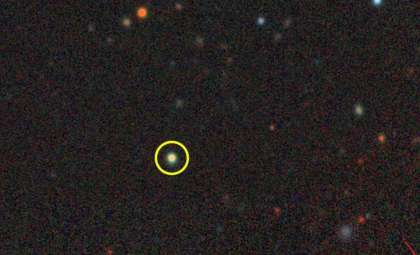
The Saguaro showcases a compact red core resembling distant little red dots, yet its surrounding spiral structure remains visible unlike many high-redshift counterparts. This detail allows scientists to explore the progression of such intriguing objects as cosmic time unfolds.
“Everything created in the early universe must evolve into something around us. We have had little idea of what LRDs become, but these results finally show us how to find their progeny,” said co-author George Rieke of the University of Arizona.
“The Saguaro is important because it’s a prototypical little red dot and is one of the few we have found at lower redshift. It can be used to study the pathway of these dots throughout cosmic time,” said Fabio Pacucci of the Harvard-Smithsonian Center for Astrophysics in Cambridge, Massachusetts, and a co-author of the study.
Connecting the Dots: Observations from Webb and Hubble
To analyze the Saguaro across diverse wavelengths, the team integrated data from NASA’s Hubble Space Telescope, the James Webb Space Telescope, and other survey programs. Their aim was to distinguish the galactic light from the bright red source at its heart.
Findings revealed the Saguaro’s core exhibits pronounced brightness in ultraviolet and infrared bands, mirroring characteristics of distant little red dots detected by Webb. Additionally, the group examined potential X-ray signals to verify if a concealed active black hole could account for the galaxy’s peculiar traits.
This galaxy’s relatively lower redshift permitted detailed study of how the black hole and host galaxy relate — a challenge with many far-flung little red dots where faint surroundings vanish, leaving only the luminous core.
“Because the Saguaro is at lower redshift, we can see the very beautiful and bright host galaxy in high resolution and detail with Webb and Hubble,” said Zihao Wu of the Harvard-Smithsonian Center for Astrophysics and a co-author of the study. “Webb’s observations can help us understand how the galaxy and its little red dot-like nucleus are connected.”
By simulating the Saguaro at a higher redshift, the researchers noted its surroundings fade almost entirely, leaving only the glowing core. This suggests many distant little red dots might be perceived as isolated due to the current telescopes’ inability to detect their faint environments.

X-Ray Clues Signal a Hidden Active Black Hole
Observations from NASA’s Chandra X-ray Observatory provided additional insights. While most little red dots observed by Webb lack strong x-ray signals, the Saguaro emitted faint X-rays hinting at an active but shrouded galactic nucleus.
This supports the idea that many distant little red dots differ from known nearby active black holes due to dense gas and dust clouds obscuring much of their radiation, complicating their detection by conventional methods.
The coexistence of subtle X-ray emission with heavy obscuration offers a plausible explanation for the distinct nature of these Webb-discovered objects, likely representing black holes in a rapid growth phase hidden within dense galactic environments.
“What the X-ray observations show is that this galaxy has an active galactic nucleus, and a very obscured one at that,” said Carys Gilbert, a master’s student at the University of Cape Town in South Africa and a co-author of the paper. “It’s not only obscured but also X-ray weak. That kind of combination could explain the lack of X-ray emission that we see from all other little red dots. It fits the puzzle of little red dots nicely.”
A Cosmic Perspective on Little Red Dot Observability
The authors suggest that little red dots might not constitute a wholly separate galaxy classification but rather represent a transient stage in galaxies harboring rapidly accreting supermassive black holes.
The apparent scarcity of little red dots at lower redshifts could stem from observational challenges. As galaxies evolve and the universe expands, their bright compact regions become distinct from fainter hosts, unlike in the distant cosmos where the red core dominates the view.
They argue astronomers might have only glimpsed the visible ‘tip’ of these systems, with faint host galaxies around distant little red dots remaining undetectable with current technology, Webb included.
“Our theory is that most of these distant sources are affected by this cosmological effect, creating an observational bias,” said Rinaldi. “We simply are not able to sample the immediate environment of high-redshift little red dots because their surroundings are just too faint to be observed even with Webb. Little red dots are far more complex than just being a dot. They’re just the tip of the iceberg—of a supermassive black hole interacting with its nearby surroundings.”
- Categories:
- News







0 comments
Sign in to Comment