

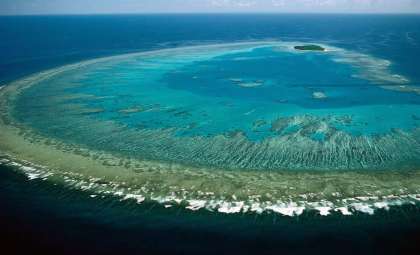
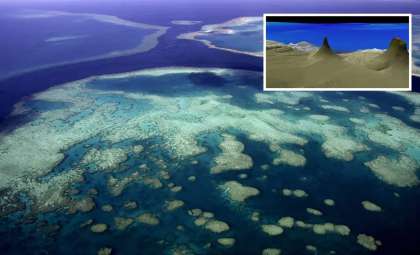
For the first time ever, scientists have charted the microbiome of the Great Barrier Reef, offering an unparalleled glimpse into the reef’s microscopic inhabitants. This groundbreaking study, featured in Nature, uncovered over 500 new bacterial species alongside hundreds of thousands of previously unknown viruses.
Although it has long been understood that microbes play a vital role in maintaining coral reef ecosystems, their immense diversity and complexity have made studying them a challenge. This new research provides the inaugural comprehensive genetic catalog of the reef’s microbial communities.
The investigation was led by Australian scientists who gathered seawater samples across the entire Great Barrier Reef. By compiling a worldwide database of microbial genomes, they've established a resource now accessible to researchers globally for advancing marine ecosystem preservation.

Charting the Genetic Landscape of Reef Microbes
The study, published in Nature, involved analyzing DNA from seawater samples collected at 48 distinct reef sites within the Great Barrier Reef. The team identified more than 800,000 microbial genomes, culminating in the creation of the Great Barrier Reef Microbial Genomes Database, now freely available to scientists worldwide.
This database serves as a foundational tool for upcoming studies examining reef ecosystems. Professor Philip Hugenholtz, senior author and microbiologist at the University of Queensland, emphasized that:
“Now, we can start to explore what makes a healthy reef microbiome and how these invisible communities respond to changes.”

Long-Read Sequencing Revolutionizes Microbial Analysis
The challenge of studying reef microbes is compounded by ocean currents that blend closely related microorganisms. Additionally, many reef microbes possess DNA configurations that are difficult to decode with standard sequencing methods.
The researchers overcame these obstacles by utilizing long-read DNA sequencing. Dr. Steven Robbins, the lead author, compared this approach to simplifying a jigsaw puzzle with tens of thousands of pieces into one with far fewer parts, making it easier to piece together the complex microbial genomes.

Discovery of Hundreds of Novel Microbial Species
The extensive survey identified 876 species of bacteria and archaea, with nearly two-thirds being entirely new to science. In addition, over 360,000 unique viruses were cataloged, highlighting the reef’s microbial richness.
One surprising discovery was the presence of the Crassvirales virus, previously thought to be linked solely to human or animal waste based on its 2014 identification in the human gut. This study reveals that Crassvirales naturally inhabit open ocean environments as well.

The study underlines the critical ecological role of these microscopic organisms. Dr. Yun Kit Yeoh from the Australian Institute of Marine Science explained that microalgae generate the majority of the oxygen humans breathe and form the basis of marine food webs. He added:
“They are eaten by krill and other zooplankton, which are then consumed by other animals from the smallest coral polyps to the largest whales.”
- Categories:
- News



0 comments
Sign in to Comment