

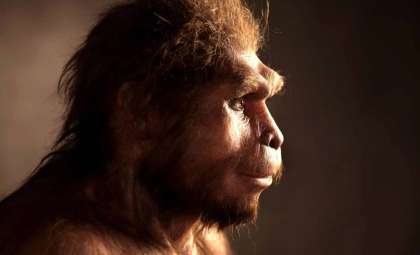
Recent research from the University of California, Berkeley reveals that contemporary humans harbor DNA from two unknown extinct human lineages. This discovery highlights a far more intricate web of interactions between ancient human groups than previously understood.
Past breakthroughs involving Neanderthals and Denisovans have progressively transformed our understanding of human evolution. Rather than a straightforward evolutionary tree, the story is now recognized as a complex network of interbreeding events spanning diverse human populations over millennia.
The new study reveals traces of two additional archaic lineages embedded within the genomes of modern people. Published on July 30 in Science, the research from UC Berkeley identifies these genetic markers independently of fossil DNA.

An Ancient Relative Traced within All Humans
The first lineage, termed a ghost ancestor by the research team, interbred with early Homo sapiens in Africa more than 50,000 years ago, preceding humanity’s spread beyond the continent.
This hidden DNA portion accounts for roughly 0.5% to 1% of the genomes in present-day humans. This lineage diverged from the ancestors of modern humans about 800,000 years ago, around the same period when Neanderthals and Denisovans began evolving on distinct paths.
The study, available in Science, found that this ghost lineage’s DNA exists both within African populations and groups outside Africa, indicating the interbreeding took place before early human migrations.

Yulin Zhang, a graduate student and co-author, noted that previous research suggested the presence of enigmatic archaic ancestry, but this study precisely pinpointed the locations of those DNA sequences across contemporary genomes, demonstrating their widespread presence among human populations.
Innovative Techniques Reveal Ancient Lineages
The Berkeley scientists utilized a novel approach called TRACE — TRacking Archaic Contributions via ARG Estimation. Unlike traditional methods that compare modern DNA to ancient fossils, TRACE reconstructs genealogical relationships of DNA segments found in living individuals.
The University of California, Berkeley explains that TRACE generates detailed family trees called ancestral recombination graphs, enabling identification of DNA regions with ancient origins far predating prior expectations.
This method successfully detected known Neanderthal and Denisovan DNA within modern populations across Asia and Oceania, while simultaneously uncovering numerous archaic genetic fragments that neither group can account for, pointing to entirely unknown ancestral human relatives. Senior researcher Priya Moorjani emphasized that these family trees hold extensive evolutionary records allowing detection of extinct population DNA despite the absence of ancient fossil genomes.
“We often think of human evolution as a branching tree, but new genomic data and analytical methods reveal a much more interconnected history, more like a complex web of populations connected by repeated episodes of migration and mixing,” he said.
A Far Older Ancestry Linked to Denisovans
The team also discovered signs of a second, far more ancient hominin lineage, described as super-archaic. This population branched off roughly 1.8 million years ago and likely interbred with Denisovans in Eurasia over 200,000 years ago. Through later interbreeding events with Homo sapiens, fragments of this distant ancestry entered the genomes of modern humans.
The strongest evidence of this legacy appears among Oceania populations, where Denisovan heritage can constitute up to 4% of the genome. Denisovan genomes themselves bear an estimated 3% to 5% of super-archaic DNA, a fraction of which ultimately passed on to contemporary human genomes.
“TRACE allowed us to contextualize how the ancestry segments from these previously uncharacterized hominins are distributed throughout the human genome,” Arjun Biddanda, who co-led the study as a first author. “We found that these contributions are widespread throughout the genome, and ghost ancestry is detected even in regions previously thought to be intolerant of Neanderthal and Denisovan ancestry.”

The study further identified many of these archaic DNA segments occurring in regions associated with immune system function and metabolic processes. The university's statement suggests these inherited variants may have offered critical genetic advantages, helping humans adapt to novel environments, new pathogens, and diverse diets, thus leaving lasting biological impacts within modern genomes.
- Categories:
- Science


0 comments
Sign in to Comment