

In northern Spain, a landslide that occurred nearly 17,000 years ago sealed the entrance to a cave, creating one of the most exceptionally preserved Paleolithic living sites ever uncovered. Inside, prehistoric tools, decorative items, and even a fire pit remain just as they were left by their ancient inhabitants. Experts consider it among the finest-preserved Ice Age residences worldwide.
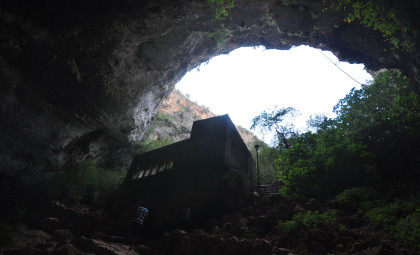
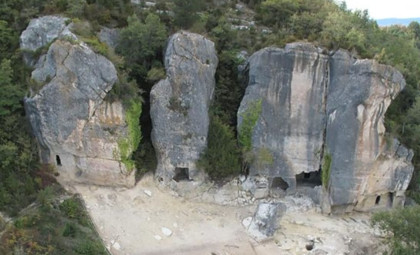
The cave, called La Garma, is located near the Cantabrian coast and was first identified in 1995. This site was inhabited throughout much of the Upper Paleolithic era and contains one of Europe's most extensive collections of rock art, spanning from the Old Stone Age until the cave was sealed.
What makes La Garma extraordinary is not only its age but the geological event that enclosed it. Approximately 17,000 years ago during the Magdalenian period, a rockfall completely blocked the main chamber, effectively locking its contents in place. While this section remained untouched for thousands of years, the adjacent chambers demonstrate nearly continuous human use long after the original habitat disappeared from sight.

An Intact Prehistoric Habitat
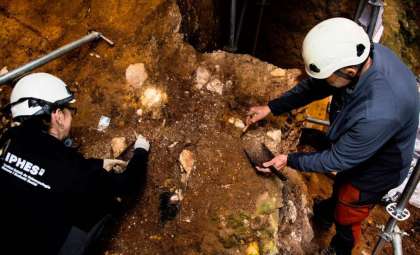
The most striking feature is a small, oval-shaped living area measuring about 5 square meters, outlined by stone blocks and stalagmites. The University of Cantabria reports that these formed the foundation for a shelter constructed of sticks and animal hides, leaning against a natural shelf along the cave wall. At its center is a hearth, surrounded by remnants of daily Ice Age life, untouched since the last occupants left.

So far, archaeologists have retrieved 4,614 artifacts from the site, providing an unusually detailed glimpse into the lives of its former residents. These items include tools for crafting stone, bone, and antler objects, as well as implements used for butchering and processing animal hides. Among the discoveries are spears, needles, and a unique device described as a “proto-harpoon.”
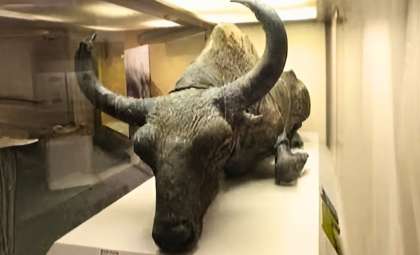
Beyond functional objects, the cave has yielded ornamental pieces like pendants fashioned from deer, horse, and bison bones. A particularly remarkable artifact is an engraved aurochs bone featuring both the animal and a human face, believed to be the only one of its kind from Paleolithic Europe, shedding light on how Ice Age humans depicted themselves alongside the creatures they hunted.
Evidence of an Extinct Predator
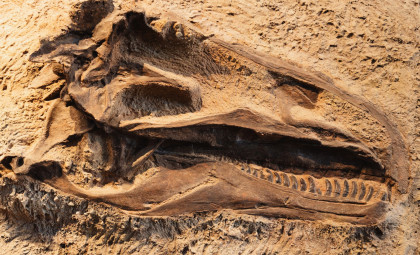
A further investigation by the University of Cantabria uncovered remains of Eurasian cave lions, a species that became extinct roughly 14,000 years ago. According to a PLOS ONE publication, these bones bore marks indicating human modification, suggesting that Ice Age inhabitants hunted the lions, likely for their pelts, which would have been vital for warmth in the cold Ice Age environment.

“Moreover, the specimens also represent the southernmost European and the latest evidence of cave lion exploitation in Iberia. Therefore, the study seeks to provide alternative explanations for lion extinction in Eurasia and argues for a role of hunting as a factor to take into account,” the researchers wrote.
This discovery suggests that early humans may have contributed to the cave lion’s extinction, although hunting is unlikely to have been the sole cause. While the debate continues, these findings add a valuable piece to understanding the disappearance of this species across Eurasia.
- Categories:
- Science






0 comments
Sign in to Comment