

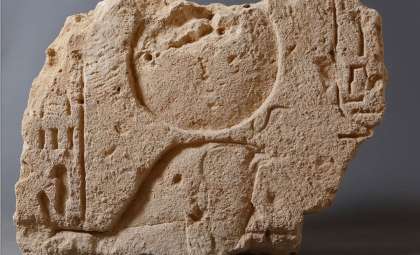
Archaeologists working on Egypt’s eastern frontier have uncovered a stone inscription preserved for more than 3,200 years that could finally solve a long-standing mystery. Excavations at Tell Abu Seifi revealed fragments bearing the name of Horus as protector of the ancient city called Mesen— a settlement referenced in historic records but never conclusively identified in the field.
This excavation is part of a larger effort along the Way of Horus, a fortified route that historically marked Egypt’s eastern frontier. The Ministry of Tourism and Antiquities of Egypt suggests that Tell Abu Seifi may indeed be the lost city of Mesen, known solely from texts dating back to the New Kingdom period, approximately 1570–1069 BCE.
Verifying this discovery is challenging due to the site’s disturbed past: extensive damage caused by Roman-era construction has left only fragments of the original settlement. Despite this, archaeologists have recovered sufficient evidence to reconstruct the layout of a significant city, potentially far more influential than previously understood.

The Multifaceted Role of the Way of Horus
The Way of Horus served as both a crucial military defense line and a commercial passage, protecting Egypt’s eastern border from invasion. According to a translated statement, archaeologists uncovered two stone-paved roads at the site, accompanied by storage areas and service rooms typically linked to temple complexes.
The discovery suggests the location was more than a mere transit point. The combination of storage spaces and structures used for religious purposes indicates the site functioned as both a checkpoint and a sanctuary. Researchers argue this dual purpose aligns perfectly with descriptions of Mesen, which was reportedly a strategic military hub as well as a sacred city under Horus’s protection.

Links to Ramses II and the Restoration of a Horus Statue
Among the most significant artifacts are fragments of sandstone inscriptions referencing Pharaoh Ramses II, who ruled from 1279 to 1213 BCE. This direct connection to one of ancient Egypt’s most famous rulers supports the theory that Tell Abu Seifi is truly the historic city of Mesen.
Another inscription details the restoration of a Horus statue called the “Lord of the City of Mesen,” explicitly connecting the deity to the city’s name long sought by researchers. Alongside architectural evidence, these texts paint a picture of a settlement that persisted through the Pharaonic, Ptolemaic, and Roman eras, continuously holding military, religious, and commercial importance.

Remaining Hurdles to Definitive Identification
Despite mounting clues, experts are cautious about declaring the matter settled. Hesham Hussein, director of archaeology for Egypt’s Delta and Sinai regions, emphasizes that further excavation and analysis are necessary before the site's identity can be conclusively established. In archaeology, certainty often emerges only gradually as evidence accumulates.
Other scholars not directly involved in the dig have noted that finding more artifacts, especially precisely datable pottery, might provide the crucial missing link. In the meantime, Tell Abu Seifi is expected to continue revealing new information over time.

Meanwhile, Egypt’s Minister of Tourism and Antiquities, Sherif Fathy, highlighted the enduring strategic and cultural significance of this border region, underscoring its impact not only in archaeology but also in shaping Egypt’s national identity through the ages.
- Categories:
- Science







0 comments
Sign in to Comment