

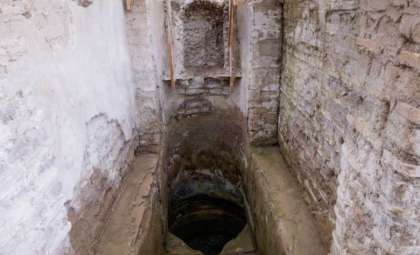
Long before cities evolved around connected streets and temples served as institutionalized religious centers, ritual practices and water sources held central importance. Archaeologists investigating the ancient Etruscan settlement of Kainua, near present-day Bologna, Italy, have uncovered a ritual well dating back approximately 2,500 years.
Within this well, the team discovered two partially preserved bronze statues depicting affluent women or girls, a bronze plate, and skeletal remains belonging to a man and a woman. These finds appear to reflect two distinct phases in the well’s use: an initial ceremonial period marked by bronze offerings near the top and a later phase involving burial or sacrifice, indicated by the human remains found deeper within.
Linking City Life and Sacred Ceremony
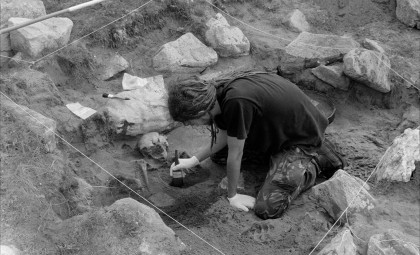
The 39th archaeological excavation at Kainua, led by Dr. Elisabetta Govi from the University of Bologna, revealed this unique ritual well. According to the university’s 2021/2022 field report, Dr. Govi has published extensive research on Kainua in 2023. The well is situated next to a sanctuary dedicated to Uni, an Etruscan goddess associated with femininity, childbirth, marriage, and growth. Temples dedicated to Uni and Tinia—a divine couple in the Etruscan pantheon—are identified nearby.


Interpreting these discoveries is challenging due to ambiguities around what qualifies as a “ritual.” Wells historically accumulate discarded objects for various mundane reasons; yet, the presence of human remains strongly suggests the possibility of human sacrifice. However, preliminary analysis of the skeletons does not indicate a violent or sacrificial death. Excavators emphasize that the combination of location, artifacts, and their chronological order makes ordinary disposal improbable.
From Bronze Offerings to Human Burials
In a September 8th LiveScience interview, Dr. Govi speculated that the human remains might represent a “closing ritual” that marked the end of the well’s use. While this remains a hypothesis, the bronze statuettes and plate provide strong material evidence linking the well’s origins to the period when Kainua was emerging as an urban center, around the late 6th or early 5th century BCE. Thanks to the waterlogged, oxygen-poor environment, the bronze artifacts are exceptionally well-preserved with much of their original sheen intact.
There are signs that the statuettes were deliberately broken before deposition. While similar bronze female votive figures tied to Etruscan water worship have been found across Europe and Asia, none have previously been discovered inside a well.

Another significant find is the bronze plate, which, while stylistically similar to common Etruscan ceramics, represents a unique example made of bronze. The Italian Ministry of Cultural Heritage and Tourism recognizes this as the only known bronze piece of its kind from the Etruscans. This strongly indicates that the plate functioned as a votive object deposited during a ritual ceremony surrounding the well’s construction.
Combined, these elements suggest a coherent symbolic narrative associated with the well. Uni’s cult, focused on feminine themes like birth and growth, and the presence of the deity Vei, connected with fertility and agriculture, align closely with the location and artifacts found.

Dr. Govi explained to Live Science that the findings collectively suggest rituals devoted to feminine principles. She noted that the Etruscans viewed bronze—an alloy of copper and tin—as a symbol of regeneration and life. Likewise, water had both practical and sacred significance. Instead of a strict division between ritual and daily use, Dr. Govi proposes that the well fulfilled both ordinary water needs and ceremonial functions linked to the adjacent sanctuary.
Unlocking the Secrets Held by the Skeletal Remains
This well bridges conventional divides between urban infrastructure, religious worship, and city founding ceremonies, offering a chronological framework rather than mere artifact assortment. The bronze items are seen as part of an initial consecration ritual, while the human skeletons may mark a subsequent ritual closure.
Researchers plan to conduct DNA analysis and radiocarbon dating on the skeletal remains. Once scientific examination is complete, the bronze artifacts will likely be housed at the National Etruscan Museum in Marzabotto. The identities of the buried individuals and the precise timing of their deposition remain unknown.
Current laboratory assessments, expected to conclude in September, aim to transform these symbolic finds into detailed biographical insights.
- Categories:
- Science


0 comments
Sign in to Comment