

An archaeological team from Spain and Egypt has uncovered a dual-chamber mastaba dating back approximately 4,400 years in Saqqara, with painted reliefs that remarkably still retain hints of their original hues. This tomb belonged to Yunmen, an influential official during Pharaoh Djedkare Isesi’s reign, who chose to share the burial site with his father. Egyptian officials have hailed this discovery as one of the most remarkable finds of the current excavation season.
Originating from Egypt’s late Fifth Dynasty, which spans roughly 2494 to 2345 BC, the tomb was located in the Mariette necropolis just north of the primary Saqqara complex. Although this desert area has attracted archaeologists since the 1800s, it has seldom been explored with contemporary archaeological techniques. The exceptional feature of this mastaba lies not only in its antiquity but also in the vivid preservation of its decoration.
During the summer, the excavation was conducted by specialists from the Autonomous University of Barcelona collaborating with Egypt’s Supreme Council of Antiquities, led by Egyptologist Josep Cervelló. Their research aims to reconstruct Saqqara’s ancient landscape, including the pathways, rituals, and communal spaces once used by its inhabitants. The discovery of the mastaba was an unexpected yet valuable addition to their broader investigation.

A Shared Tomb Spanning Two Generations
Commissioned by Yunmen, a high-ranking official serving under Djedkare Isesi, the tomb was intended to house both himself and his father, Iti, who held a modest administrative role. This arrangement resulted in two distinct funerary chapels within the same structure. As noted by the Egyptian Ministry of Tourism and Antiquities, the mastaba contains "two funerary chapels belonging to two high-ranking officials," identified as Younmin and his father Ity.
Researchers believe this dual-chapel layout symbolizes a narrative of social advancement: Yunmen rose from provincial administration to a central government role and wished to honor his father’s legacy alongside his own. This personal story adds a human layer to the broader archaeological context.

Remarkably Preserved Painted Reliefs
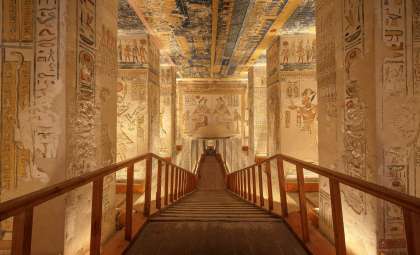
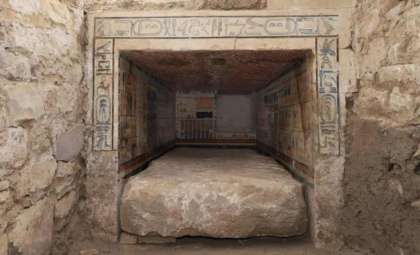
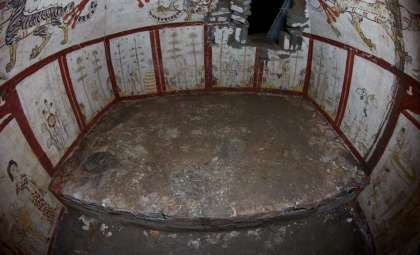
The outstanding state of the painted scenes has captured significant interest. The Egyptian Ministry emphasized the well-maintained reliefs illustrating farming activities and ceremonial processions presenting offerings. Remarkably, many of these carvings “have retained their original colours” despite lying underground for over 4,000 years. The artwork also portrays donkeys and various animals, adding a vivid glimpse into everyday rural life alongside formal funerary motifs.
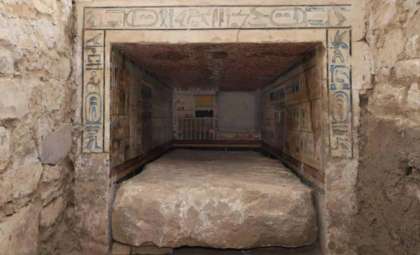
In addition to the colorful decorations, the mastaba features a finely crafted architrave and inscriptions detailing Yunmen’s official titles and duties. These writings help identify historically and socially significant individuals from this era, according to the university team.

Additional Tombs Expected Nearby
This discovery emerged as part of a wider effort to chart Saqqara’s ancient layout, including its roadways, public plazas, and the flow of people and offerings throughout the area. The process led to uncovering this previously undocumented mastaba, along with indications of two more adjacent structures yet to be excavated.
Researchers plan to return in upcoming seasons to explore these sites. For now, the find enriches our understanding of the late Fifth Dynasty, a period with comparatively limited archaeological and textual records in Egypt’s long history.

- Categories:
- News




0 comments
Sign in to Comment