

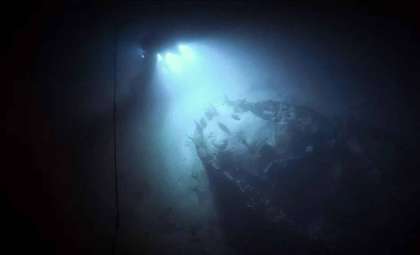
For nearly 2,000 years, two enormous Roman ships thought to have been owned by Emperor Caligula rested beneath the waters of Lake Nemi, a volcanic crater about 30 kilometers south of Rome, until a remarkable Italian engineering feat in the late 1920s brought them back to the surface.
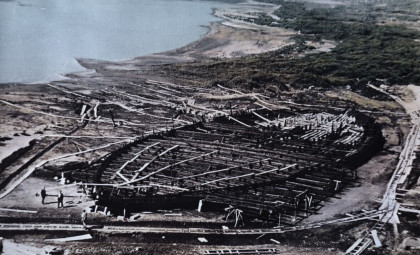
This excavation stands out as one of the most extraordinary archaeological projects of its era. Starting in 1928, Italian engineers began draining the lake, uncovering the giant hulls of the two ships. Each was approximately 70 meters long, showcasing the advanced shipbuilding techniques used by the Romans.

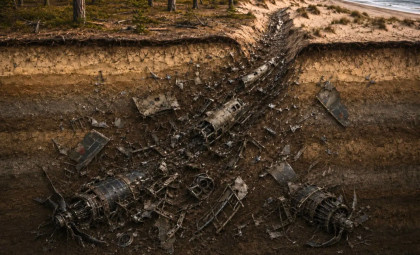
Unfortunately, the ships remained above water briefly. On the night of May 31 to June 1, 1944, during World War II’s advance on Rome, a devastating fire swept through the museum built to house them, obliterating much of the wooden remains.

Draining the Lake to Expose the Ancient Vessels
Efforts to recover these vessels date back centuries to long before modern archaeology existed. One notable early attempt occurred in 1446 by Renaissance architect Leon Battista Alberti, among many other efforts over the years.
In 1928, engineers pioneered a novel approach: instead of raising the ships from the deep waters, they gradually lowered Lake Nemi's water level. Using pumps and an ancient Roman drainage network linked to the lake, the water receded, revealing the ships’ hulls as they emerged from centuries of mud entombment. This process gave scholars a rare opportunity to study the vessels directly.
The salvage operation extended into the early 1930s, allowing for detailed examination and documentation.

These ships were enormous by ancient standards. The first measured about 70 meters in length and 20 meters in width, with the second closely matching these proportions. Their wide design and lake location suggest they were specially constructed for use on Lake Nemi rather than for long ocean voyages.
Their dimensions, however, were not their only exceptional traits.
Insights Gained from the Recovery
The excavation revealed remarkable details about Roman naval craftsmanship.
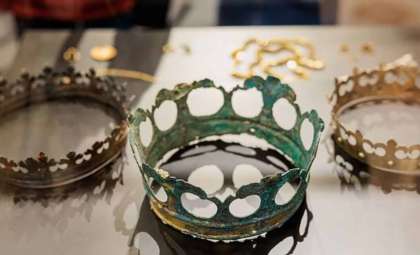
Features found aboard the ships included lead cladding, intricate plumbing systems, anchors, pumps, and ornamental fixtures. Lead pipes inscribed with Emperor Caligula’s name linked the vessels firmly to the ruler who reigned from AD 37 to AD 41.
A particularly intriguing find was ancient ball bearings linked to rotating platforms or wheels, highlighting sophisticated engineering. The ships’ anchors and pump mechanisms also reflected the technical skill behind their construction.
Charles River Editors offer a detailed account of Caligula’s Nemi ships, noting the presence of pumps, anchors, and bearing mechanisms. A Google Books collection suggests the larger ship might be among the biggest vessels built in antiquity.

Based on archaeological study, it appears these ships were far more lavish than typical transport vessels. Decorative stone and bronze fittings, plus amenities like running hot and cold water and heating systems, imply they were akin to luxurious floating mansions. Still, their exact function remains a subject of speculation.
Spiritual Connections at Lake Nemi
The religious significance of Lake Nemi adds another perspective to theories about the ships’ uses.
The lake is closely connected to the worship of Diana Nemorensis, with her temple located nearby. C.M.C. Green’s work on Roman religion and Diana’s cult at Aricia explores this connection to the region.
Given this religious context, some suggest the ships may have had ceremonial or sacred functions. Yet, existing evidence is insufficient to determine if their entire use or only parts of it were ritualistic.

Additional insight can be found in a detailed report from La Brújula Verde, outlining historic attempts to find these ships and highlighting the successful strategy of lowering Lake Nemi’s water level.
A Museum Built to Preserve the Giants
After the salvage, Italy established the Museo delle Navi Romane near Lake Nemi to protect the vessels. Given the immense size and fragile condition after centuries underwater, traditional display methods were impossible.
The museum was essentially constructed around the ships, which rested on custom supports while thousands of recovered artifacts were arranged beside them.
For several years, visitors could view these exquisite Roman vessels above water—until the tragic events of May 31, 1944.
As the Allied armies pushed north through Italy and German troops withdrew toward Rome, a fire erupted overnight in the museum housing the ships. By the morning of June 1, both wooden hulls had been severely damaged.
This loss was especially heartbreaking given the ships’ survival underwater for almost two millennia prior to their display. Less than a decade after their recovery, the majority of their original wooden structures had been destroyed.
Controversy Surrounding the Fire’s Cause
The origin of this devastating fire remains a subject of debate.
Postwar reports largely blamed German forces in the area, a view widely accepted and repeated in historical accounts of the ship’s discovery and demise.
However, alternate theories have emerged, suggesting that artillery fire aimed near the museum could have ignited or exacerbated the blaze during ongoing military operations.
To date, no conclusive agreement on the fire’s cause has been reached.
Despite the destruction, many artifacts and detailed documentation including photographs and drawings of the ships had already been collected, preserving vital knowledge of their sophisticated design and construction.
- Categories:
- News




0 comments
Sign in to Comment