

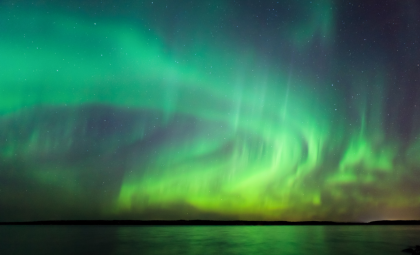
An intense surge of solar activity is dispatching energetic particles toward Earth, potentially producing visible aurora borealis displays across parts of the northern United States from Monday evening through Tuesday, September 8, 2026. These coronal mass ejections (CMEs) are anticipated to trigger G1-level geomagnetic storm conditions, offering enthusiasts several states a chance to witness luminous night sky shows.
This event coincides with heightened solar activity, including multiple M-class solar flares and a notable C9-class solar flare associated with a CME directed at Earth. While the geomagnetic storm is predicted to remain mild, ideal conditions could make the northern lights observable in regions with minimal light interference and dark skies.
Several Solar Eruptions Fuel Aurora Prospects
The ongoing space weather disturbance stems from multiple CMEs launched by solar magnetic disturbances. One CME from September 2 was projected to impact Earth on September 7, and a subsequent outburst on September 4 may either cause minor effects or merge with prior solar emissions between late September 7 and early September 8.

In contrast to solar flares, which travel at light speed and reach Earth within approximately eight minutes, CMEs progress more slowly, taking days to cross the space between the Sun and Earth depending on their velocity and direction.
The CME connected to this upcoming storm was launched from an active region near sunspot 4524, an area marked by intricate magnetic structures on the Sun’s surface. When these particles engage with Earth’s magnetosphere, they disturb the planet's magnetic field, sparking auroral phenomena.
The peak viewing period is anticipated just before dawn on Tuesday, coinciding with heightened geomagnetic activity. However, much of the event’s climax may occur during daylight hours across the U.S., restricting visibility in certain locations.

NOAA Monitors Incoming Geomagnetic Disturbances
The National Oceanic and Atmospheric Administration (NOAA) and its Space Weather Prediction Center (SWPC) report that Earth is set to experience G1 minor geomagnetic storm activity near September 8. Models indicate that storm intensity might increase if further solar material arrives in the days ahead.
NOAA's aurora outlook highlights multiple northern states with promising conditions, including Alaska, northern Washington, Idaho, Montana, North Dakota, South Dakota, Minnesota, Wisconsin, Michigan, upper New York, and Maine.
Regions such as Montana, North Dakota, and Minnesota may offer some of the clearest views during the early morning hours. Observers’ success will hinge on weather conditions, sky darkness, and the ultimate strength of the geomagnetic response.
NOAA also tracks how geomagnetic storms influence technology. Even storms classified as minor can cause brief disruptions in satellite operations, radio communications, and electrical grid functions.
What Causes the Northern Lights During Solar Storms?
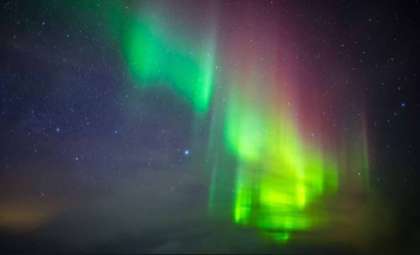
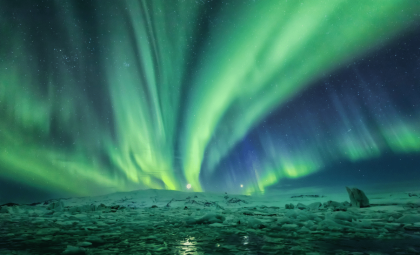
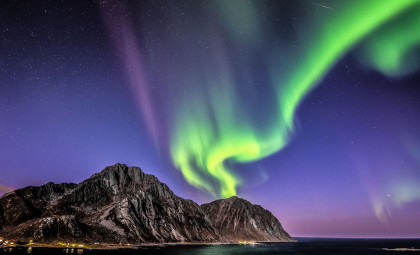
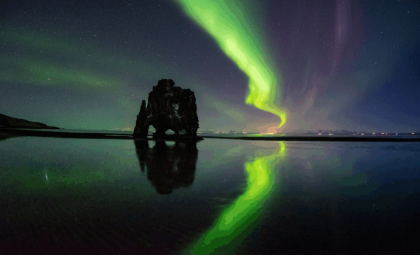
The aurora borealis arises when solar-charged particles collide with Earth's upper atmosphere, energizing atoms and molecules to emit visible light.
Various atmospheric gases produce distinct colors: oxygen generates greens and reds, while nitrogen yields blues and purples. Heightened solar activity can push auroras to lower latitudes beyond the polar zones.
Solar flares are categorized by intensity into A, B, C, M, and X classes, each tier representing a tenfold power increase. Although the recent C9 flare ranks below the highest levels, its associated CME was strong enough to instigate geomagnetic effects near Earth.
The Sun is currently experiencing an active phase of its roughly 11-year solar cycle. Researchers leverage such events to deepen understanding of how solar eruptions impact Earth’s space environment and technologies.

Northern U.S. Observers Ready for Aurora Possibility
Anyone aiming to catch the northern lights should seek out dark locations away from urban lighting and scan toward the northern horizon. The hours before dawn on Tuesday, September 8, currently represent the best chance for sightings.
The degree of aurora visibility depends on the CME’s interaction strength with Earth's magnetic field. Continued updates from NOAA SWPC will refine forecasts as the solar material draws near.
Beyond offering a stunning natural spectacle, geomagnetic storms provide vital scientific data to explore the Sun-Earth relationship. These studies enhance forecasting efforts that safeguard satellites, communication infrastructure, and other space-weather-sensitive systems.
For northern U.S. residents, this solar event may present a rare opportunity to observe one of nature’s most captivating light shows. Should conditions be favorable, streaming solar particles could illuminate the skies with a fresh aurora display.
- Categories:
- News








0 comments
Sign in to Comment