

Once a remote Soviet site for testing dangerous pathogens like anthrax, smallpox, and plague, Vozrozhdeniya Island ceased to be an island in 2001 when the receding Aral Sea formed a land bridge connecting it to the mainland at the Uzbek-Kazakh border. This shift removed the natural water barrier that had kept the secret facility, known as Aralsk-7, isolated for decades.
In 2002, a joint U.S.-Uzbek mission was launched to decontaminate some of the abandoned laboratories, buildings, and anthrax burial sites left behind after the Soviet bioweapons program ended. However, this cleanup addressed only certain areas, not the entire range used during years of open-air biological testing.
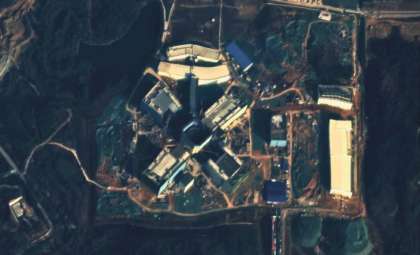
Aralsk-7 was a complex combining a military township called Kantubek with research labs, animal facilities, and a testing ground. At its peak, the settlement accommodated nearly 1,500 military personnel and their families. A former senior official in the Soviet biological warfare program estimated that between 100 and 150 scientists, technicians, and soldiers worked on the site at any one time.

A Secret Town and Open-Air Biological Testing Ground in One
Research on biological weapons on Vozrozhdeniya started long before the permanent complex was completed. Soviet military biologists first arrived in 1936, conducting experiments on tularemia, plague , and cholera in 1937. Activities paused during World War II and resumed afterward.
Construction of the permanent site began in 1954. CIA aerial images from 1962 revealed barracks, parade grounds, animal enclosures, research facilities, and open-air testing areas situated on the island, which also supported fishing operations.

The town of Kantubek included apartment blocks, a school, retail stores, a post office, a dining hall, a stadium, barracks, and its own power plant. Freshwater was delivered by barge and stored in large tanks. Nearby, Barkhan airfield featured four runways to accommodate aircraft landings under various wind conditions.
A few kilometers from Kantubek was a field research lab known by the Russian acronym PNIL. The southern island area functioned as the main testing range, where pathogens were dispersed via aircraft or explosive devices. The program worked with dangerous agents including anthrax, plague, smallpox, tularemia, brucellosis, typhus, Q fever, and other infectious diseases.
The facility's design aimed for prevailing winds to carry biological aerosols away from the inhabited town. Workers carried out decontamination routines after tests and underwent mandatory quarantine. In the 1980s, 500 monkeys used for research on tularemia died from exposure; their bodies were incinerated and buried on the island.
Risks Evident from Several Accidents
The island was associated with numerous incidents, though details and causes vary in the records.
In 1971, a scientist aboard the research vessel Lev Berg fell ill after the ship sailed into a haze near Vozrozhdeniya. Despite vaccination, she contracted smallpox. Subsequently, nine individuals in her hometown were infected and three died. Investigations revealed the ship had passed through an aerosol cloud generated during a smallpox test.
In 1972, the bodies of two fishermen who had disappeared were discovered in their boat. Though suspected to have died from plague, confirmation was lacking.

In May 1988, an estimated 50,000 saiga antelope died suddenly on the nearby steppe within an hour. The cause remained undetermined, with pollution among the possible explanations.
The Soviet bioweapons program operated other sites far from the Aral Sea. A notable example is the April 1979 anthrax outbreak in Sverdlovsk (now Yekaterinburg), which has conflicting death numbers reported. The East Carolina University archive lists at least 68 deaths, while a BBC Future investigation estimates no fewer than 105 fatalities.
At first, Soviet officials blamed tainted meat for the outbreak. It was only years later that the accident’s link to a biological weapons lab was acknowledged.
Aral Sea's Decline Ends the Island’s Seclusion
Once the world's fourth-largest lake in 1964, the Aral Sea dramatically shrank after Soviet irrigation projects diverted the Syr Darya and Amu Darya rivers during the 1950s and 1960s to water cotton and other crops. This caused water levels to drop, shoreline retreat, and exposed vast former seabed areas, as documented by the NASA Earth Observatory.
As the water receded, Vozrozhdeniya Island grew in size, expanding nearly tenfold over the 1990s. By 2001, it was no longer an island but connected to the mainland, turning into a peninsula.

The Soviet bioweapons program had ended as the USSR dissolved. The Aralsk-7 laboratory officially closed in November 1991, with Kantubek’s residents evacuated shortly afterward. According to the Arms Control Association’s report, the Soviets fully abandoned the site by 1992, leaving behind buildings, equipment, and infrastructure.
Before leaving, Soviet authorities tried to dispose of a large anthrax stockpile. In 1988, between 100 and 200 tonnes of anthrax slurry were combined with bleach, transported by barge, and dumped into pits on the island. U.S. Defense Department researchers testing the soil in the late 1990s later discovered viable anthrax spores in the area.
Joint U.S.-Uzbek Cleanup Targets Anthrax Burial Sites
On October 22, 2001, the United States and Uzbekistan agreed on a cleanup operation funded with up to $6 million. The mission aimed to dismantle about 20 buildings, decontaminate laboratories, and treat 11 anthrax burial grounds.
Over four months, 100 local workers excavated contaminated soil into a specially lined trench, treating it with thousands of kilograms of powdered bleach. After six days of treatment, tests showed no surviving spores in the treated material.
The cleanup did not guarantee that all former testing zones were free from biological agents. The island also had open-air test ranges and other burial pits containing infected animal remains. The documented U.S.-Uzbek effort focused specifically on laboratories, certain buildings, and the 11 identified anthrax pits.
- Categories:
- Science





0 comments
Sign in to Comment