

Researchers have uncovered a previously unknown primate species living in the region now known as Wyoming approximately 50 million years ago. Named Tetonius varleyorum, this small creature, comparable in size to today’s mouse lemurs, challenges existing ideas about primate evolutionary history.
Part of the omomyid family—small, large-eyed primates bearing resemblance to modern tarsiers—these animals thrived in the forests of North America during the Eocene epoch. Omomyids first appeared around 55 to 56 million years ago across the northern hemisphere.
Parker Rhinehart, a PhD candidate at the Biodiversity Institute and Natural History Museum at the University of Kansas, stated that despite their extinction, these were genuine primates positioned near the point where the line separating lemurs diverges from the lineage leading to monkeys, apes, and humans.

New Species Revealed Through Small Fossilized Teeth
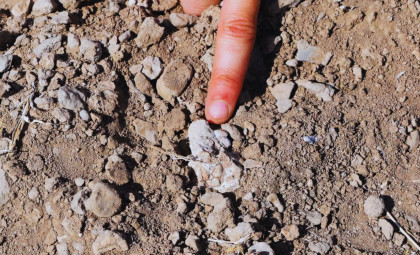
At the Tim’s Confession sandstone site within the Smiley Draw fauna region of southern Wyoming’s Great Divide Basin, scientists discovered numerous jaw and tooth fragments belonging to Tetonius varleyorum. The species' name also honors a supportive local family involved in the discovery process.
“We named it Tetonius varleyorum,” Rhinehart explained in a statement. “Varley is the name of a family that runs a truck stop near the campground where we stay when we’re collecting fossils, and they’ve been a great help to us.”
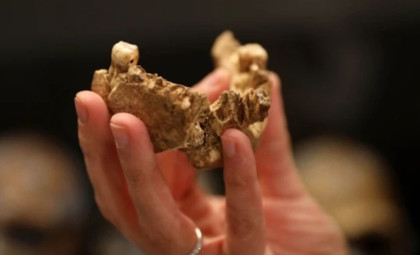
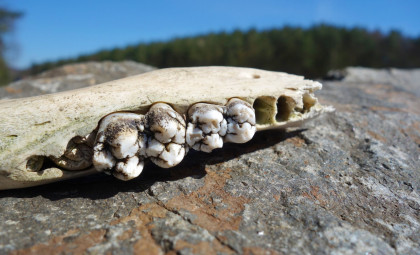
Due to their small size, these fossils are challenging to locate, with teeth and jaw fragments often serving as the only surviving evidence of ancient primates after millions of years of natural wear.
“Identifying ancient primate fossils in the field typically requires hunting tiny fossil jaws and teeth, the only body parts tough enough to withstand erosion over geologic time,” Parker Rhinehart said.

Close to 1,000 fossilized jaw fragments featuring teeth from an array of ancient mammals have been excavated at this location. These specimens are contributing novel insights into Tetonius evolution, expanding knowledge beyond fossils previously found solely in Wyoming’s Bighorn Basin. Rhinehart emphasized that including fossils from other sites significantly alters the understanding of the species' evolutionary trajectory.
“One of the things our paper points out is when you start incorporating fossils from outside of the Bighorn Basin, this picture becomes a little bit more complicated,” he said.
Coexistence of Multiple Omomyid Species
The significance of Tetonius varleyorum was heightened by the identification of two additional rare omomyid species—Arapahovius gazini and Anemorhysis savage—at the same excavation site. These findings represent their second and third known occurrences, respectively.
This coexistence is unprecedented, marking the first time that three different omomyid species have been documented from the same early Eocene locality. Furthermore, a fourth omomyid fossil was recovered at the site but has yet to be formally described.
“While the earlier paper and figure have been vital to the Tetonius story, fossils from Smiley Draw would challenge some of its conclusions.”

Revising the Established Evolutionary Framework
The newly discovered fossils from Wyoming are prompting scientists to reexamine an influential 1987 study by paleontologists Thomas Bown and Kenneth Rose that has guided interpretations of Tetonius evolution.
That research, based on Bighorn Basin fossils, proposed a steady evolutionary transition called anagenesis, in which one species morphs gradually into another without diverging branches. However, the Smiley Draw fossils contradict this pattern, disrupting the previously assumed sequence.
“Our analysis reveals that the new fossils of Tetonius varleyorum interrupt the purported anagenetic lineage from the Bighorn Basin,” Rhinehart said.

Published in the Journal of Human Evolution, the research presents compelling evidence that the evolutionary path of Tetonius is more intricate than previously recognized.
- Categories:
- Science



0 comments
Sign in to Comment