

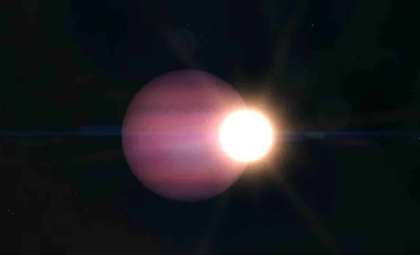
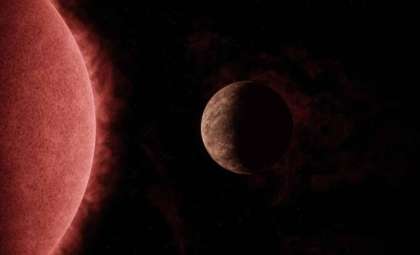
A newly studied white dwarf, measuring nearly half the diameter of Earth, astonishingly contains about 1.226 times the mass of our Sun. Scientists believe that SDSS J0608−0059 could harbor a rare and intriguing oxygen-neon core beneath its outer layer.
White dwarfs are the incredibly dense cores left behind after stars burn out, but this particular star represents an extreme case. Most known white dwarfs have masses ranging between 0.5 and 0.7 solar masses, typically with interiors composed primarily of carbon and oxygen. However, extraordinarily massive white dwarfs—those above approximately 1.05 to 1.1 solar masses—may differ significantly.
Their unique nature stems from their progenitor stars. Stars with masses between 8 and 10 times that of the Sun can reach conditions intense enough to fuse carbon into oxygen and neon. Smaller stars fail to achieve those extreme temperatures and densities, ending up with carbon-oxygen cores. This difference is crucial because oxygen-neon white dwarfs might have distinct evolutionary paths, unlike typical carbon-oxygen white dwarfs which can trigger Type Ia supernova explosions when they accrete mass from a companion star.

Companion Star Offers Vital Insight
Exploring the internal composition of white dwarfs is challenging since we can only directly observe their visible surface layers—the photosphere—while over 99% of their mass remains hidden beneath. Although spectroscopic data provides information about the surface, it does not reveal the characteristics of the star’s core.
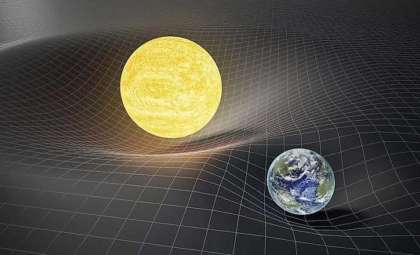
The research team, headed by Stefan M. Arseneau from Boston University, tackled this problem using gravitational redshift — the effect causing light’s wavelength to stretch as it escapes a strong gravitational field.
SDSS J0608−0059’s binary partner proved crucial. Located roughly 2,684 astronomical units away, this companion star’s velocity is essentially synchronized with the white dwarf’s. The researchers, as outlined in The Astrophysical Journal, calculated the white dwarf’s intrinsic velocity by subtracting the companion’s observed velocity, allowing them to isolate the gravitational redshift component.
Integrating Data from Four Sky Surveys to Pinpoint Size
Since gravitational redshift alone cannot independently determine a star’s mass and radius, the team combined it with luminosity data from four major astronomical surveys: Gaia, SDSS, Pan-STARRS, and SkyMapper.
Using a statistical approach, the researchers integrated these observations with gravitational redshift data to estimate the best fit values for mass, radius, distance, extinction, and temperature. Their results are remarkable: SDSS J0608−0059 possesses a mass near 1.226 times that of the Sun squeezed into a radius approximately half that of Earth.
This star’s location on a brightness versus color plot places it firmly within the category of ultramassive white dwarfs, noticeably beneath the standard cooling trajectory of typical white dwarfs.
Evidence Points Toward an Oxygen-Neon Core
With mass and size estimates in hand, the researchers investigated SDSS J0608−0059’s inner composition. White dwarfs with carbon-oxygen cores differ subtly from those with oxygen-neon cores in their mass-radius relationship at such high masses. The team compared their measurements against theoretical models for both core types.
“By comparing to state-of-the-art mass-radius relations for ultramassive white dwarfs, we find preference for an O/Ne core over a C/O core, with a Bayes factor of 2.7,” the team wrote
They also evaluated the possibility that SDSS J0608−0059 formed from the merger of two white dwarfs, a known route to create high-mass remnants. However, its typical Galactic velocity, absence of a magnetic field, and continued existence in a wide binary orbit all argue against this scenario.
Although the data strongly suggest an oxygen-neon core, confirmation is still pending. According to Phys.org, future enhanced data from Gaia or further ultraviolet observations could provide greater clarity.
- Categories:
- Space




0 comments
Sign in to Comment