

Researchers have announced the identification of a new genus and species of armored dinosaur, uncovered from skull fossils excavated over two decades ago on Japan’s Hokkaido island. Designated Nipponopelta yezoensis, this dinosaur existed around 96 to 94 million years ago and marks the initial formal description of an ankylosaur in Japan.
This discovery is more than just an addition to dinosaur taxonomy. Ankylosaurs—stocky, heavily armored herbivores from the Cretaceous period—are divided into two primary clades: nodosaurids and ankylosaurids. While fossils from both groups are commonly found in North America and Europe, Asian nodosaurids are comparatively scarce and are largely known only through body fossils rather than cranial remains.
The rarity of skull specimens is what makes Nipponopelta yezoensis particularly significant. According to the scientists involved, this represents only the second Asian nodosaurid identified from skull material, offering valuable insights into anatomical details such as inner ear structures and jaw mechanics, inaccessible through body fossils alone.

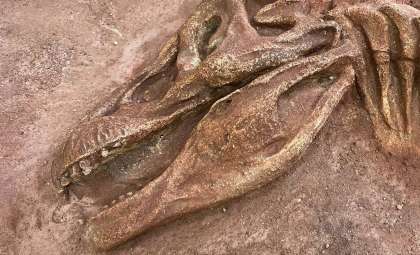
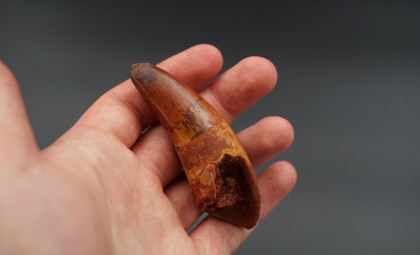
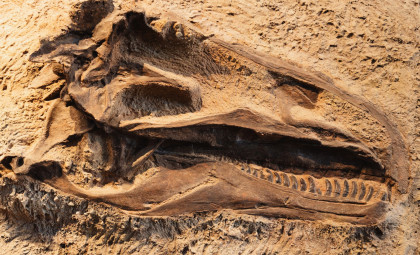
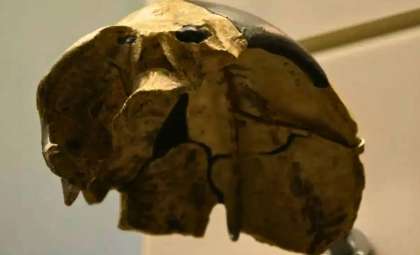
The fossil find includes a partial skull, a cervical vertebra, and several teeth, originally extracted from a concretion in the upper Hikagenosawa Formation near Yubari city. Despite being discovered years ago, its precise classification remained unclear until recently.
Two Decades of Digital Analysis
The fossils remained enigmatic largely because key features inside the skull were hidden from view. However, a team led by Hokkaido University paleontologist Shumpei Oyabu utilized 3D CT scanning technology to digitally reconstruct hidden internal structures, revealing anatomical details previously unseen.

The scans unveiled new information, including portions of the lower jaw, two complete teeth, and the dinosaur’s left inner ear, alongside unique traits at the back of the skull. This combination enabled researchers to finally confirm the fossil as a new genus and species, rather than an existing nodosaurid genus.
A Surprising Evolutionary Relationship
One of the study’s most fascinating findings relates to the evolutionary placement of Nipponopelta yezoensis. Instead of grouping with previously known Asian nodosaurids, phylogenetic analyses positioned it among more derived nodosaurids from North America and Europe, including Pawpawsaurus, Panoplosaurus, Edmontonia, and Denversaurus.

To interpret this pattern, the scientists reconstructed ancestral dispersal routes spanning millions of years. Oyabu and colleagues explain:
“Ancestral geographic analysis suggests that Nipponopelta yezoensis and its close relatives originated in Laramidia, Appalachia, and Asia, indicating a wide ancestral area.”
Living by the Sea and Broader Trends
The team also investigated how habitats preferred by ankylosaurs evolved over time. Nodosaurids are noted to be more frequently discovered in marine sedimentary environments compared to ankylosaurids, with multiple references indicating this group was generally suited to coastal and estuarine habitats.
Habitual reconstructions suggest that Nipponopelta yezoensis inhabited environments influenced by proximity to the sea, such as coastal shores or estuaries. The researchers propose that ankylosaurs might have originally thrived in coastal regions, with some lineages eventually moving inland.

It appears that nodosaurids, including Nipponopelta yezoensis, maintained a coastal existence, and the researchers suggest this ecological preference may have influenced their geographical distribution over time.
- Categories:
- Science






0 comments
Sign in to Comment