

A distinctive armored predator that inhabited Brazil around 240 million years ago has been identified as a distant relative of crocodiles, bearing an uncanny resemblance to dinosaurs. The species, named Tainrakuasuchus bellator, lived shortly before dinosaurs rose to prominence, highlighting the rich biodiversity of the Triassic period.
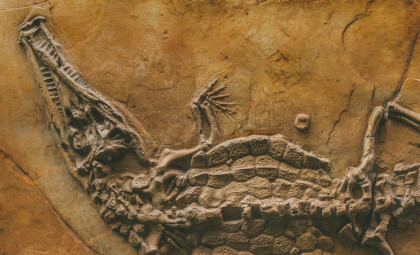
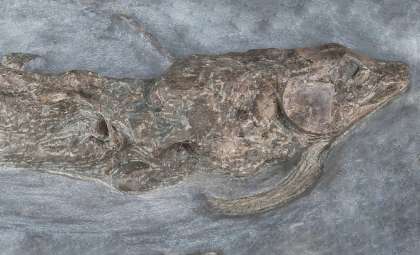
The fossil remains, discovered in the Dona Francisca region of Brazil, consist of sections of the lower jaw, spine, and pelvis. Scientists say this find enhances understanding of a prehistoric era when various reptile groups competed for survival before dinosaurs dominated. Detailed in a study published on November 13 in the Journal of Systematic Palaeontology, Tainrakuasuchus bellator is part of Pseudosuchia, the lineage that eventually evolved into modern crocodiles. Even though it bore a dinosaur-like form, it is not classified as a dinosaur.
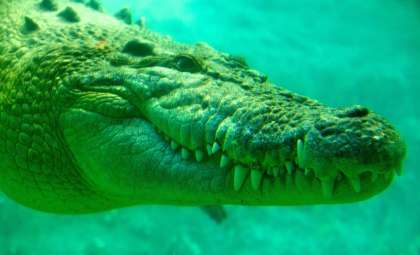
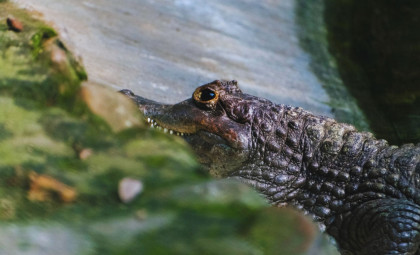
Approximately 240 million years ago, during the Triassic period, archosaurs were the leading land vertebrates. This group split into two main branches: one leading to dinosaurs and birds, and the other to crocodilians. The newly described species falls under a rare clade of pseudosuchians termed poposauroids. Fossils from this group are scarce, particularly in South America, making this discovery valuable for exploring pre-dinosaurian life.

A Dinosaur-Like "Warrior" Crocodilian Ancestor
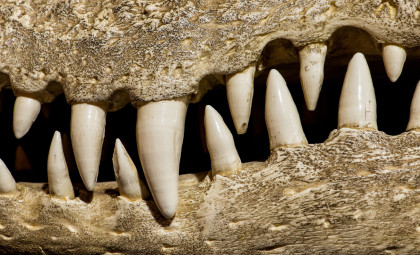
Tainrakuasuchus bellator was modest in size by its era’s standards, measuring roughly 2.4 meters (7.9 feet) in length and weighing about 60 kilograms (130 pounds). Its anatomy featured a lengthened neck, a slender jaw lined with pointed teeth, and a back armored with bony plates known as osteoderms. These plates served as protective armor, a trait that modern crocodiles retain, indicating the deep evolutionary roots of this defense mechanism.

Rodrigo Temp Müller, paleontologist at the Federal University of Santa Maria and the lead author of the paper, emphasized how the discovery illuminates the predator-rich world before dinosaurs ruled. He explained that pseudosuchians exhibited remarkable diversity during that time, yet many branches remain little understood due to scarce fossil evidence.
Though active and formidable as a hunter, this predator wasn’t the era’s apex hunter. Researchers noted:
“This animal was an active predator, but despite its relatively large size, it was far from the largest hunter of its time with the same ecosystem home to giants as big as seven meters long.”
Evidence of Ancient Connections Between Brazil and Africa
The fossil also provides a glimpse into a prehistoric Earth. At the time of Tainrakuasuchus bellator, South America and Africa were united within the supercontinent Pangaea, facilitating fauna migration between regions now separated by oceans.
“At that time, the continents were still united, which allowed the free dispersal of organisms across regions that are now separated by oceans,” Müller explained. “As a result, the faunas of Brazil and Africa shared several common elements, reflecting an intertwined evolutionary and ecological history.”

In a press release, Müller highlighted the close relationship between the Brazilian species and Mandasuchus tanyauchen, a pseudosuchian from Tanzania that lived around 245 million years ago. This connection illustrates the high degree of ecosystem interconnectivity across Pangaea and shows how prehistoric creatures migrated across vast connected territories.
A Glimpse Into a World Before Dinosaurs
The research published in the peer-reviewed Journal of Systematic Palaeontology reveals that life before dinosaurs included a variety of unique and formidable predators. Though dinosaurs would later dominate terrestrial ecosystems, crocodilian ancestors like this armored hunter were already developing distinctive adaptations millions of years earlier.
The fossil offers valuable insight into a lesser-known era of prehistoric life. According to the study’s authors, it broadens understanding of the rich biodiversity that existed prior to dinosaurs’ ecological dominance on Earth’s landscapes.

With its armored plating, razor-sharp teeth, and strong crocodile lineage, Tainrakuasuchus bellator enriches our understanding of reptilian history, illustrating that some of the most extraordinary ancient predators existed long before dinosaurs became iconic.
- Categories:
- Science




0 comments
Sign in to Comment