

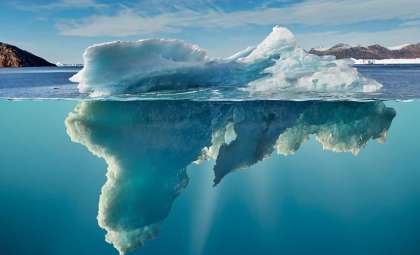
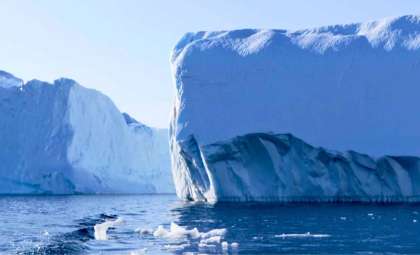
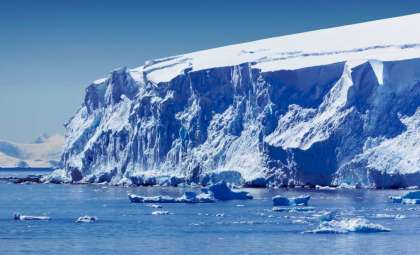
A colossal iceberg, spanning nearly 29 square miles, detached from Greenland’s Petermann Glacier and headed toward a rocky island in Arctic waters. Contrary to expectations, the massive ice chunk endured the impact without fracturing and kept drifting, much to the surprise of scientists monitoring its trajectory.
The iceberg broke off from Petermann Glacier in August 2026, coinciding with the season when iceberg calving typically intensifies in Greenland’s fjords. This event marked the largest iceberg calving recorded in the Arctic since 2020, drawing significant scientific interest due to its size and the unexpected behavior that followed.
Petermann Glacier is a key marine-terminating glacier in Greenland, extending into the ocean and frequently shedding large ice masses through calving. Although calving is a natural glacier process, scientists observe these events closely, as shifts in glacier dynamics can reveal vital information about the changing conditions of Greenland’s ice sheet.

According to NASA Earth Observatory, researchers use satellite data and environmental measurements to track long-term glacier changes, especially where glaciers meet the sea.
Record-Breaking 29-Square-Mile Ice Island Emerges From Greenland
The iceberg’s voyage started on August 4, 2026, when Adam Garbo, a glaciology PhD candidate at the University of Ottawa, spotted the calving event via imagery from the European Space Agency’s Sentinel-1 satellite. His observations contribute to a global effort to monitor Petermann Glacier’s floating ice tongue remotely.
Dubbed an “ice island” for its broad, flat shape, this iceberg covered just over 76 square kilometers upon detaching. Scientists noted it as the largest ice chunk released from Petermann since the significant 2012 calving, which created an iceberg measuring 130 square kilometers.

Petermann has generated several notable icebergs in recent years, including a 31-square-kilometer one in 2008 and a much larger calving event in 2010 that produced an iceberg just exceeding 250 square kilometers. Researchers anticipated the 2026 calving would happen along one of several large fractures observed on the glacier’s floating section, possibly releasing an even bigger iceberg. However, the break occurred along a different crack.
“What surprised us was that the calving instead followed a different fracture, producing a smaller ice island than we had originally anticipated,” Garbo said.
By the end of August, two prominent rifts remained on Petermann Glacier, but it was unclear when they might release additional ice islands.
Enormous Iceberg Strikes Joe Island
Following its calving, the iceberg drifted through Petermann Fjord heading toward Nares Strait. Glaciologist Mauri Pelto from Nichols College tracked its movement using NASA and USGS Landsat satellite images, documenting how the iceberg transformed as it traveled.
During its first week adrift, the iceberg covered roughly 3 kilometers daily. Its course brought it near Joe Island, a small rocky islet positioned near the fjord’s mouth.
Joe Island plays a critical role in the transport of icebergs exiting Petermann Glacier, as many large fragments pass through this area. Historically, collisions with this island have caused sizeable icebergs to break apart, including the 2010 event when the iceberg fractured into two after hitting the island.
Images from Landsat 9’s Operational Land Imager captured on August 23 and 24, 2026, showed the iceberg nearing Joe Island. This close watch was important because icebergs from Petermann tend to be thinner and more fragile compared to those from other Greenland glaciers like Jakobshavn and Helheim.

NASA Earth Observatory highlighted that these icebergs are notably thinner than gigantic Antarctic ice masses, making their interactions with atmospheric and oceanic forces crucial to understand.
Ice Giant Persists Through Arctic Currents
Despite colliding with Joe Island, the immense iceberg stayed largely intact, defying expectations based on prior incidents when Petermann icebergs struck the island.
“We were certainly watching closely as it interacted with Joe Island and were impressed that it survived the interaction without further fragmentation,” Garbo said.

At the time of calving, the iceberg was estimated to be under 150 meters thick. After passing Joe Island, it was propelled by winds and ocean currents beyond Petermann Fjord, shifting southwestward through Nares Strait. Although it survived intact for now, natural forces like melting, tidal action, winds, and currents will gradually weaken the iceberg, ultimately causing it to fragment into smaller pieces over time.
- Categories:
- Science




0 comments
Sign in to Comment