

The autumn of 2026 promises an exciting time for stargazers, featuring numerous meteor showers alongside bright planetary displays and lunar occurrences. According to The Weather Network, from early October until the close of the season, at least one meteor shower will be visible somewhere on Earth each night. With longer nights and earlier darkness, enthusiasts can enjoy key events such as the autumnal equinox, a Saturn opposition, a supermoon, and multiple close approaches between the Moon and various planets.
Frequent Meteor Activity Lights Up Fall Nights
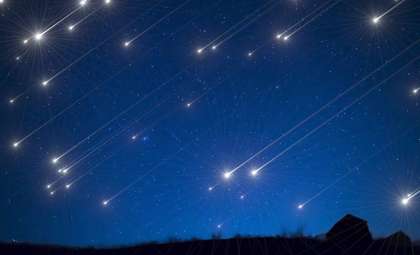
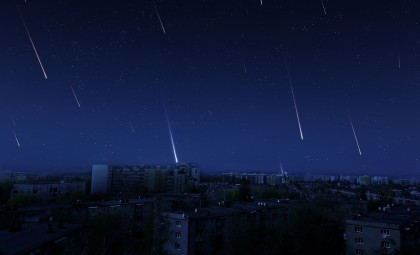
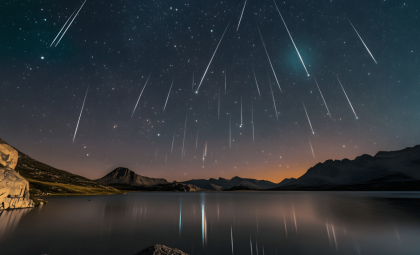
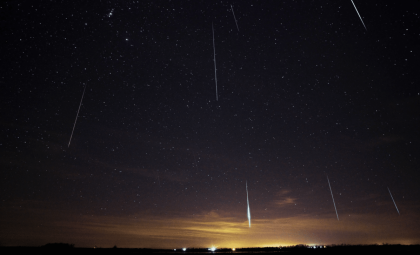
Fall 2026’s standout feature will be the recurring meteor showers, giving skywatchers plenty of opportunities to see bright streaks of light as tiny space debris burns upon entering Earth’s atmosphere. These meteors originate from fragments of comet and asteroid trails orbiting the Sun, producing glowing paths caused by frictional heating.
The Weather Network notes that autumn is among the most meteor-rich seasons due to multiple significant showers taking place as Earth passes through these debris streams.

Each meteor shower is identified by a specific radiant point in the sky, the spot where meteors seem to originate. While some showers offer only a few meteors per hour, others can put on spectacular displays at their peak.
The extended autumn nights afford longer and darker conditions ideal for observing these celestial events. Even in suburban areas, those with clear skies might catch several meteors in a single session.

The Arrival of Astronomical Fall Marked by the Equinox
On September 22, 2026, at 7:05 p.m. EDT, the northern hemisphere will enter astronomical fall with the autumnal equinox. At this point, the Sun aligns directly over the equator as Earth transitions into a new season.
This equinox arises from the tilt of Earth’s axis as it travels around the Sun, causing the Sun’s direct rays to shift between hemispheres and prompting seasonal changes worldwide.
Although the term equinox suggests equal lengths of day and night, atmospheric effects and observational methods mean the exact equality does not happen precisely on this date.
For astronomers and night sky admirers, the equinox signals longer nights in the northern hemisphere, allowing more time to view stars, planets, and meteor activity.
Three Full Moons Will Brighten Autumn Nights in 2026
The Moon will also enhance fall nights with three full moons spaced from September to November. The first occurs on September 25-26, known as the Harvest Moon since it is the full moon nearest the autumnal equinox, historically aiding farmers with extended light during harvests.
Following that, the Hunter’s Moon will light the sky on October 25-26, shining brighter and closer than the September moon but falling short of supermoon status.
The Beaver Moon, appearing on November 23-24, will be a supermoon, happening near the Moon’s closest orbital point to Earth. This will make it over 13 percent more luminous than the average full moon in September.
Planetary Highlights Set the Stage for Spectacular Night Skies
Throughout fall 2026, a variety of bright planets will be visible, including Venus, Mercury, Saturn, Mars, and Jupiter. Early in the season, Venus will be seen near the southwestern horizon soon after sunset, although visibility will improve only during the brief twilight before 8 p.m.
Mercury will also appear nearby but will be tough to spot due to its proximity to the Sun.
Saturn will rise in the east and remain visible overnight, reaching opposition on October 4 when Earth passes between Saturn and the Sun, bringing the planet closest and brightest to our viewpoint that year.
Mars will rise post-midnight at the season’s start, with Jupiter following roughly two hours later. Over time, these planets will rise earlier and come closer together in the sky.
A spectacular conjunction between Mars and Jupiter will occur on November 14, when both will appear near each other before gradually drifting apart.
The Moon’s Dance with Planets Creates Nightly Highlights
Throughout the fall, the Moon will frequently pass near prominent planets, providing easy targets for casual observers. This happens because the Moon orbits Earth rapidly, moving against the backdrop of stars and planets.
From September 25-27, Saturn will be close to the full and waning gibbous Moon. Before sunrise on October 5, Mars will appear near the waning crescent Moon, followed by Jupiter close by on October 6.
Later, Saturn will again be near the waxing gibbous Moon on October 23-24. On November 4, before dawn, Mars and Jupiter will both be visible near the waning crescent Moon.
November 29-30 will feature another meeting with the Moon alongside Mars and Jupiter. Finally, on December 9 before sunrise, the waning crescent Moon will come near Venus, wrapping up a season rich with celestial encounters.
- Categories:
- News





0 comments
Sign in to Comment