

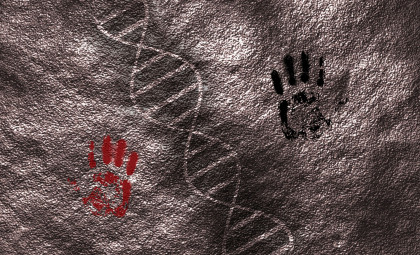
It is well-established that Homo sapiens interbred with both Neanderthals and Denisovans, leaving genetic traces that persist in current human populations. However, these groups do not fully account for all archaic DNA segments found in our genomes. Some sequences suggest the presence of unknown ancestral groups, referred to as ghost lineages.
Researchers at UC Berkeley, including postdoctoral fellow Arjun Biddanda and graduate researcher Yulin Zhang, aimed to detect these elusive genetic regions. Their study, published in Science, targeted archaic DNA segments that could not be attributed to Neanderthals or Denisovans. Findings indicate that several ancient interbreeding events contributed to the genetic makeup of modern humans.
Ancient Ghost Ancestry Present in All Humans
One significant signal comes from an unidentified ancestral population that contributed DNA to humans before the major out-of-Africa migration. This genetic input became widespread as humans dispersed globally.

“We find evidence for at least one ghost introgression predating the [out of Africa] expansion that contributed ancestry to all present-day populations,”wrote the authors in Science.
Earlier studies had left it unclear whether this ghost ancestry was limited to African groups. The new research broadens this view, showing that this genetic heritage is shared across all modern human populations. According to Popular Mechanics, the lineage leading to modern humans traces back roughly 550,000 to 750,000 years, while the mysterious ghost species probably existed about one million years ago.
Another detected ghost lineage appears to have diverged around the same time modern humans split from Neanderthals. Its genetic legacy may have been introduced into early humans about 300,000 years ago through introgression, the gene flow that occurs when different species interbreed.
TRACE Tool Unveils Multiple Archaic Genetic Inputs
The team at UC Berkeley created TRACE — TRacking Archaic Contributions via ARG Estimation — to identify highly archaic genetic segments in present-day genomes that cannot be explained by known Neanderthal or Denisovan ancestry. Their analysis detected evidence for several introgression events involving unknown archaic populations, alongside the recognized genetic legacy of Neanderthals and Denisovans.
Moreover, the study found indications of ancient lineages within the Denisovan DNA carried by Oceanian peoples. This further supports the idea that modern human genomes include DNA from a super-archaic hominin species, highlighting a deep and intricate evolutionary history beyond the familiar archaic groups.
The pathway by which this ancient DNA entered the modern human gene pool remains uncertain. The researchers propose two hypotheses: unknown hominin groups may have bred directly with early Homo sapiens or their forebears, or these archaic populations could have first interbred with Neanderthals or Denisovans, whose descendants then transmitted these ancient sequences to modern humans. Thus, some of the oldest DNA segments in people today might have passed through intermediary archaic hominins before integration.
Potential Origins: Two Ancient Human Species
The genetic footprints point to unidentified ancestry but do not conclusively determine which archaic hominins contributed it. Biddanda and Zhang propose Homo erectus and Homo heidelbergensis as candidate contributors. However, current genetic data cannot definitively link these ghost sequences to either species. Other, as-yet-undiscovered hominins might also be responsible. Some of these populations may remain absent from the fossil record, while others might be genetically undetectable.
The exact timing and locations of these ancient interbreeding events have not yet been identified. Archaic DNA constitutes approximately 2% of the Homo sapiens genome, according to Popular Mechanics, though several of these ancient contributions are still of uncertain origin. Their impacts on modern human biology are another ongoing research question.
“[Ghost genes’] roles in immunity and metabolism have yet to be fully characterized,” Biddanda and Zhang noted. “Future studies that integrate additional ancient genomes at deep timescales, particularly from Africa and Asia, will be critical for refining the timing, sources, and evolutionary consequences of these introgression events.”
Scientists anticipate that sequencing more ancient genomes from Africa and Asia will help pinpoint when these gene flow events occurred and identify the archaic groups involved. Such insights will deepen our understanding of how these genetic exchanges shaped human evolution and clarify the origins of the ghost DNA persisting in people worldwide today.
- Categories:
- Science




0 comments
Sign in to Comment