

Dr. William Romoser, a retired entomologist from Ohio University, proposed that some images captured by NASA's Mars rover might display winged insects capable of flight and even sizable predator-like reptilian forms on the Martian surface.
As an Emeritus Professor, Dr. Romoser presented his observations at the Entomological Society of America Conference held on November 19, 2019, in St. Louis, Missouri. His analysis focused on numerous photos taken by the Curiosity rover over several years, highlighting potential evidence of insect-like and reptile-like organisms on Mars.
Employing a variety of analytical techniques, Dr. Romoser scrutinized rover images for recognizable anatomical features such as segmented bodies, wings, legs, and interactions between different life forms. He identified some structures resembling fossilized remains, while others appeared to represent living beings.


Among the many images examined, Dr. Romoser highlighted several that revealed seemingly flying insects. He found diverse types, including figures bearing resemblance to bees.
He carefully marked distinct features such as compound eyes, wing veins, and leg parts in several photos. Some shapes showed classic three-part body segmentation akin to a head, thorax, and abdomen.
Dr. Romoser's identification relied on anatomical symmetry, segmentation, recurring patterns, interactions between objects, and interpretations of apparent motion. To enhance detail visibility, he adjusted brightness, contrast, saturation, and applied image inversion techniques.
Importantly, Dr. Romoser stressed that he neither introduced nor eliminated any elements from the original images. Based on scale references, he estimated one featured shape to span approximately 20 inches in length. Another image seemed to depict a wing specimen exhibiting longitudinal and cross veins caught on the rover.

In his published study, Dr. Romoser found the compiled evidence quite persuasive.
Nonetheless, he acknowledged that his conclusions are preliminary and open to revision pending further research.
Reptilian Predator Forms and Evidence of Prey Dynamics
Dr. Romoser's work also encompasses shapes he describes as “reptile-like” beings.
In one image set, he pointed out an object in Martian terrain that resembles the front view of an Eastern King Snake, noting possible eyes, bilateral symmetry, and a mouth-like cavity.
Additional images were interpreted as depicting potential predatory behavior between these reptile-like figures and insect-like creatures. One photo, for example, appears to show a reptile-like entity capturing an insect-like organism in its mouth, suggesting active predation.

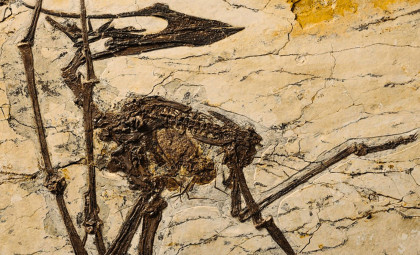
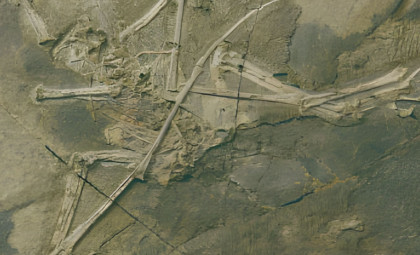
In his paper, Dr. Romoser also drew parallels between fossilized serpent-like reptiles and insect-like fossils potentially present on the Martian surface.
The images analyzed come from NASA and Jet Propulsion Laboratory public archives. Although Dr. Romoser's collection includes raw and composite panoramic images from multiple missions, his research largely centers on data from NASA’s Curiosity rover.
Exploring Mars with NASA’s Curiosity Rover
NASA’s official mission description for Curiosity contrasts with Dr. Romoser’s interpretations. The rover was launched on November 26, 2011, landing on Mars on August 6, 2012. According to NASA:
“What does Curiosity do?…Curiosity investigates how our solar system formed and evolved.”
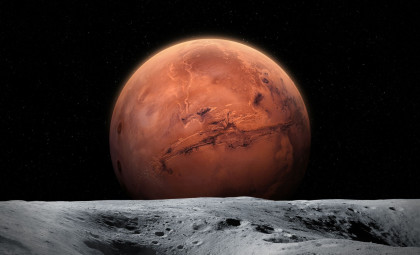
Early findings from Curiosity revealed chemical and mineral evidence suggesting that ancient Martian environments may have supported microbial life. Since its 2012 landing in Gale Crater, Curiosity has conducted ongoing rock and soil analyses.
Curiosity, comparable in size to a small SUV, is equipped with ten scientific instruments, including seventeen cameras, a laser tool capable of vaporizing tiny rock samples, and a drill to produce rock powder for study. NASA reports that Curiosity has drilled into forty-two rocks to collect samples.
The rover’s mission focuses on detecting organic molecules on Mars, crucial carbon-based compounds needed for biological processes, although some can form without life.
Among the rover’s discoveries are long-chain organic molecules such as decane, undecane, and dodecane, identified in a sample named Cumberland. According to NASA’s Curiosity mission page, these represent the longest-chain organics found so far on Mars.
- Categories:
- Science





0 comments
Sign in to Comment