

Unearthed in the 1950s from California’s La Brea Tar Pits, a fossil has now been identified as belonging to a new species of Ice Age spadefoot toad. Named Spea labreae, this extinct amphibian marks only the second Pleistocene-era frog species documented in North America.
Published in the Journal of Vertebrate Paleontology, the finding highlights that even extensively examined fossil sites can still conceal undiscovered species. By re-examining archived museum specimens, scientists demonstrated that decades-old fossils continue to provide valuable insights into Earth’s prehistoric life.
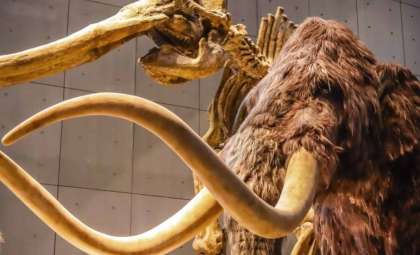
While the La Brea Tar Pits are famed for fossils of saber-toothed cats, dire wolves, and mammoths, they also preserve smaller creatures that often receive less focus. Amphibians like frogs are scarce in the fossil record, yet their remains offer crucial information about ancient ecosystems.

Because amphibians are highly sensitive to environmental conditions and remain close to their native habitats, their fossils serve as indicators of past climate shifts, vegetation changes, and regional ecosystems. They provide a unique perspective on the Ice Age beyond the more well-known large mammals.
A Fossil Hidden Away for Over 70 Years
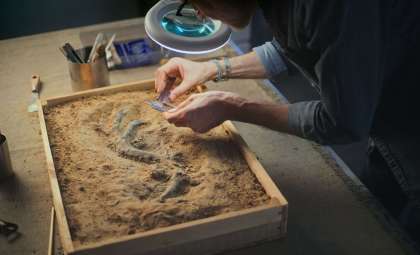
The journey of this ancient frog began when scientist Alberto Cruz revisited the amphibian fossils stored at La Brea. Initially, the distinct features of one specimen were thought to be abnormalities or injuries.
After comparing multiple fossils and examining living spadefoot toads, Cruz recognized these traits were consistent enough to classify a new species, rather than an individual with abnormalities.
“I reviewed and reviewed a lot of specimens until I was convinced. I thought, ‘Oh my gosh, this is a new species,’” Cruz said in a statement. “This material is originally from the 1950s, but when you study it again, you can find gold in these specimens.”

The fossil that defined Spea labreae is a partial sacro-urostyle bone, which links the vertebral column to the pelvis, serving as crucial evidence for identifying this extinct frog species.
A Small Frog Reveals Big Ice Age Secrets
Discovering new amphibian fossils from the Ice Age is rare because their fragile bones often do not fossilize well. The newfound Spea labreae offers scientists valuable clues about the Ice Age environment of Southern California. Amphibians’ rapid response to environmental alterations makes them important indicators of historical habitat conditions. Cruz commented:
“If you change the environment, you change the vegetation, the climate is warmer or colder, it affects these animals directly.”

The extinction of this species corresponds with significant ecological shifts occurring near the end of the last Ice Age, approximately 10,000 years ago. Its presence suggests the area once supported amphibian populations that have since vanished.
Uncovering a Forgotten Amphibian Species
To verify Spea labreae as a distinct species, Cruz analyzed La Brea fossils alongside over 80 comparative specimens from the Natural History Museum of Los Angeles County and the University of California, Berkeley’s Museum of Vertebrate Zoology.
The research further documented the earliest record of the Mexican burrowing toad from the genus Rhinophrynus found in the southwestern United States. While this species persists today, it no longer inhabits areas near Los Angeles.

The closest living populations of this toad now reside around 1,500 miles away in southern Mexico. For Emily Lindsey, study co-author and curator at the Samuel Oschin Center for Global Ice Age Research, this finding underscores:
“It’s a great example of how we’re still finding new things at La Brea Tar Pits, even after a century of ongoing excavation and research. There’s definitely more to come.”
- Categories:
- News





0 comments
Sign in to Comment